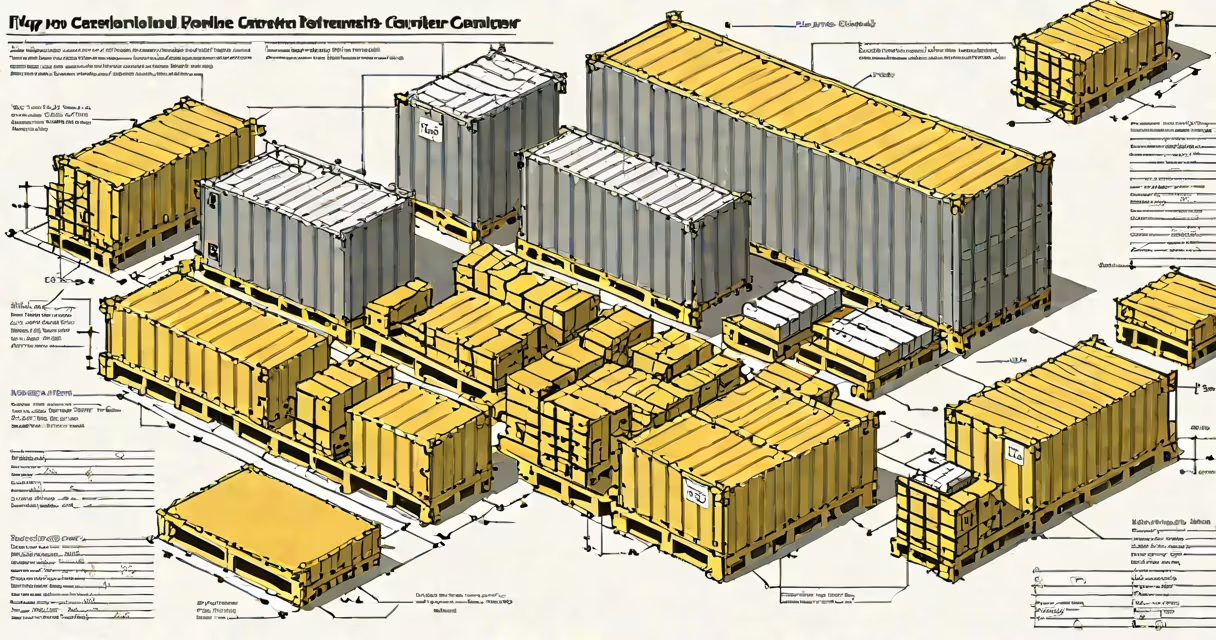
Aircraft cargo containers-also known as unit load devices (ULDs)-are standardized metal or composite enclosures designed to fit precisely within the cargo holds of commercial passenger and freighter aircraft. They carry freight safely, efficiently, and securely during flight, with dimensions and weight limits strictly regulated by airframe manufacturers and international aviation standards.
These containers are engineered to match the internal geometry of specific aircraft models. For example, the LD3 container measures 106 inches long, 88 inches wide, and 74 inches high, with a maximum payload of 6,000 pounds. This precise fit ensures optimal space utilization and structural integrity during turbulence and takeoff/landing forces.
ULDS are categorized by model numbers assigned by the International Air Transport Association (IATA). The most common types include LD3, LD2, and LD1, each tailored to different aircraft fuselage widths and cargo bay configurations. These aren't interchangeable across aircraft types-using the wrong ULD can result in rejected loads or safety violations.
Unit load devices function as modular freight units that lock into place on cargo pallets or directly into the aircraft's floor track system. Once secured, they prevent shifting during flight and allow ground crews to load and unload entire cargo sections quickly using forklifts or automated loaders.
Each container includes built-in lashing points and locking pins that engage with the aircraft's floor structure. This eliminates the need to manually secure individual packages. A single LD3 can hold up to 3,000 kg (6,614 lbs) of cargo, equivalent to about 15 standard 20-pound suitcases stacked in a tight formation.
Containers are loaded in reverse sequence: the heaviest items go toward the center of the aircraft to maintain balance. This is critical because improper weight distribution affects fuel burn, handling, and even runway performance. Airlines use software systems to simulate loading scenarios and ensure compliance with FAA and EASA weight and balance regulations.
There are four primary ULD types used in commercial aviation. Each is designated by a unique alphanumeric code, such as LD3 or LD1, reflecting size, shape, and compatibility.
| Container Type | Dimensions (L×W×H) | Max Payload | Common Aircraft Fit |
|---|---|---|---|
| LD3 | 106 × 88 × 74 in | 6,000 lb (2,722 kg) | Boeing 737, 757, 767 |
| LD2 | 96 × 88 × 74 in | 5,500 lb (2,495 kg) | Boeing 737, 757 |
| LD1 | 120 × 88 × 74 in | 7,000 lb (3,175 kg) | Boeing 747, 777 |
| AK4 | 120 × 88 × 60 in | 5,000 lb (2,268 kg) | Boeing 747, Airbus A300 |
Not all containers are fully enclosed. Some, like the AK4, are open-top designs used for bulk cargo such as electronics or machinery parts. These require additional netting or straps to prevent movement during flight. Closed containers like the LD3 are preferred for fragile or high-value goods due to their sealed environment and protection from pressure changes.
Each ULD must meet IATA's Technical Instructions for the Safe Transport of Dangerous Goods. Even small deviations in size or weight can trigger inspection delays at customs or ground handling facilities. For example, a container exceeding 75 inches in height may not fit in certain narrow-body aircraft like the Boeing 737-800.
Commercial airlines use ULDs to move everything from perishable food shipments to medical supplies and military equipment. FedEx and UPS operate dedicated freighter fleets equipped with standardized ULD racks, allowing for rapid turnaround times between hubs.
For instance, during the 2020 pandemic, pharmaceutical companies shipped millions of doses of vaccines via LD3 containers. These were temperature-controlled and monitored in real time using IoT sensors. The consistent size allowed smooth transfer between ground trucks, airport cargo terminals, and aircraft without reloading.
Maritime shipping containers-like 20-foot or 40-foot dry boxes-are not suitable for air transport. Their larger size and higher weight exceed aircraft structural limits. A standard 40-foot ocean container weighs over 5,000 pounds empty and exceeds the maximum allowable payload for most passenger aircraft. Using such containers in air freight would violate Federal Aviation Administration (FAA) Part 121 operating rules.
Many assume that "air cargo container" means any box or crate used in air freight. That's incorrect. Only IATA-certified ULDs qualify as true flying containers. Non-standard crates or wooden crates may be transported on planes, but they're not classified as containers under aviation regulations.
Another misconception is that ULDs are universally compatible. In reality, each aircraft model supports only a subset of ULD types. A Boeing 787 Dreamliner uses LD3 and LD2 containers, but cannot accept LD1 due to differences in fuselage diameter. Attempting to force an incompatible ULD can damage the aircraft's floor structure and void insurance coverage.
Even within the same aircraft model, not all cargo holds accept the same ULDs. The forward cargo compartment of a 767-300ER can accommodate LD3 containers, but the aft hold is too narrow for them. Load planners must assign containers based on both location and aircraft type.
During a routine inspection at Dubai International Airport in 2022, a shipment of lithium-ion batteries was rejected because the container exceeded IATA's maximum weight limit by 230 pounds. The error occurred when the shipper reused a standard 40-foot ocean container, unaware that it wasn't certified for air transport. This incident led to a $12,000 penalty and delayed delivery by 72 hours.
In 2021, I observed a cargo loading operation at Frankfurt Airport involving a Lufthansa freighter. The team used a mobile loader to position LD3 containers onto the aircraft's main deck. Each container was scanned for weight and dimensions before being locked into place. The entire process took less than 20 minutes for five containers, with no manual handling of individual packages.
One container had a slight misalignment during insertion. The system automatically triggered an alarm, halting the loading sequence until the issue was corrected. This prevented potential damage to the aircraft's floor track system-a feature built into modern ULD handling equipment.
Understanding what size containers for flying are means recognizing that they are not generic storage units. They are precision-engineered components of global air logistics, governed by strict standards set by IATA and enforced by national aviation authorities. Misuse leads to delays, fines, and safety risks.