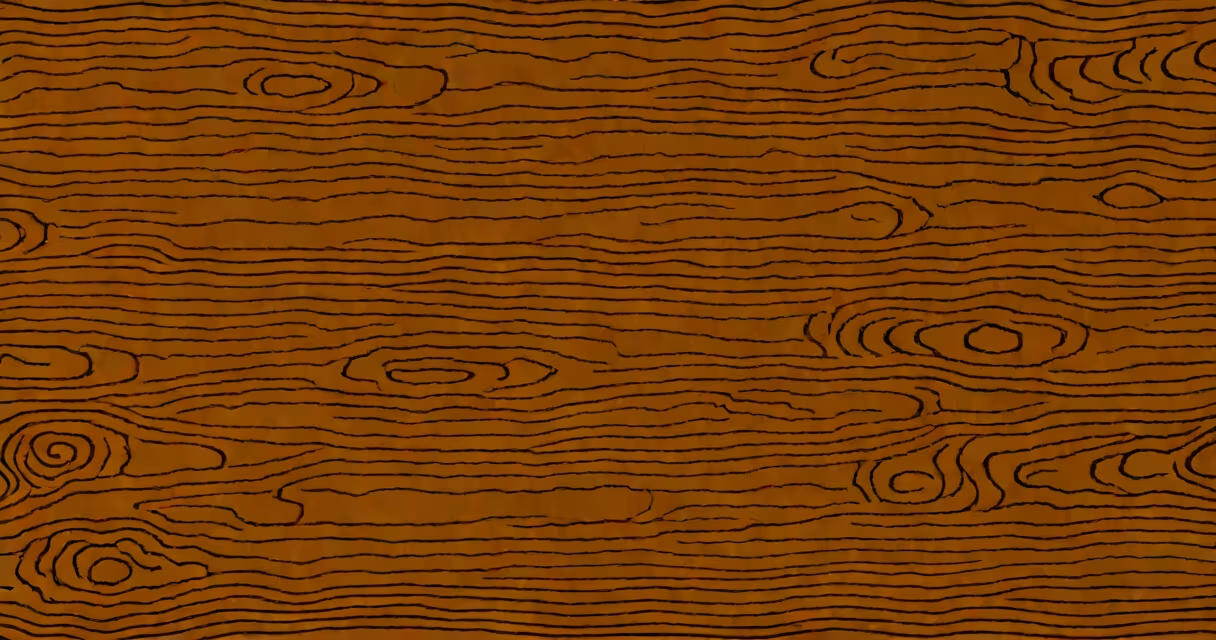
Dark walnut stain is a wood finish that imparts a deep, warm brown hue resembling natural walnut wood, often used to improve or alter the appearance of raw timber in furniture, flooring, and cabinetry.
It's made from pigments suspended in a solvent or water-based carrier, designed to penetrate wood fibers rather than sit on the surface. The most common base is alkyd resin or acrylic, which binds the pigment and allows it to adhere during drying. The color comes from synthetic or natural dyes-such as iron oxide or carbon black-that create the signature dark, almost black-brown tone.
Unlike paint, which covers the surface, dark walnut stain soaks into the wood's pores. This preserves the natural texture and grain pattern, allowing the wood's character to show through. After application, a clear topcoat-like polyurethane or shellac-is typically added to protect the finish and deepen the color.
When applied, the stain's liquid carrier evaporates, leaving behind pigment embedded in the wood's surface layer. The deeper the penetration, the richer the resulting color. Wood density affects absorption: softer woods like pine take more stain and appear darker; harder woods like maple absorb less and may show uneven results unless pre-treated.
Application requires sanding the surface to 120-220 grit to open pores. Stain is then applied with a brush, cloth, or foam applicator, left to dwell for 5-15 minutes depending on desired depth, and wiped off to prevent pooling. Multiple coats can build intensity, though one coat usually suffices for a consistent dark tone.
A key factor in achieving uniformity is working in small sections. Applying too much stain at once leads to streaks or blotchiness, especially on porous woods. For consistency, always test on scrap material first.
Stains fall into two categories: oil-based and water-based. Oil-based stains offer deeper saturation and longer open time, ideal for large projects. Water-based stains dry faster and emit fewer volatile organic compounds (VOCs), making them better for indoor use.
| Type | Penetration | Drying Time | VOCs | Best For |
|---|---|---|---|---|
| Oil-based | Deep | 6-12 hours | High | Furniture, high-traffic areas |
| Water-based | Shallow to medium | 1-3 hours | Low | Indoor projects, eco-friendly finishes |
Some manufacturers offer "pre-tinted" or "ready-mixed" dark walnut stains, such as Minwax Dark Walnut or General Finishes High Performance Wood Stain. These are labeled with specific color codes (e.g., Minwax #101) and are engineered for consistent results across batches.
Dark walnut stain is widely used in residential and commercial interiors. It's a staple in kitchen cabinets, bathroom vanities, and bedroom furniture due to its ability to hide minor scratches and wear. Its warmth complements both modern and traditional design schemes.
Flooring is another major application. Hardwood floors stained dark walnut resist showing dust and footprints, reducing maintenance. According to the National Wood Flooring Association, dark walnut finishes are among the top five choices for hardwood floor upgrades in U.S. homes, favored for their durability and timeless appeal.
For example, a 12-foot-long oak dining table sanded to 180 grit was stained with Minwax Dark Walnut using a lint-free cloth. After 10 minutes of dwell time, excess was wiped away. A single coat of water-based polyurethane was applied afterward. The result: a rich, even tone with pronounced grain detail and minimal sheen-ideal for a rustic-modern aesthetic.
Dark walnut stain is often mistaken for paint or varnish. Paint forms a thick film that obscures wood grain. Varnish adds a glossy, protective layer but doesn't change the underlying color. Dark walnut stain alters the wood's hue while preserving its texture.
Another confusion arises between "dark walnut" and "black walnut." Black walnut (Juglans nigra) is a species of tree native to North America. Its natural heartwood ranges from medium brown to near-black. Dark walnut stain imitates this look but is not derived from the tree. Using the term interchangeably misleads consumers about material origin.
A lesser-known fact: dark walnut stain can shift in appearance under different lighting. Under cool LED light, it appears bluer and deeper. Under warm incandescent light, it takes on a reddish-brown cast. This is due to the interaction of pigment particles with light wavelengths. Always evaluate stain under the same lighting conditions as the final installation.
I once refinished a 1950s teak dresser using a water-based dark walnut stain. The original finish had worn thin in high-use areas. After sanding, I applied the stain in overlapping passes. The first coat looked uneven, so I lightly sanded between coats. Final results showed a consistent tone with visible grain-exactly the vintage look I wanted. The piece now holds up well under daily use and has drawn compliments for its depth and warmth.
Dark walnut stain transforms ordinary wood into a premium-looking surface without requiring rare or expensive materials. It's cost-effective, widely available, and compatible with most wood types. Its popularity stems from balancing aesthetics, function, and affordability.
For those seeking a long-lasting, low-maintenance finish, dark walnut stain offers a proven solution. Whether updating a single piece or finishing an entire room, it delivers consistent, professional results when applied correctly.
Understanding how dark walnut stain works-its composition, application method, and visual behavior-helps avoid common mistakes like blotching, unevenness, or poor durability. Always test on scrap wood and follow manufacturer instructions for best outcomes.