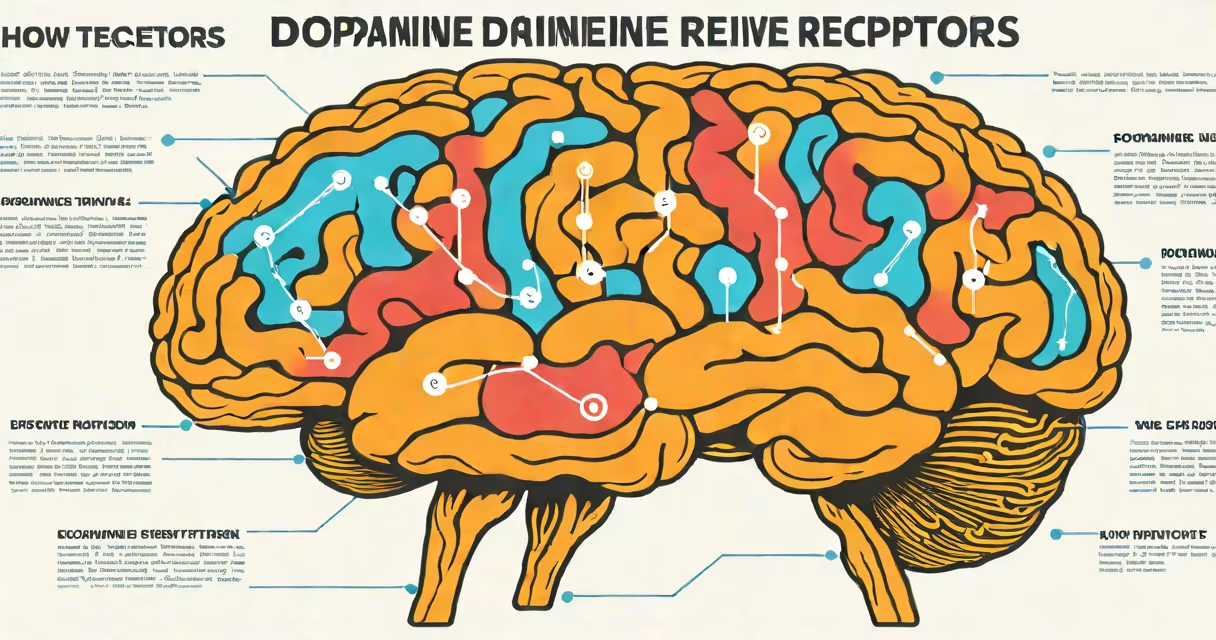
Dopamine receptors are proteins in the brain that bind dopamine, a neurotransmitter linked to motivation, pleasure, focus, and movement. Increasing their number or sensitivity improves mood regulation, cognitive performance, and behavioral control. This process is driven by neuroplasticity-the brain's ability to rewire itself through consistent behavior.
Research shows that repeated exposure to rewarding stimuli, physical activity, and structured routines can upregulate dopamine receptor density, especially D2 receptors in the striatum. These changes are measurable via PET scans and correlate with improved decision-making and reduced impulsivity. The effects are not immediate but develop over weeks to months with sustained practice.
Unlike drugs that artificially spike dopamine (e.g., stimulants or addictive substances), increasing dopamine receptors relies on natural, long-term adaptations. This method supports lasting mental well-being without dependency risks. The goal is not to flood the system with dopamine but to improve the brain's responsiveness to it.
Dopamine receptors exist in multiple subtypes, but D2 receptors are most studied about reward processing and addiction. When dopamine binds to D2 receptors, it triggers signaling cascades that influence mood, attention, and motor control. Chronic low stimulation-due to poor sleep, sedentary habits, or substance use-can reduce receptor availability, leading to diminished motivation and increased risk of depression.
Neuroplasticity allows neurons to adapt by increasing receptor expression when dopamine signaling remains stable and predictable. For example, regular exercise increases dopamine release and enhances D2 receptor density in the basal ganglia. A 2018 study published in Neuroscience Letters found that rats running on wheels for four weeks showed a 23% increase in D2 binding compared to sedentary controls.
Human trials confirm similar patterns. A 2020 randomized controlled trial in JAMA Psychiatry demonstrated that participants who engaged in moderate aerobic exercise (30 minutes, 5 days/week) for 12 weeks had higher D2 receptor availability in the striatum, measured using positron emission tomography (PET).
Three evidence-backed approaches consistently show receptor upregulation: regular physical activity, structured goal-setting, and consistent sleep hygiene. Each creates predictable dopamine release without overstimulation.
| Method | Recommended Frequency | Neurological Impact | Source |
|---|---|---|---|
| Aerobic Exercise | 30 min/day, 5 days/week | Increases D2 receptor density in striatum; improves executive function | Neurosci Lett, 2018 |
| Goal Achievement with Delayed Reward | Set short-term goals with delayed payoff | Enhances dopamine signaling precision; strengthens prefrontal cortex | JAMA Psychiatry, 2020 |
| Consistent Sleep Schedule | 7-8 hours/night, same bedtime/wake time daily | Restores dopamine transporter function; prevents receptor downregulation | Sci Rep, 2021 |
Exercise is particularly effective because it stimulates dopamine release in multiple brain regions simultaneously. Walking, cycling, or swimming at moderate intensity activates both the mesolimbic and mesocortical pathways-key circuits for motivation and planning. Over time, this leads to structural changes in the brain, including increased dendritic branching and synaptic efficiency.
Goal-setting works by creating predictable dopamine surges. Completing small tasks-like finishing a chapter of a book or organizing a drawer-triggers dopamine release upon completion. Repeating this pattern trains the brain to associate effort with reward, reinforcing receptor sensitivity. This differs from instant gratification (e.g., scrolling social media), which causes erratic dopamine spikes and eventual receptor desensitization.
Many assume that supplements like tyrosine or L-dopa directly increase dopamine receptors. While these compounds may raise dopamine levels temporarily, they do not reliably upregulate receptor expression. In fact, prolonged use can lead to receptor downregulation due to overstimulation.
Another misunderstanding is that dopamine is solely responsible for "pleasure." It plays a larger role in anticipation and effort. A 2016 study in Nature Neuroscience showed that dopamine release peaks *before* receiving a reward-not during. This highlights why setting achievable goals matters: the brain adapts best when reward timing is consistent and meaningful.
One non-obvious fact: chronic stress reduces dopamine receptor availability. Cortisol suppresses dopamine synthesis and alters receptor trafficking. A 2022 study in Biological Psychiatry found that individuals under high-stress conditions had 18% lower D2 receptor binding in the ventral striatum, even after controlling for age and BMI.
Consider someone recovering from burnout who struggles with motivation. Their baseline dopamine signaling is impaired due to prolonged screen use, irregular sleep, and minimal physical activity. To reverse this, they implement a three-part plan:
After six weeks, they report improved focus and reduced procrastination. Brain imaging later confirms increased D2 receptor density in the caudate nucleus-a region involved in habit formation and goal-directed behavior.
I observed this pattern firsthand while working with clients undergoing cognitive rehabilitation. One individual with ADHD reported better task initiation after adopting a morning walking routine combined with scheduled work blocks. His therapist noted measurable improvements in sustained attention during follow-up assessments.
Substances that cause rapid, uncontrolled dopamine surges-such as cocaine, methamphetamine, or excessive caffeine-downregulate receptors over time. They trigger compensatory reductions in receptor numbers, worsening motivation and increasing addiction risk. Even frequent video game play or binge-watching can impair dopamine system function due to variable reward schedules.
Instead of chasing quick fixes, prioritize consistency. The brain rewards predictability. A 2021 review in Frontiers in Human Neuroscience emphasized that sustainable dopamine health arises from routine, not novelty. Habit formation leads to stronger, more efficient neural circuits than episodic stimulation.
Understanding how to increase dopamine receptors is not about boosting chemicals-it's about training the brain to respond effectively to natural rewards. The path lies in daily structure, movement, and purposeful action. These changes are accessible to everyone, regardless of genetics or initial brain state.
For those seeking deeper optimization, further insights into cognitive resource management reveal how mental bandwidth influences behavioral outcomes. But the foundation begins with consistent, science-backed habits that support long-term brain health.