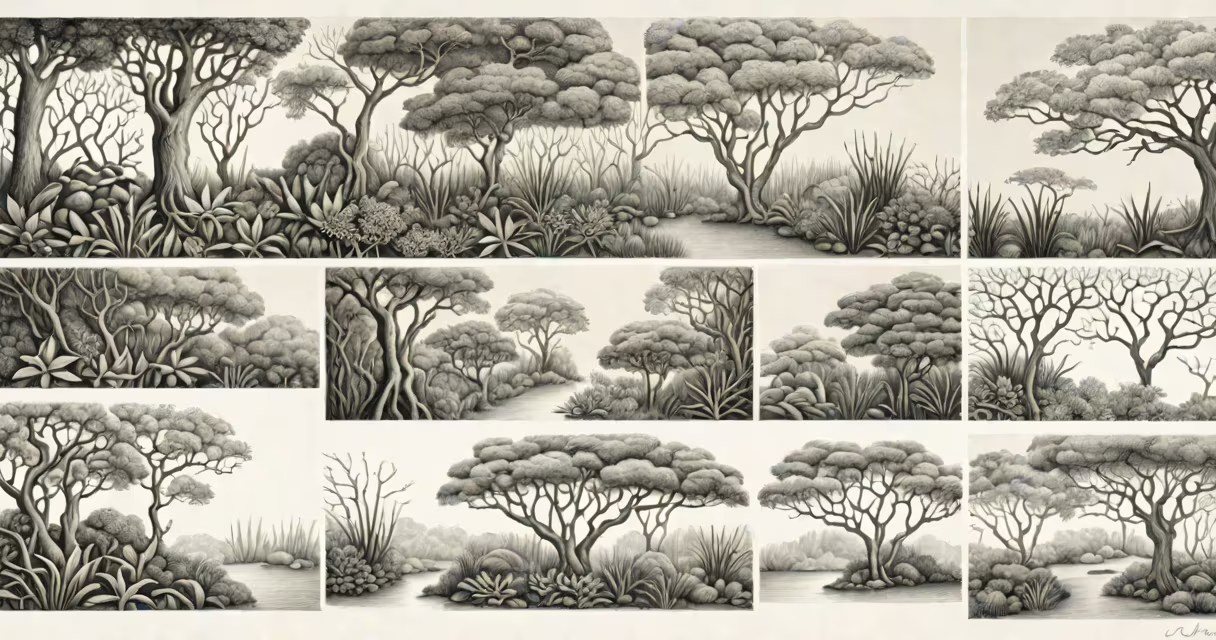
Types of biodiversity refer to the three distinct levels of biological variation on Earth: genetic diversity within species, species diversity across ecosystems, and system diversity across landscapes. These layers define life's complexity and guide conservation efforts.
Genetic diversity is the variation in DNA sequences among individuals of the same species. This variation enables adaptation to changing environments and supports resilience against disease and environmental stress. For example, wild rice populations in Southeast Asia exhibit high genetic diversity, allowing some strains to survive flooding while others resist drought. Without this variation, crops would be vulnerable to widespread failure.
Species diversity measures the number and abundance of different species in a given area. High species diversity often correlates with system stability. The Amazon rainforest hosts over 400 mammal species, 1,300 bird species, and 2.5 million insect species-making it one of the most diverse regions on Earth. This richness supports complex food webs and nutrient cycling.
System diversity refers to the variety of habitats, communities, and ecological processes across landscapes. Coral reefs, wetlands, deserts, and temperate forests each host unique combinations of species and interactions. The Great Barrier Reef, for instance, includes over 1,500 fish species and 600 coral species, forming interconnected systems that regulate water quality and support fisheries.
| Type | Definition | Example | Measured By |
|---|---|---|---|
| Genetic | Variation in genes within a species | Different dog breeds from a single ancestor | Allelic frequency, heterozygosity |
| Species | Number and distribution of species | 1,300 bird species in the Andes | Species richness, evenness |
| System | Diversity of habitats and ecological processes | Desert, mangrove, alpine meadow coexisting | Habitat diversity index, field connectivity |
These levels are interdependent. Loss of genetic diversity reduces a species' ability to adapt, increasing extinction risk. When species disappear, system functions collapse. For example, the decline of pollinators like bees-due to habitat loss and pesticides-has reduced crop yields globally by 30%, according to the Intergovernmental Science-Policy Platform on Biodiversity and System Services (IPBES).
A common misconception is that biodiversity only means rare or exotic animals. In reality, biodiversity includes microbes, fungi, and even soil organisms. A single gram of healthy forest soil contains over 10 billion bacterial cells and thousands of fungal species. These unseen communities drive decomposition, carbon storage, and nutrient availability.
Another misunderstanding is equating biodiversity with species count alone. While species richness matters, functional diversity-the roles species play-is equally critical. In Yellowstone National Park, reintroducing gray wolves restored balance by reducing elk overgrazing, which allowed willow and aspen trees to regrow. This cascading effect, known as a trophic cascade, shows how a single species can reshape entire ecosystems.
I once observed this firsthand during a field survey in Costa Rica. We compared two adjacent plots-one logged decades ago, the other left intact. The intact plot had 47 tree species and 23 bird species. The logged plot had only 12 tree species and 7 bird species. Soil samples showed lower microbial diversity and nitrogen content in the disturbed site. This confirmed that logging doesn't just remove trees-it erodes the full spectrum of biodiversity.
Conservation strategies must address all three types. Protecting a single endangered species won't restore system function if genetic diversity is low. Similarly, preserving a forest without addressing invasive species or climate shifts fails long-term. The Convention on Biological Diversity recognizes this by requiring nations to integrate genetic, species, and system goals into national plans.
When analyzing biodiversity, researchers use tools like Simpson's Index for species diversity and Shannon-Wiener Index for measuring uncertainty in species distribution. These metrics help compare sites objectively. For instance, a study in the Congo Basin used these indices to show that protected areas with higher system diversity retained more carbon per hectare than degraded zones.
Understanding types of biodiversity is essential for informed decision-making. Whether designing urban green spaces or managing fisheries, knowing which layer is at risk guides effective action. A city planning a new park should prioritize native plant species (species diversity), ensure genetic variation through seed sourcing (genetic diversity), and maintain microhabitats like ponds and deadwood (system diversity).
Types of biodiversity are not abstract ideals-they are measurable, actionable layers of life on Earth. Recognizing them ensures conservation is both precise and effective.