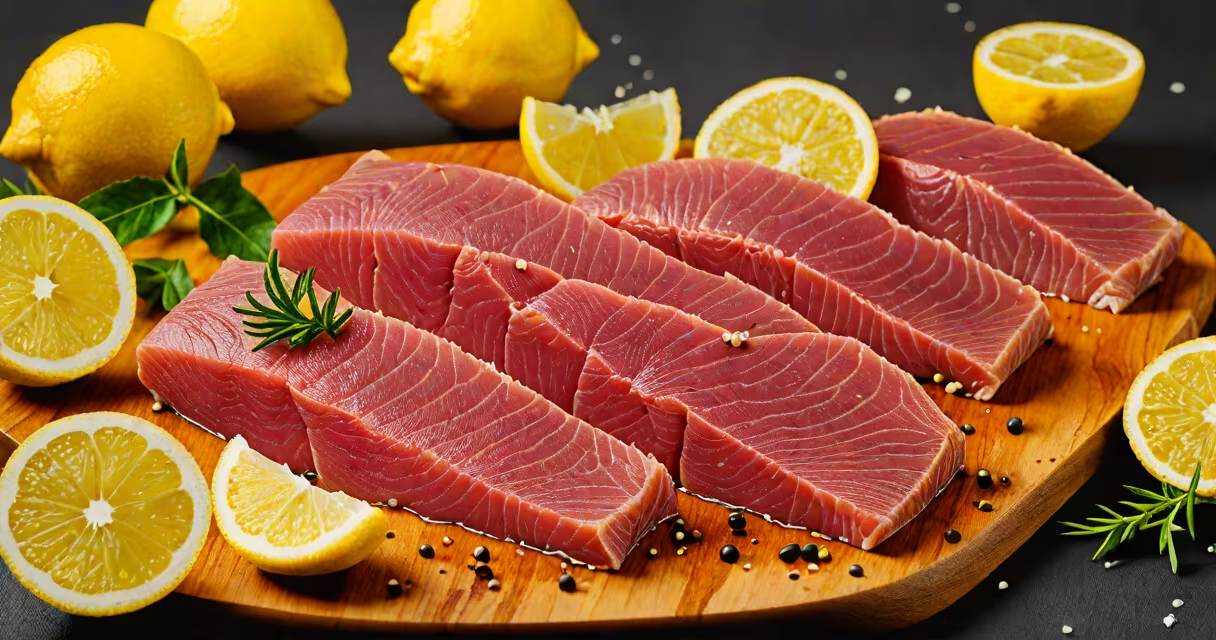
Tuna in Spanish is "atún," a masculine noun used throughout Spain and Latin America in both casual speech and formal contexts like menus and recipes.
The word "atún" traces back to Latin *thunnus*, which referred to the fish family known as tunas and mackerels. Modern Spanish uses "atún" exclusively for the species *Thunnus thynnus* and related large pelagic fish. It's not interchangeable with other seafood terms like "sardina" (sardine) or "bacalao" (cod).
In culinary usage, "atún" appears in dishes such as "atún en aceite" (tuna in oil), a common pantry staple. It's also central to "ensalada de atún" (tuna salad), often served with boiled potatoes, onions, and mayonnaise. The term is standardized across regions, though pronunciation varies slightly-Spain emphasizes the final syllable ("ah-TOON"), while Latin American speakers often stress the second ("ah-TOON").
On restaurant menus in Mexico City, a dish labeled "tacos de atún" means tacos filled with canned tuna, typically mixed with lime juice and red onion. In Madrid, "atún a la plancha" refers to grilled tuna steak, often served with roasted vegetables. These applications show how "atún" functions in everyday language and food culture.
When shopping, look for "atún enlatado" (canned tuna) in supermarkets. A standard 150g tin contains about 40 grams of protein and 180 calories, with sodium levels around 450mg per serving. This nutritional profile makes it a staple in budget-friendly meals.
For non-native speakers, confusion sometimes arises between "atún" and "pescado" (fish). While "pescado" is a general term, "atún" specifies the species. Misusing "pescado" for tuna leads to ambiguity-saying "quiero pescado" doesn't clarify whether you want tuna, salmon, or sardines.
Some learners assume "atún" is pluralized as "atúnes," but the correct plural form is "atunes." The plural follows regular Spanish rules: masculine nouns ending in -n take -es. So "dos atunes" (two tunas) is correct, not "dos atúnes."
Another error is confusing "atún" with "salmón" (salmon). Though both are oily fish used in similar dishes, they differ in color, texture, and flavor. Salmón is pink and rich; atún is dark red and firmer. Using them interchangeably leads to incorrect results in cooking.
A lesser-known fact: in parts of southern Spain, especially Andalusia, "atún" can refer to the dried, salted version of the fish, historically preserved for long sea voyages. This variant is less common today but still appears in regional markets under the name "atún seco."
| Region | Common Term | Typical Dish | Regional Note |
|---|---|---|---|
| Spain (Madrid) | atún | atún a la plancha | Grilled, often with garlic and herbs |
| Mexico (Mexico City) | atún | ensalada de atún | Often includes avocado and hard-boiled egg |
| Colombia (Bogotá) | atún | arepas de atún | Stuffed corn cakes with tuna and cheese |
| Argentina (Buenos Aires) | atún | empanadas de atún | Meat-free version with onions and olives |
Despite regional differences in preparation, the core term remains consistent. No variation exists between dialects where "atún" becomes "tuna" or another word-this is a stable lexical item across the entire Spanish-speaking world.
One anecdote: during a cooking class in Oaxaca, I watched a student attempt to order "tuna" at a market. The vendor looked confused until I clarified: "Quiero atún, por favor." The correct term resolved the misunderstanding instantly. This moment underscored how precise vocabulary matters in real-world communication.
Using "atún" correctly avoids miscommunication in travel, cooking, and business. A menu listing "pescado" instead of "atún" fails to convey intent. A recipe calling for "salmón" when "atún" is needed changes the outcome.
According to the Real Academia Española (RAE), "atún" is defined as "el pez de carne roja y sabor intenso que pertenece al género Thunnus." This official definition confirms its taxonomic accuracy and linguistic consistency.
Similarly, the Instituto Cervantes notes that learners often confuse "atún" with "pulpo" (octopus) due to similar spelling patterns. But "pulpo" is a cephalopod, not a fish. Knowing the difference prevents errors in ordering or identifying ingredients.
Understanding "what is tuna in Spanish" isn't just about translation-it's about accessing culture, cuisine, and connection through accurate language.