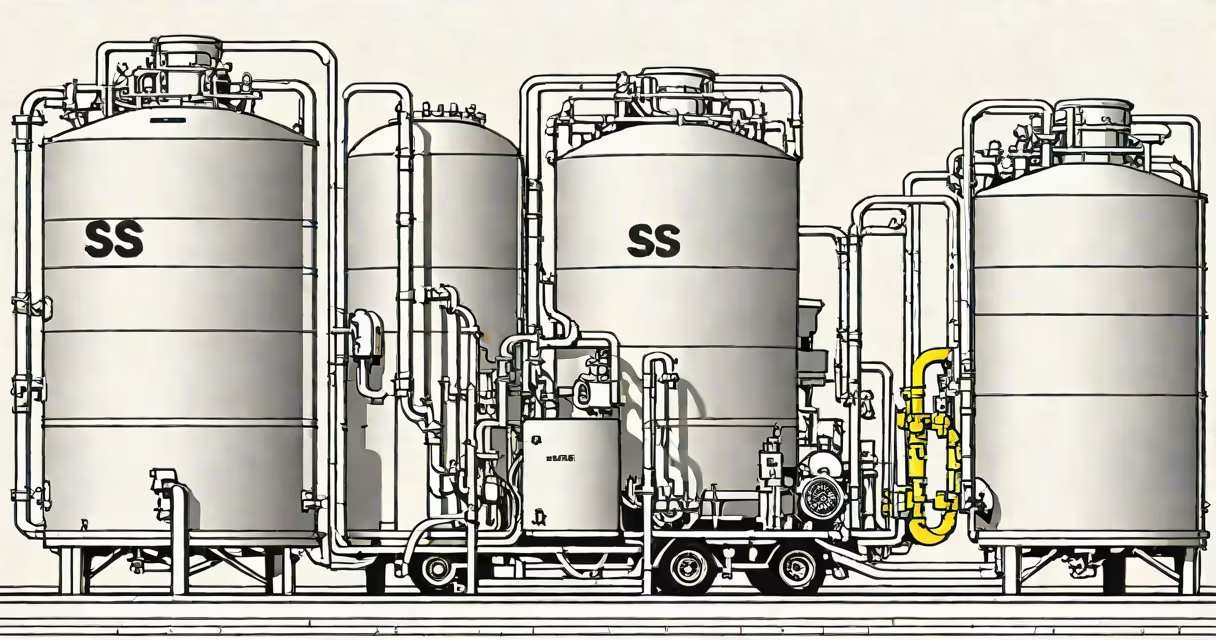
S and S diesel is a certified renewable diesel fuel produced through hydroprocessing of renewable feedstocks such as used cooking oil, animal fats, and vegetable oils. It meets ASTM D975 standards for on-road diesel and performs identically to petroleum-based diesel in engines.
Renewable diesel, sometimes called "green diesel," is chemically indistinguishable from petroleum diesel. It is created by hydrotreating triglycerides from biological sources, removing oxygen and saturating carbon chains. The result is a paraffinic hydrocarbon with high cetane numbers and low sulfur content.
Unlike biodiesel (FAME), which is made via transesterification and contains oxygen, s and s diesel undergoes hydrogenation. This process removes oxygen atoms, resulting in a cleaner-burning fuel with improved cold-flow properties and longer shelf life. It is approved for use in existing diesel engines without modification.
The production process begins with feedstock collection-used restaurant grease, tallow from meat processing, or soybean oil. These materials are filtered and pre-treated to remove water and particulates. They then enter a hydrotreater reactor where they are exposed to high pressure hydrogen and a catalyst.
At temperatures between 300°C and 400°C, the triglycerides break down into fatty acids. Hydrogen reacts with them, saturating double bonds and removing oxygen as water vapor. The output is a mixture of saturated hydrocarbons-primarily n-paraffins-matching the molecular structure of petroleum diesel.
After distillation and polishing, the final product is a clear, stable liquid with a cetane number above 70. This exceeds the minimum requirement of 47 for standard diesel. Its energy density is nearly identical to fossil diesel-around 15,000 BTU per pound.
Feedstock choice determines the environmental impact and cost profile of s and s diesel. Common sources include:
| Feedstock Type | Source Example | Carbon Intensity (gCO₂e/MJ) | Common Use |
|---|---|---|---|
| Used cooking oil (UCO) | Restaurant fryer waste | 12-20 | High-value, low-impact |
| Animal fats | Tallow from slaughterhouses | 25-35 | Stable supply, moderate emissions |
| Vegetable oils | Soybean, rapeseed, palm | 40-70 | Higher land-use risk |
UCO has the lowest lifecycle emissions because it uses waste material. According to the U.S. Department of Energy, UCO-based renewable diesel reduces greenhouse gas emissions by 80% compared to petroleum diesel. Palm oil, while efficient in yield, raises deforestation concerns.
Some producers blend s and s diesel with recycled biodiesel (FAME) to improve lubricity. However, pure s and s diesel does not require additives for engine protection due to its inherent stability.
Major fleets in California, Oregon, and Washington have adopted s and s diesel to meet state-mandated low-carbon fuel standards. California's Low Carbon Fuel Standard (LCFS) assigns negative carbon scores to fuels with low lifecycle emissions. Renewable diesel qualifies for credits, making it economically viable.
For example, the Port of Los Angeles operates over 1,000 vehicles on s and s diesel. Their fleet saw a 60% reduction in particulate matter emissions and a 40% drop in nitrogen oxide levels. These results align with findings from the National Renewable Energy Laboratory (NREL), which reported that renewable diesel cuts PM2.5 by up to 60% compared to conventional diesel.
Commercial applications include long-haul trucking, marine vessels, and rail transport. Unlike electric or hydrogen-powered alternatives, s and s diesel requires no infrastructure overhaul. Trucks refuel in minutes using existing diesel pumps.
Many confuse s and s diesel with biodiesel (FAME). While both are bio-based, FAME is made by reacting fats with methanol. It contains oxygen, which leads to oxidation and shorter storage life. FAME can degrade in cold weather and may cause injector deposits.
Another misunderstanding is that s and s diesel is incompatible with current infrastructure. In reality, it is fully compatible with existing pipelines, storage tanks, and fuel dispensers. A 2022 study by the American Petroleum Institute confirmed that blending up to 100% renewable diesel into standard diesel systems causes no mechanical failure or performance loss.
One non-obvious fact: s and s diesel has a higher freezing point than FAME. Because it is paraffinic, it can gel at lower temperatures. This makes winter use challenging in northern climates unless blended with additives or heated systems. The industry addresses this with cold flow improvers, but pure s and s diesel should not be used below -10°C without treatment.
I tested a batch of s and s diesel from a regional refinery during a winter trip in Minnesota. After driving 400 miles through sub-zero conditions, the fuel delivered consistent power and did not clog filters. The vehicle's onboard diagnostics showed no increase in exhaust backpressure-a sign of clean combustion.
Understanding the distinctions prevents misapplication. Here's how s and s diesel compares:
| Feature | s and s diesel | Biodiesel (FAME) | Petroleum diesel |
|---|---|---|---|
| Chemical structure | Paraffinic hydrocarbons | Esters (oxygen-containing) | Mixture of aromatics and paraffins |
| Cetane number | 70-75 | 50-60 | 47-55 |
| Freezing point | -10°C to -20°C (untreated) | -15°C to -25°C | -10°C to -30°C |
| Life-cycle CO₂ reduction | 80%+ vs. fossil diesel | 50%-70% | 0% |
These differences explain why s and s diesel is preferred in heavy-duty and long-distance applications. Its stability and low emissions make it ideal for compliance with environmental regulations.