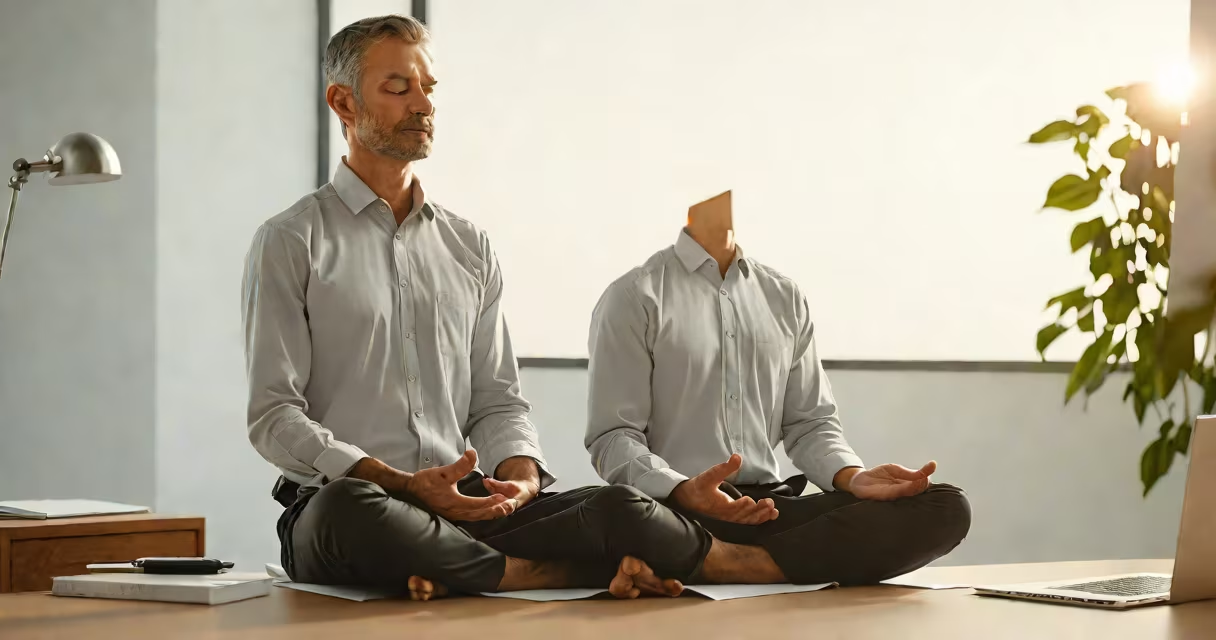
Mindfulness in work is the practice of intentionally focusing attention on the present moment during job tasks, without judgment. It involves observing thoughts, emotions, and physical sensations as they arise, helping employees stay grounded and reduce reactive responses. This approach improves concentration, emotional regulation, and decision-making under pressure.
Research from the University of California, Berkeley shows that even brief daily mindfulness exercises-just 10 minutes-can lead to measurable improvements in attention span and reduced cortisol levels, the hormone linked to stress. The practice isn't about emptying the mind but noticing what's happening now: a notification, a breath, a task in progress.
Unlike passive relaxation techniques, mindfulness in work requires active engagement. It's not a break from work-it's a way of doing work differently. Employees who apply it report fewer distractions, better prioritization, and improved communication with colleagues. A 2022 study published in the Journal of Occupational Health Psychology found that teams using structured mindfulness sessions had 23% lower burnout rates over six months compared to control groups.
Mindfulness in work operates through neuroplasticity-the brain's ability to rewire itself with consistent practice. When individuals repeatedly return their attention to the present-such as focusing on their breath during a meeting-they strengthen neural pathways associated with sustained attention and emotional regulation.
For example, a software developer facing a complex coding error might pause, take three slow breaths, and observe their frustration without reacting. This brief interruption prevents escalation and allows clearer thinking. Over time, such micro-practices build resilience against cognitive overload.
Neuroimaging studies show increased activity in the prefrontal cortex-the area responsible for planning and impulse control-during mindfulness sessions. This region is often underactive during high-stress work scenarios, leading to rushed decisions. Regular mindfulness restores balance.
Organizations implement mindfulness in work through structured programs. These fall into three categories based on duration and intensity:
| Type | Duration | Frequency | Use Case |
|---|---|---|---|
| Micro-practices | 1-3 minutes | Multiple times per day | Before meetings, after emails, during transitions |
| Group sessions | 15-30 minutes | Weekly or biweekly | Team check-ins, leadership retreats |
| Formal training | 6-8 weeks | Once weekly | Full organizational rollout, leadership development |
Companies like Google and Aetna have integrated mindfulness into employee wellness programs. Google's "Search Inside Yourself" program, developed by former engineer Chade-Meng Tan, includes modules on emotional intelligence, attention training, and mindful communication. Participants reported a 37% increase in self-reported focus and a 28% drop in perceived stress after completing the course.
A common misconception is that mindfulness requires sitting cross-legged for hours. That's not the case. The core element is awareness-not posture. You can practice mindfulness while walking to a meeting, typing a response, or listening to a colleague. The key is returning attention to the present when it drifts.
Mindfulness in work is often mistaken for stress management or time management. While both aim to improve performance, they differ fundamentally. Stress management focuses on removing or reducing external pressures. Time management organizes tasks. Mindfulness addresses internal state-how we relate to our experiences while working.
Another misunderstanding is that mindfulness leads to passivity. On the contrary, it sharpens responsiveness. A manager who practices mindfulness doesn't avoid tough feedback; they deliver it with clarity and less reactivity. They notice tension in their voice before speaking and adjust accordingly.
One non-obvious fact: mindfulness in work doesn't eliminate distractions-it changes your relationship to them. A 2021 study from Stanford University found that participants who practiced mindfulness were not less distracted, but they recovered faster from interruptions. Their attention returned to the task within 4 seconds on average, compared to 12 seconds in the control group.
In 2023, a product design team at a mid-sized SaaS company began implementing a 5-minute morning mindfulness session. Led by a team lead trained in mindfulness-based stress reduction (MBSR), the group sat quietly, focused on breath, and shared one intention for the day.
After four weeks, team members reported fewer misunderstandings in sprint planning. One designer noted, "I used to react emotionally when my wireframes were questioned. Now I pause, breathe, and ask 'What's the goal?' before responding." Project completion times improved by 14%, according to internal tracking.
The team didn't adopt meditation as a ritual. They used it as a tool to reset attention. When a new feature launch was delayed, instead of blaming, they held a 10-minute reflective session. The conversation shifted from blame to problem-solving. The delay was resolved in half the usual time.
Mindfulness in work isn't limited to personal habits. It scales to team culture. When leaders model mindful behavior-listening without interrupting, pausing before decision-making-they set a tone that reduces conflict and increases psychological safety.
Studies from Harvard Business Review confirm that teams with mindful leaders report higher trust and collaboration. One executive described leading a crisis meeting where silence lasted 12 seconds before anyone spoke. "That silence wasn't awkward," he said. "It was space for clarity."
Organizations don't need to train everyone in meditation to benefit. Simple practices-like starting meetings with a one-minute breathing pause or asking "What's one thing we're grateful for?"-build collective presence. These small acts create cumulative effects on team cohesion and innovation.
Mindfulness in work is not a trend. It's a skill rooted in neuroscience and behavioral psychology. It's not about being calm all the time. It's about recognizing when you're stressed, distracted, or overwhelmed-and choosing how to respond. With consistent application, it becomes part of the workflow, not a separate activity.