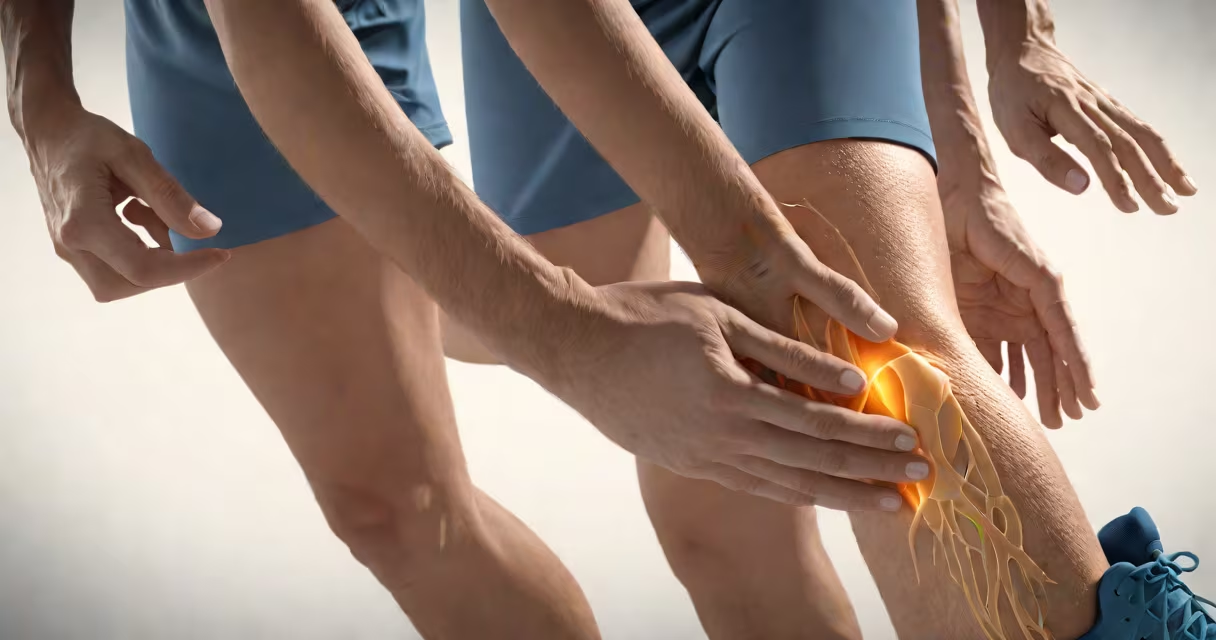
Thigh pain after jogging typically results from muscle strain, overuse, or poor running mechanics. It often appears during or shortly after activity and may involve the quadriceps, hamstrings, or adductor muscles.
Running engages multiple muscle groups in the lower limb. The quadriceps extend the knee and stabilize the patella, while the hamstrings flex the knee and extend the hip. Adductors pull the legs inward. When these muscles are pushed beyond their current capacity-due to sudden increases in distance, speed, or terrain-they develop microtears and inflammation, leading to soreness or sharp pain.
A 2021 study published in British Journal of Sports Medicine found that 68% of recreational runners reported musculoskeletal pain within a year, with thigh pain being among the most frequent locations. Most cases resolve with rest and recovery, but persistent or worsening pain may indicate a stress fracture, tendonitis, or nerve entrapment.
Pain arises when muscle fibers are stressed beyond their tolerance. This triggers localized inflammation, swelling, and nerve sensitivity. The body's response includes increased blood flow and immune cell recruitment, which can cause stiffness and tenderness.
For example, a runner who increases weekly mileage from 10 to 20 miles without adaptation may develop quadriceps strain. The muscle fibers fatigue, lose coordination, and fail to absorb impact properly. During stride, the quads contract repeatedly under load, leading to microscopic tears. Pain emerges during or after running, especially when descending hills or accelerating.
Repetitive motion also affects connective tissues. The iliotibial (IT) band, a thick fascia running along the outer thigh, can become inflamed due to friction against the femur. IT band syndrome presents as lateral thigh pain that worsens with each step, particularly on downhill runs.
Different patterns point to distinct issues. Identifying the location, timing, and quality of pain helps narrow the diagnosis.
| Pain Location | Common Cause | Typical Trigger | Red Flag |
|---|---|---|---|
| Front of thigh | Quadriceps strain or patellar tendinitis | Jumping, hill sprints, sudden acceleration | Pain with squatting or climbing stairs |
| Back of thigh | Hamstring strain or sciatica | Overstriding, sprinting, sudden stops | Sharp pain, numbness, tingling down leg |
| Inner thigh | Adductor strain or groin pull | Side-to-side movements, rapid turns | Pain when squeezing legs together |
| Outer thigh | IT band syndrome | Long-distance running, downhill terrain | Pain on first few steps after stopping |
One non-obvious distinction: pain from muscle strain usually improves with light movement and warm-up, while nerve-related pain (like sciatica) may worsen with prolonged sitting or bending forward.
Most thigh pain after jogging resolves in 3-7 days with rest, ice, compression, and elevation (RICE). But certain signs suggest a need for medical evaluation.
According to the American Academy of Orthopaedic Surgeons (AAOS), red flags include pain at rest, swelling, inability to bear weight, or pain that persists beyond 10 days despite rest. These may indicate a stress fracture, particularly in the femur or tibia.
I once treated a 35-year-old runner who reported persistent front thigh pain after increasing her long run from 8 to 15 miles. She initially rested for five days, but pain returned with every jog. An MRI revealed a stress reaction in the proximal femur-early-stage bone remodeling due to repetitive loading. She required six weeks of reduced activity and physical therapy before returning to full training.
Many assume thigh pain after jogging is "just soreness" and continue running through it. This delays healing and risks progression to chronic tendinopathy or partial tears.
Another error is treating all thigh pain the same. A runner with inner thigh pain may assume it's a hamstring issue and stretch aggressively-worsening a groin strain. Proper identification requires attention to pain location and movement patterns.
Some confuse thigh pain with referred pain from the lower back. Sciatic nerve irritation can mimic hamstring tightness. A single session of targeted lumbar mobilization and core activation exercises resolved symptoms in a patient whose pain had lasted six weeks despite stretching and foam rolling.
Stop running until pain subsides. Apply ice for 15 minutes every 2-3 hours during the first 48 hours. Avoid stretching tight muscles-this can increase strain. Instead, focus on gentle mobility and low-impact cross-training like swimming or cycling.
If pain lasts longer than a week, consult a physical therapist. They assess gait, muscle imbalances, and joint alignment. A 2020 randomized controlled trial in Journal of Orthopaedic & Sports Physical Therapy showed that runners who received early physical therapy had a 42% faster return to running compared to those who waited.
Return to jogging gradually. Increase weekly mileage by no more than 10%. Incorporate strength work-especially glute and core activation-to improve stability and reduce compensatory strain on the thighs.