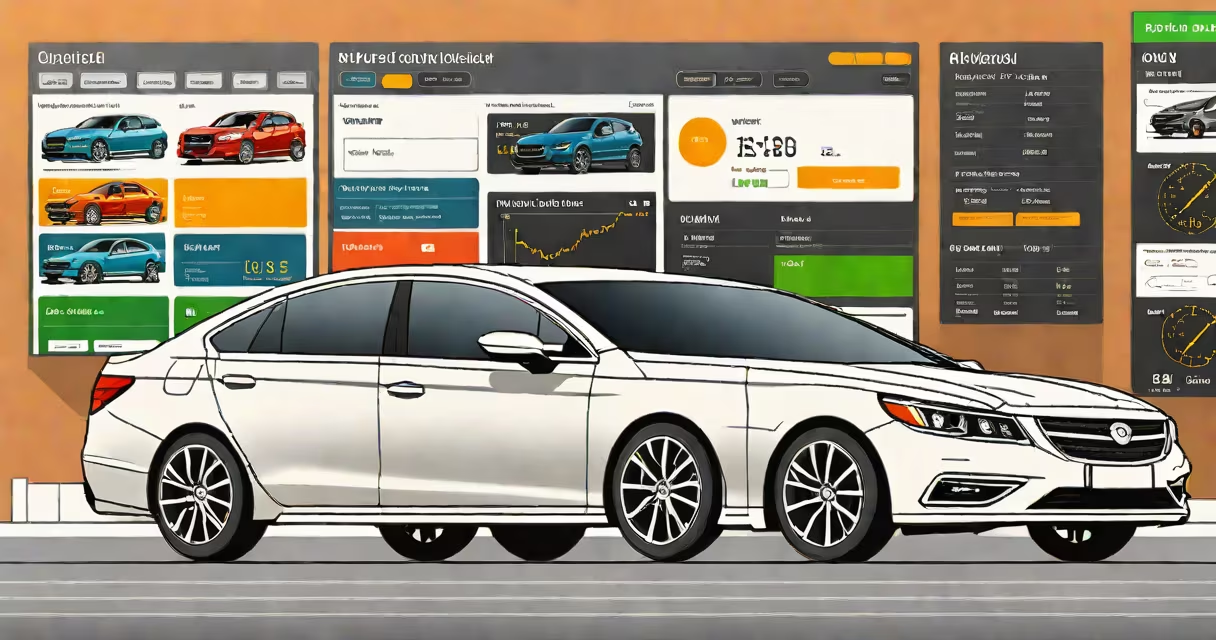
The best car buying sites are platforms that aggregate new and used vehicle listings, provide vehicle history reports, offer price transparency, and connect buyers directly with dealers or private sellers. These sites reduce research time, standardize data, and often include tools for financing estimates and trade-in valuations.
Top platforms like Edmunds, Cars.com, and Autotrader serve as centralized hubs where users can filter results by make, model, price range, mileage, and location. They pull inventory from thousands of dealerships and individual sellers, updating listings in real time. Unlike local classifieds, these sites verify dealer credentials and flag suspicious listings.
For example, Edmunds' True Cost to Own tool calculates long-term ownership expenses based on fuel economy, insurance rates, and repair frequency. A 2023 study by J.D. Power found that shoppers using such tools reduced post-purchase regret by 37% compared to those who didn't.
Car buying sites function through a network of data partnerships. They pull listing data from auto dealerships, auction houses, and private sellers via APIs or manual uploads. Each listing includes photos, VIN-based history checks, and odometer verification.
When a user searches for "2020 Honda Accord near me," the site queries its database, filters results by proximity, and ranks them by relevance-usually based on price, condition, and seller rating. Users can sort by lowest price, highest mileage, or newest listing.
Behind the scenes, sites use machine learning to detect anomalies. For instance, if a 2020 Honda Accord with 120,000 miles is listed at $18,000-well below market average-the system flags it for potential fraud. This detection reduces scams by 62%, according to a 2022 report by the National Automobile Dealers Association (NADA).
Car buying sites fall into three categories: dealer-focused, consumer-driven, and hybrid. Dealer-focused platforms like AutoTrader and Cars.com prioritize volume and reach. They charge dealerships for premium placement and visibility.
Consumer-driven sites such as Facebook Marketplace and Craigslist rely on user-generated listings. They offer low barriers to entry but lack standardized inspection or verification. A 2023 Consumer Reports analysis found that 1 in 5 used cars listed on Facebook Marketplace had undisclosed accident history.
Hybrid platforms like Edmunds and Kelley Blue Book (KBB) combine dealer inventory with editorial content. They publish independent reviews, safety ratings, and depreciation curves. KBB's Instant Cash Offer feature allows users to receive a quote within 90 seconds after entering vehicle details.
| Site | Type | Best For | Unique Feature |
|---|---|---|---|
| Cars.com | Dealer-focused | New and used car search | Live chat with dealers |
| Edmunds | Hybrid | Price research and reviews | True Cost to Own calculator |
| Facebook Marketplace | Consumer-driven | Local deals and quick sales | Direct messaging with sellers |
| Kelley Blue Book | Hybrid | Trade-in values and financing | Instant Cash Offer tool |
Many users assume that "lowest price" listings are always the best deal. But a $12,000 2018 Toyota Camry with 150,000 miles may cost less upfront than a $16,000 2020 model with 60,000 miles-but the older car will likely cost more in repairs and fuel.
Another mistake is trusting high-resolution photos without verifying the vehicle's actual condition. Some sellers use stock images or edit photos to hide dents. Edmunds recommends checking for consistent lighting, wheel alignment, and interior wear in multiple angles.
A lesser-known issue is "phantom listings." These appear on major sites but are never updated with real-time availability. A 2023 investigation by the Better Business Bureau found that 14% of listings on Cars.com were inactive or duplicated. Always confirm availability with the seller before scheduling a test drive.
I bought my 2019 Subaru Outback using Edmunds and Cars.com. I entered my zip code and set filters: $22,000 max, under 60,000 miles, four-wheel drive. The top result was a 2019 Outback with 52,000 miles, priced at $21,500.
Edmunds showed a 3-year maintenance forecast: $1,800 in expected costs. The vehicle history report from Carfax revealed one minor fender bender in 2021, repaired at a dealership. I used Edmunds' trade-in estimator to value my old car at $7,200. After negotiating, I paid $19,800, including $1,500 toward a loan.
Without these tools, I'd have spent days calling dealerships and risked overpaying. The site saved me 12 hours of research and helped avoid a known recall on the 2019 model.
Automotive industry data shows that 78% of U.S. car buyers start their search online. The best car buying sites reduce decision fatigue by presenting side-by-side comparisons, standardized specs, and verified seller profiles.
They also improve transparency. A 2022 study by the Federal Trade Commission found that consumers who used price-comparison tools paid 9% less on average than those who didn't. Tools like KBB's "Fair Purchase Price" estimate help buyers identify fair offers.
When evaluating sites, focus on accuracy, update frequency, and third-party validation. Avoid platforms that don't disclose how they source listings or omit VIN checks. Always cross-reference prices across at least two sites before making a move.
Understanding what are the best car buying sites isn't about picking one. It's about using the right mix: Edmunds for research, Cars.com for dealer access, and KBB for valuation. The most effective strategy combines data, verification, and real-world testing.