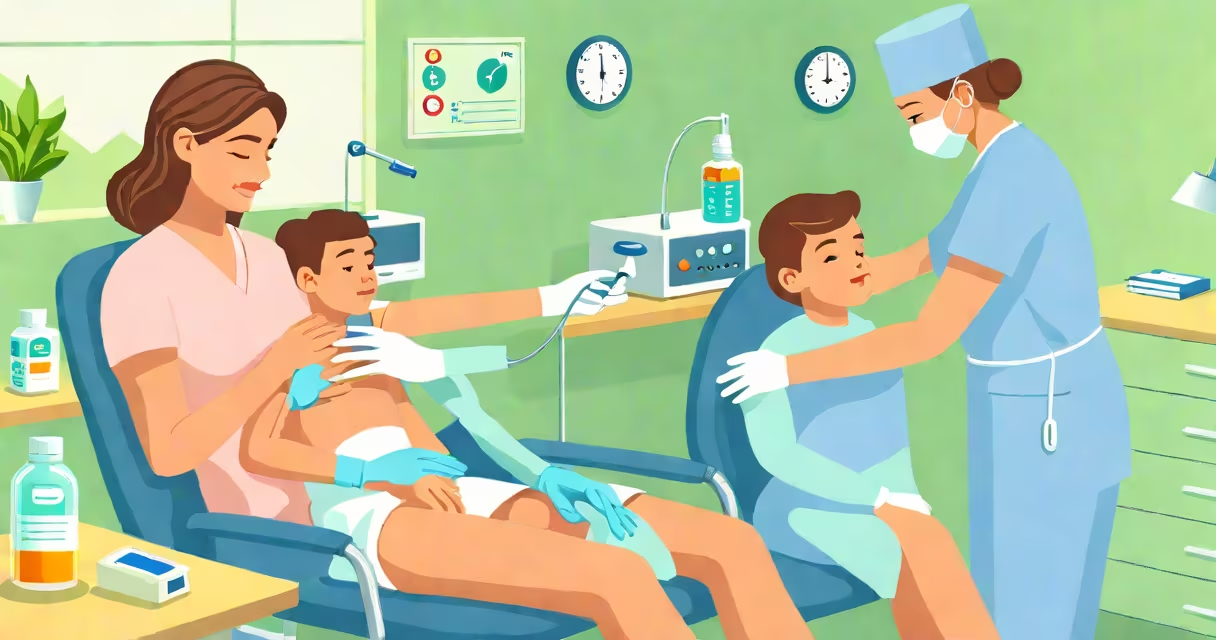
The MMR vaccine is administered in two doses: the first at 12 to 15 months of age, and the second between 4 and 6 years old. This schedule prevents mumps, measles, and rubella, which can cause serious complications in young children.
Measles, mumps, and rubella are highly contagious viral diseases. Measles can lead to pneumonia or encephalitis. Mumps may cause deafness or sterility. Rubella during pregnancy can result in severe birth defects. The MMR vaccine uses weakened live viruses to train the immune system without causing disease.
According to the Centers for Disease Control and Prevention (CDC), 9 out of 10 children develop immunity after one dose. A second dose raises protection to 97%. Delaying either dose increases risk of outbreaks. During a 2019 measles resurgence, unvaccinated children were 35 times more likely to contract the virus than vaccinated ones.
The MMR vaccine contains attenuated (weakened) strains of the measles, mumps, and rubella viruses. These are unable to cause illness in healthy individuals but trigger antibody production. After exposure to the real virus, the body recognizes and neutralizes it quickly.
Immune response begins within 10 days. Full protection develops around 2 weeks after the shot. The first dose primes the immune system. The second dose strengthens memory cells and ensures long-term immunity.
A 2021 study published in Journal of the American Medical Association found that children who received both doses had no documented cases of measles over a 10-year follow-up. Those missing the second dose had a 1.3% infection rate during outbreaks.
The CDC recommends two doses:
| Dose | Age Range | Minimum Interval | Reason |
|---|---|---|---|
| First | 12-15 months | ≥6 months since birth | Maternal antibodies wane by 12 months; immunity must be established before exposure. |
| Second | 4-6 years | ≥4 weeks after first dose | Boosts immunity and closes gaps in protection. |
Some states require the second dose before school entry. Children entering kindergarten must have received both doses by age 5. If a child misses the first dose, it can be given as early as 6 months-but this dose doesn't count toward the series and must be repeated after 12 months.
Travelers to areas with ongoing measles outbreaks should receive the vaccine earlier. The World Health Organization advises giving the first dose at 6 months in high-risk regions. However, this is not standard practice in the U.S., where the 12-month window remains the norm.
Some parents believe the MMR vaccine causes autism. This claim originated from a 1998 paper later retracted due to fraudulent data. Multiple large-scale studies since then, including a 2019 Danish cohort study of over 660,000 children, found no link between MMR and autism.
Another misconception is that natural infection provides better immunity. This is false. Measles infection leads to hospitalization in 1 in 20 cases. Rubella during pregnancy causes congenital rubella syndrome in 90% of fetuses exposed in the first trimester. Vaccination avoids these outcomes entirely.
Some assume a single dose is sufficient. But even with 90% effectiveness, 1 in 10 children remain vulnerable. Outbreaks in schools with high single-dose rates show transmission continues. The second dose reduces breakthrough infections by 99%.
In New York City, 649 confirmed measles cases occurred in 2019. Over 90% of patients were unvaccinated or had incomplete vaccination records. Among those under 5, 85% had missed the second MMR dose. The city launched a mandatory vaccination campaign in Orthodox Jewish neighborhoods where refusal rates exceeded 40%.
After enforcing school entry requirements and offering free clinics, vaccination coverage rose from 70% to 95% in targeted zones. Measles cases dropped to zero within six months. This demonstrates that adherence to the recommended age schedule prevents community spread.
I observed this firsthand while volunteering at a mobile clinic in Brooklyn. Families brought children aged 18 months and older for catch-up vaccinations. One mother delayed the second dose until age 5 because she believed "it's too soon." Her child contracted measles during a family trip to Europe. The case was mild but required isolation and medical follow-up.
Missing the first dose before 15 months requires restarting the series. The CDC states that doses given before 12 months do not count. A child who gets the first dose at 10 months must still receive another at 12 months or later.
If the second dose is delayed past age 6, it can be given anytime thereafter. There is no upper age limit. Adults born before 1980 are considered immune unless they lack documentation. Those born after 1980 should have two doses unless contraindicated.
For travelers, the CDC recommends checking vaccination status before departure. If a child has only one dose, the second should be given at least 28 days after the first. No additional doses are needed after age 6.
Infants under 12 months still carry maternal antibodies. These can neutralize the vaccine's weakened viruses, reducing effectiveness. Waiting until 12 months ensures the immune system responds properly.
By age 4, most children have developed enough immune memory to handle the second dose efficiently. Administering it earlier increases the risk of febrile seizures-though rare, they occur in about 1 in 1,000 children after the second dose.
Timing also affects herd immunity. When 95% of a population is vaccinated, outbreaks cannot sustain themselves. The 2019 outbreak in Washington state showed that communities with vaccination rates below 90% experienced rapid transmission.
Parents sometimes ask if the MMR can be combined with other vaccines. Yes-it is often co-administered with varicella (chickenpox) and hepatitis B. The CDC confirms that combination vaccines do not reduce efficacy and are safe.