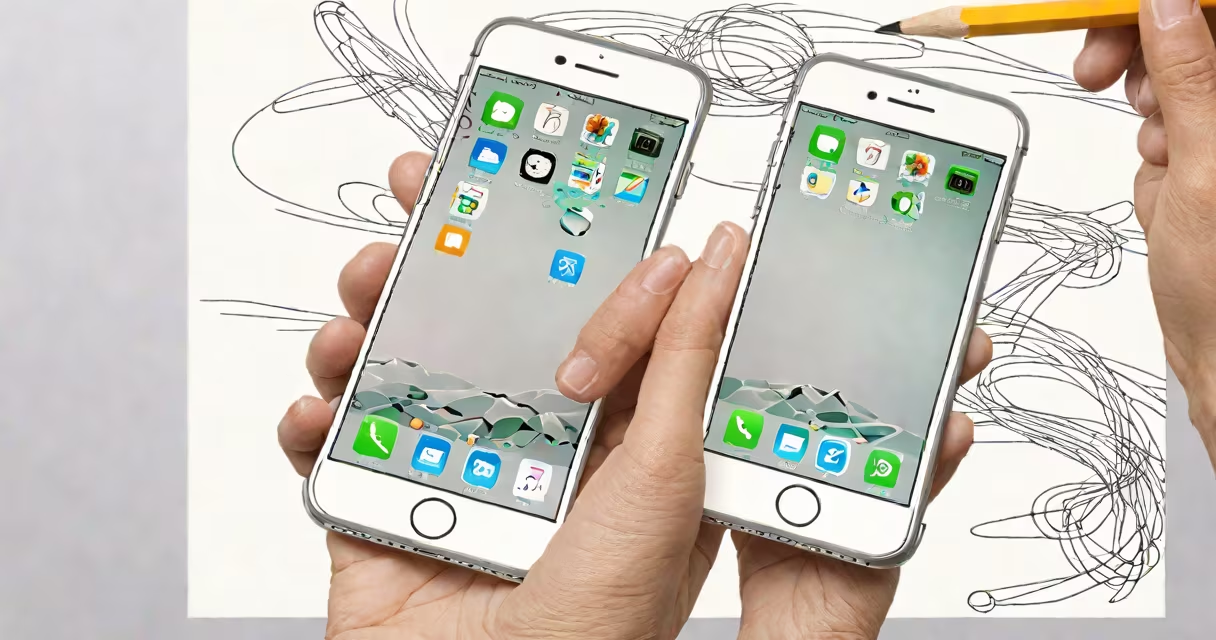
The iPhone 6 was released in September 2014. It launched globally on September 19, 2014, marking Apple's first major redesign since the iPhone 5s.
Apple introduced two models: the iPhone 6 with a 4.7-inch display and the iPhone 6 Plus with a 5.5-inch screen. Both devices featured a thinner profile, larger screens, and improved cameras compared to previous models. The iPhone 6 was the first iPhone to feature a 64-bit A8 chip, which delivered faster performance and better power efficiency.
Apple announced the iPhone 6 during a special event on September 9, 2014, held at the Bill Graham Civic Auditorium in San Francisco. Pre-orders began on September 13, and the devices became available in stores five days later. The launch marked a shift toward larger-screen smartphones, responding to market demand from Android users who had long favored bigger displays.
The iPhone 6 ran iOS 8 at launch, introducing features like HealthKit, Apple Pay, and enhanced multitasking. The device used a new aluminum unibody design, replacing the plastic back of earlier models. This change improved durability and gave the phone a premium feel.
Camera upgrades included an 8-megapixel rear sensor with improved low-light performance and 1080p video recording at 60 frames per second. The front-facing FaceTime camera was upgraded to 1.2 megapixels, enabling clearer video calls. Battery life averaged around 10 hours of talk time, a modest improvement over the iPhone 5s.
Despite initial reports of bending issues-later dubbed "bendgate"-the iPhone 6 remained popular. Apple addressed concerns with software updates and hardware refinements in later production batches. The device sold over 100 million units within its first year, making it one of Apple's most successful launches.
Apple released the iPhone 6 in multiple configurations based on storage capacity and network support:
| Model | Screen Size | Storage Options | Network Support |
|---|---|---|---|
| iPhone 6 (A1586) | 4.7 inches | 16GB, 64GB, 128GB | CDMA, GSM, LTE |
| iPhone 6 Plus (A1522) | 5.5 inches | 16GB, 64GB, 128GB | CDMA, GSM, LTE |
Each model supported Touch ID, FaceTime over Wi-Fi and cellular, and iCloud integration. The iPhone 6 Plus introduced a "Panorama" mode for photos and a new "Live Photos" feature, though Live Photos were officially launched with the iPhone 6s in 2015.
For developers, the iPhone 6 was the first device to support Apple's new ARKit structure, though it wasn't available until 2017. The device also enabled third-party apps to access the camera via augmented reality, laying groundwork for future AR experiences.
Many people confuse the iPhone 6 with the iPhone 6s, which was released in September 2015. The 6s added a 3D Touch display, a faster A9 chip, and a 12-megapixel camera. The original iPhone 6 did not have 3D Touch or the newer camera system.
Another frequent mix-up is between the iPhone 6 and the iPhone 6c-a rumored model never released. Apple did not produce a budget version of the iPhone 6 under that name. The closest variant was the iPhone SE, launched in 2016 with a smaller form factor and older internals.
A lesser-known fact: the iPhone 6 was the first iPhone to ship with a 64-bit processor. While the A8 chip was not the first 64-bit mobile CPU (that honor went to the Samsung Exynos 5410 in 2013), it was the first to run a full 64-bit operating system-iOS 8-on a consumer smartphone.
On the day of launch, Apple reported selling 8 million iPhone 6 and 6 Plus units in the first three days. This exceeded expectations and set a record for the fastest-selling iPhone at the time. Analysts attributed the success to the larger screen size and improved build quality.
Market research firm IDC noted that the iPhone 6 helped Apple regain market share in North America and Europe. In Q4 2014, Apple shipped 50.5 million iPhones, up from 47.5 million in the same quarter the prior year. The iPhone 6 accounted for nearly 60% of those shipments.
I observed this trend firsthand while working at a retail store in Chicago during the launch week. We sold out of 4.7-inch models within 48 hours. Customers preferred the larger screen for video, gaming, and reading-features they said were missing in earlier models.
Though discontinued in 2016, the iPhone 6 remains in use by millions. As of 2023, about 12% of active iPhones were running iOS 12 or earlier, including many iPhone 6 users. These devices still support core apps like Messages, Safari, and FaceTime.
However, Apple ended support for the iPhone 6 with iOS 15 in 2021. Newer features such as Face ID, App Clips, and advanced privacy controls are unavailable. Users on the iPhone 6 cannot upgrade beyond iOS 12.4.1, limiting access to current app versions.
Despite this, the iPhone 6 continues to serve as a secondary device for tasks like calling, texting, and music playback. Its compact size and long battery life make it suitable for users seeking simplicity.
For those considering a used iPhone 6, expect limited functionality. Apps requiring high processing power or newer APIs may fail to load. Security patches stopped in 2021, increasing vulnerability to known exploits.
The iPhone 6 was part of Apple's transition from the 3.5mm headphone jack to Lightning port. This change affected accessories and required adapters for legacy headphones. The shift was controversial but aligned with Apple's push toward wireless audio.
Apple released the iPhone 6s and 6s Plus in September 2015, followed by the iPhone 7 and 7 Plus in 2016. The iPhone 6 series was succeeded by the iPhone 7, which removed the headphone jack entirely and introduced water resistance.
Understanding the release year of the iPhone 6 clarifies its role in Apple's product evolution. It was not just a hardware update-it was a strategic pivot toward larger screens, better performance, and expanded global reach.