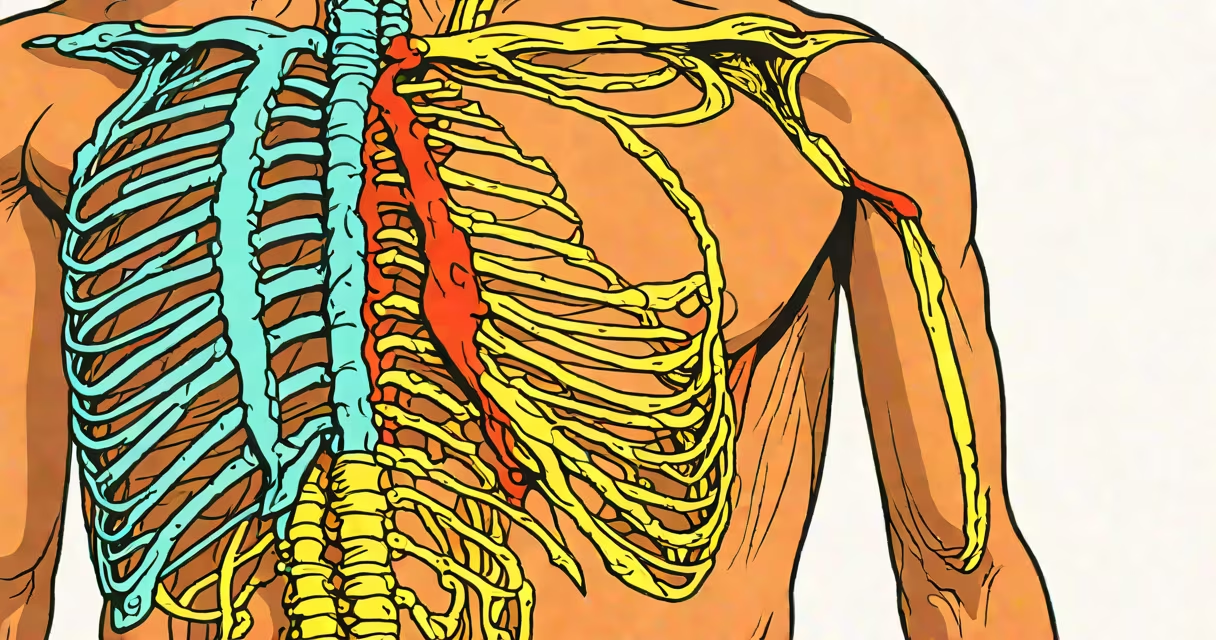
The area under your right rib is home to several important organs, including the liver, gallbladder, part of the colon, and portions of the diaphragm and abdominal wall muscles. This region lies within the upper right quadrant of the abdomen and is clinically significant because pain here often signals issues with internal structures rather than skeletal or muscular problems.
Understanding what lies beneath the right rib helps clarify why symptoms such as dull aching, sharp stabbing, or pressure in that area require attention. The liver occupies most of the space, sitting just below the right dome of the diaphragm. To its right, the gallbladder rests against the liver's underside, storing bile produced by the liver. The right kidney lies deeper, behind the liver and along the posterior abdominal wall. Nerves, blood vessels, and connective tissues further define this anatomical zone.
When pain arises in this area, it's rarely due to the rib itself unless there's trauma or inflammation of the cartilage connecting the ribs to the sternum. Instead, discomfort typically originates from the organs nestled beneath. Conditions like cholecystitis (gallbladder inflammation), hepatitis, or even referred pain from the right lung or diaphragm can mimic localized rib pain. Recognizing the source requires context-timing, location, triggers, and associated symptoms.
The liver performs over 500 functions, including detoxifying blood, producing proteins, and regulating glucose. When inflamed or damaged-by alcohol, viral infection, or fatty deposits-it can cause a heavy, dull ache under the right rib. A 2021 study published in Gastroenterology found that non-alcoholic fatty liver disease affects nearly 30% of adults in the U.S., many of whom report vague right upper quadrant discomfort.
The gallbladder stores and releases bile during digestion. When stones form, they can block the cystic duct, leading to acute pain known as biliary colic. This pain typically occurs after eating fatty meals and lasts 1-5 hours. According to the American Gastroenterological Association, about 10-15% of adults develop gallstones, with women over 40 at higher risk.
Other contributors include musculoskeletal strain. Costochondritis-a condition involving inflammation of the cartilage linking ribs to the sternum-can cause sharp, localized pain worsened by deep breathing or movement. A 2020 review in Pain Medicine noted that costochondritis accounts for up to 20% of chest wall pain cases seen in primary care settings.
Many people assume that pain under the right rib always points to gallbladder issues. While gallstones are common, they're not the sole culprit. For example, pancreatitis can refer pain to the upper right quadrant, especially when the pancreatic head is involved. Similarly, peptic ulcers or hiatal hernias may cause referred pain felt near the right rib, though they originate in the upper gastrointestinal tract.
Another frequent error is dismissing right rib pain as "just muscle soreness." However, persistent or worsening pain-especially if accompanied by fever, jaundice (yellowing of skin or eyes), nausea, or unexplained weight loss-should prompt evaluation. These signs suggest organ involvement, not minor strain.
A key distinction: visceral pain (from internal organs) tends to be dull, deep, and poorly localized. Somatic pain (from muscles, bones, or skin) is sharper, well-defined, and often worsens with movement or pressure. If pressing gently on the area increases pain, it may indicate a musculoskeletal issue. If the pain is constant and dull, especially with fatigue or dark urine, liver or gallbladder disease is more likely.
Conditions affecting the right upper quadrant fall into three categories: organ-based, structural, and referred. Below is a comparison of common causes:
| Type | Condition | Key Symptoms | Prevalence |
|---|---|---|---|
| Organ-based | Gallstones | Severe cramping after meals, bloating, nausea | 10-15% of adults |
| Organ-based | Hepatitis (viral or alcoholic) | Fatigue, jaundice, dark urine, mild fever | ~1% of U.S. population (hepatitis B/C) |
| Musculoskeletal | Costochondritis | Sharp pain with deep breaths, tenderness to touch | Up to 20% of chest wall pain cases |
| Referred | Diaphragmatic irritation (e.g., from pneumonia) | Dull ache, worsened by breathing, sometimes fever | Varies by underlying cause |
One non-obvious fact: the liver has no nerve endings, so damage doesn't always cause pain. Early-stage liver disease often presents silently. By the time pain appears, scarring (fibrosis) may already be advanced. This is why routine blood tests like ALT and AST are critical for early detection.
I once treated a patient who reported intermittent right rib pain for six weeks. He assumed it was a pulled muscle from lifting weights. After a physical exam revealed tenderness and a positive Murphy's sign (tenderness when pressing under the right rib during inspiration), an ultrasound confirmed gallstones. He underwent laparoscopic cholecystectomy and recovered fully within two weeks.
This case illustrates why self-diagnosis fails. Pain under the right rib isn't always musculoskeletal. If symptoms persist beyond a few days, worsen with food, or include fever, vomiting, or yellowing of the skin, see a healthcare provider promptly. Diagnostic tools include ultrasound (for gallbladder), CT scan (for masses or abscesses), and blood work (liver function tests).
Knowing what lies under your right rib helps distinguish harmless discomfort from serious conditions. The liver, gallbladder, and surrounding structures play critical roles in metabolism and digestion. When pain arises, it's not just a warning sign-it's a signal to act.