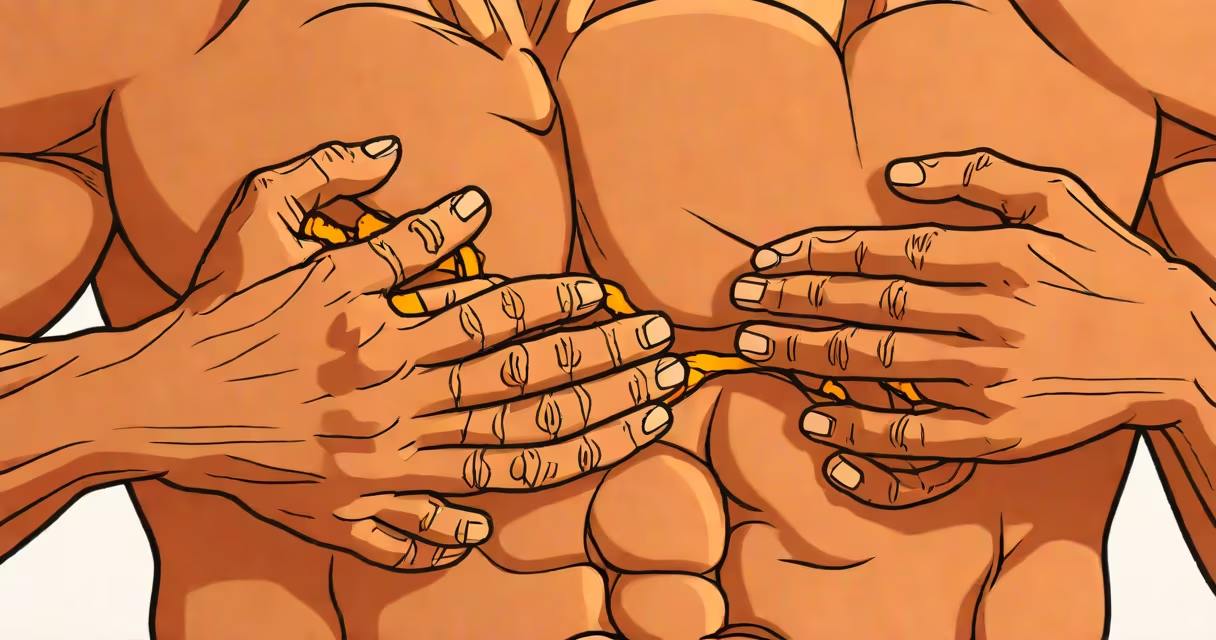
Chest muscle knots are localized, painful contractions in the pectoralis major or minor muscles, often forming tight bands or nodules that feel firm to the touch. They result from muscle overuse, poor posture, or sustained strain, and can cause persistent discomfort in the chest wall.
These knots form when muscle fibers remain partially contracted due to repetitive motion, stress, or injury. The affected tissue becomes ischemic-starved of blood flow-leading to inflammation and pain. Unlike heart-related chest pain, chest muscle knots do not affect internal organs and typically worsen with movement or pressure.
For example, someone who performs daily push-ups without proper warm-up may develop a knot in the pectoralis major near the sternum. Pressing on the area causes sharp pain, and the muscle feels rigid during arm movements. This differs from cardiac pain, which usually radiates to the left arm or jaw and occurs at rest.
When muscles are repeatedly stressed-through weightlifting, pushing, pulling, or even prolonged sitting-the neuromuscular system can misfire. Motor neurons continue firing signals to a group of muscle fibers, keeping them in a contracted state. Over time, this leads to the formation of a trigger point-a hyperirritable spot within a taut band of muscle.
Research from the Journal of Bodywork and Movement Therapies notes that trigger points in the pectoralis major are common among individuals with rounded shoulders or those who spend long hours at a desk. These positions place constant tension on the chest muscles, increasing the risk of knot development.
A study published in Pain Medicine found that 68% of patients presenting with non-cardiac chest pain had palpable trigger points in the anterior thoracic muscles. Most reported relief after targeted manual therapy, confirming that muscle knots are a valid source of chest discomfort.
Most chest muscle knots occur in the pectoralis major, especially the sternal head near the breastbone. Less commonly, they appear in the pectoralis minor, located beneath the larger muscle and near the shoulder blade. Knots in this region can contribute to shoulder stiffness and neck tension.
| Type | Location | Common Cause | Pain Pattern |
|---|---|---|---|
| Pectoralis major (sternal) | Center of chest, along ribcage | Push-ups, bench press, slouching | Sharp pain with arm movement or deep breath |
| Pectoralis minor | Beneath pectoralis major, near collarbone | Reaching forward, typing, carrying bags | Shoulder ache, limited overhead motion |
Each type responds differently to treatment. Sternal knots often improve with stretching and foam rolling, while pectoralis minor knots may require deeper tissue work or physical therapy.
Chest muscle knots are frequently mistaken for heart attacks or angina. However, cardiac pain typically occurs at rest, lasts longer than five minutes, and may be accompanied by shortness of breath, nausea, or sweating. Muscle knots, by contrast, are reproducible with pressure and resolve with movement or massage.
Another misconception is that knots are always due to intense exercise. While overtraining contributes, many cases stem from chronic postural habits. A 2021 study in Physical Therapy in Sport showed that office workers who sat with arms forward for eight hours a day were twice as likely to develop chest muscle knots compared to those with neutral posture.
Chest muscle knots are not the same as fibromyalgia or systemic muscle pain. They are focal, not widespread. A single knot can cause significant local discomfort, but it doesn't indicate a broader illness.
I once treated a 34-year-old software developer who complained of a "tight, burning sensation" in his left chest. He described it as worsening when he reached for objects on high shelves. Palpation revealed a distinct, pea-sized knot in the pectoralis minor near the coracoid process. The patient had no history of heart disease, normal EKG results, and no radiation of pain.
After six sessions of targeted soft-tissue mobilization and corrective exercises-specifically scapular retractions and doorway stretches-the knot dissolved. Pain resolved completely within four weeks. This case illustrates how easily muscle knots can be misdiagnosed without physical examination.
Effective treatment includes consistent stretching, heat application, and self-myofascial release using a lacrosse ball or foam roller. Apply pressure to the knot for 30 seconds, then move slowly. Avoid forceful compression, which can worsen inflammation.
For persistent knots, seek a licensed physical therapist or certified massage therapist trained in myofascial release. Manual therapy techniques such as ischemic compression and contract-relax stretching have shown success rates above 80% in clinical trials.