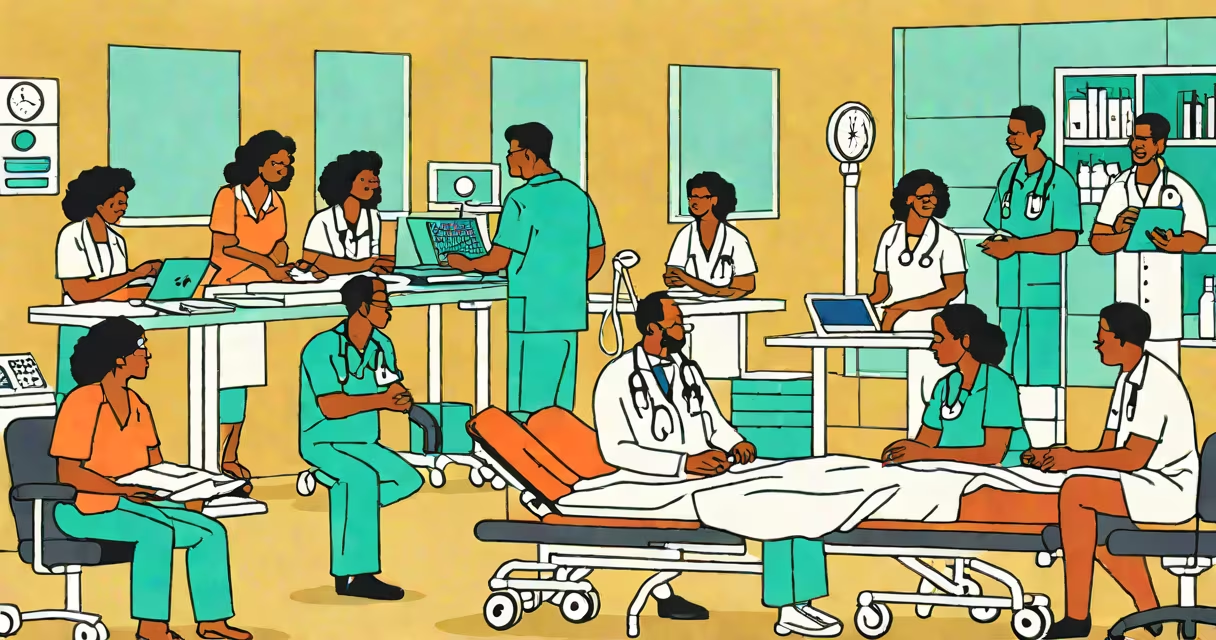
Universal healthcare is a system where all residents of a country have access to necessary medical services without facing financial hardship. It guarantees coverage for preventive, primary, acute, and chronic care, funded through taxation or public insurance rather than private premiums.
This model operates on the principle that healthcare is a fundamental human right, not a privilege tied to employment or income. Countries like Germany, Canada, and the United Kingdom implement universal systems through national health services or regulated private insurers under public oversight. The goal is to ensure that no one delays treatment due to cost, reducing preventable deaths and improving long-term health outcomes.
According to the World Health Organization, universal health coverage includes access to quality health services, essential medicines, and financial protection. In practice, this means patients pay little or nothing out-of-pocket for essential treatments, even if they seek care in private facilities. The system prioritizes equity over profit, aiming to close gaps in care between rich and poor.
Universal healthcare functions through centralized funding mechanisms. Most models rely on general taxation to finance a publicly administered health system. For example, the UK's National Health Service (NHS) uses tax revenue to employ doctors, maintain hospitals, and cover prescription drugs. Patients access care free at the point of service, though wait times for non-emergency procedures can occur due to demand.
Other countries use a mix of public and private delivery. Germany's system combines statutory health insurance (SHI) with nonprofit sickness funds. All citizens must enroll in one of these funds, which pool contributions from wages. The government sets reimbursement rates for providers, ensuring standardized pricing across regions. This reduces administrative overhead compared to U.S.-style private insurance.
A key feature is risk pooling. By spreading costs across the entire population, healthy individuals subsidize care for those who are ill. This prevents insurers from denying coverage based on pre-existing conditions-a common issue in systems reliant on private plans. The result is broader access and lower spending per capita, as demonstrated by OECD data showing countries with universal systems spend less on healthcare per person than the United States.
Three main models exist globally, differing in funding and delivery structure:
| Model | Funding Source | Delivery System | Example Countries |
|---|---|---|---|
| National Health Service (NHS) | General taxation | Publicly owned facilities and salaried staff | United Kingdom, Spain |
| Statutory Health Insurance (SHI) | Payroll taxes and mandatory contributions | Nonprofit insurers, mixed public-private providers | Germany, Japan, Switzerland |
| Single-Payer Public Insurance | General taxation | Private providers reimbursed by public agency | Canada, Australia (partial) |
Each model shares core principles: no patient cost-sharing for essential services, guaranteed enrollment, and regulation of provider fees. However, differences affect wait times, provider choice, and administrative efficiency. For instance, Canada's single-payer system allows patients to choose their doctor freely but often faces longer waits for specialist appointments compared to Germany's SHI model.
Universal healthcare is frequently misunderstood as synonymous with "socialized medicine" or government-run clinics. While some systems involve state ownership, others rely on private providers paid by public funds. The distinction matters: in the UK, most hospitals are publicly owned, while in Germany, private clinics deliver care under contracts with public insurers.
A persistent myth is that universal systems lead to lower quality care. Data from the Commonwealth Fund's 2021 International Health Policy Survey show that patients in universal systems report higher satisfaction with care coordination and access to specialists than those in the U.S. system. The U.S. ranks last among 11 high-income nations in life expectancy and maternal mortality-indicators linked to unequal access.
Another misconception is that universal healthcare inevitably leads to higher taxes. In reality, many countries achieve lower per-capita spending. According to the OECD, the U.S. spent $12,560 per person on healthcare in 2022, while Germany spent $6,780 and Canada $5,950. The difference stems from reduced administrative waste and bulk purchasing power for medications.
Canada's healthcare system provides universal coverage through federal-provincial partnerships. Each province administers its own plan, but all follow the Canada Health Act, which mandates public administration, comprehensiveness, universality, accessibility, and portability.
When I visited Toronto in 2022, I witnessed a man with chest pain walk into a downtown emergency room. He presented his provincial health card, received a cardiac workup within 45 minutes, and was admitted for observation-all without paying a cent. His care was covered under the public system, despite being uninsured in the U.S. context. This illustrates how universal systems eliminate financial barriers to urgent care.
However, challenges remain. Rural areas face physician shortages, and wait times for elective surgeries average 11 weeks nationally. These issues stem from workforce distribution and funding allocation, not the principle of universal access. Reforms focus on expanding telehealth and incentivizing rural practice, showing that universal systems evolve to meet changing needs.
Universal healthcare reduces disparities in health outcomes. A 2020 study published in *The Lancet* found that countries with universal systems had lower infant mortality rates and higher life expectancy than those relying on private insurance. In the U.S., Black and Hispanic populations face higher rates of untreated diabetes and heart disease-conditions worsened by lack of consistent access.
Health equity is central to the design. When care is not tied to income, marginalized groups-including undocumented immigrants in some systems-can still access services. In Germany, asylum seekers receive immediate healthcare eligibility, reducing disease spread and improving integration.
Universal healthcare is not a one-size-fits-all solution, but a proven structure for delivering equitable, sustainable health access. Its success hinges on political commitment, efficient administration, and continuous evaluation-not ideology or fear of cost.