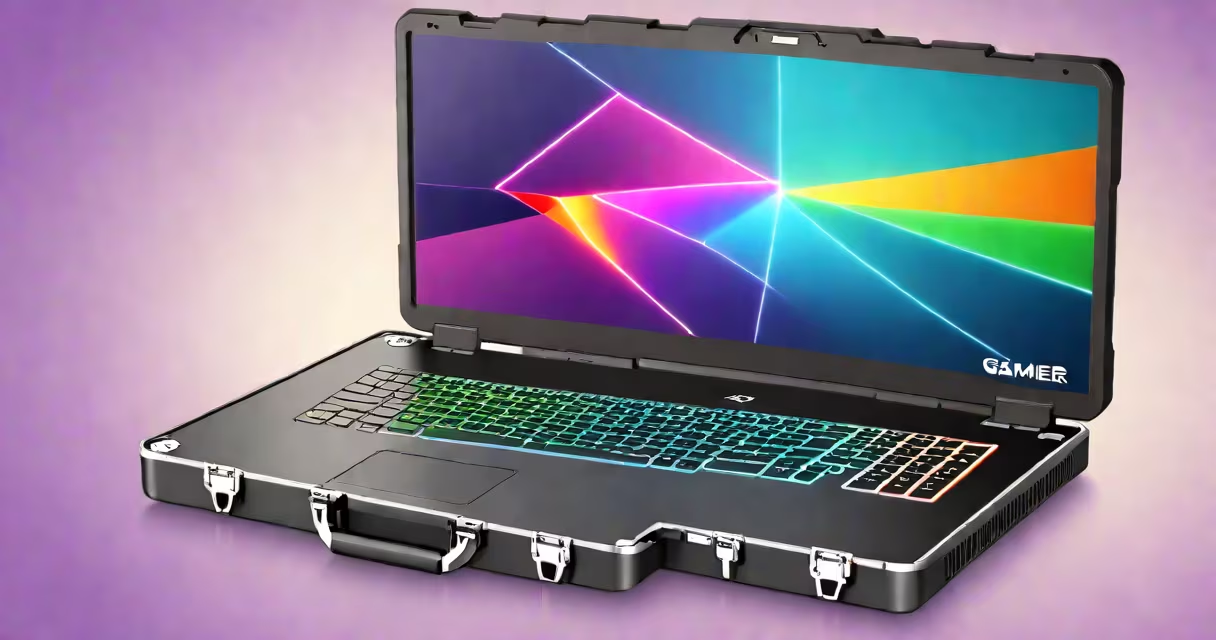
A tour PC gamer is a custom-built, transportable gaming system combining a high-performance desktop PC with a durable, wheeled carrying case. Designed for gamers who attend events, conventions, or LAN parties, it enables consistent, high-frame-rate gameplay anywhere.
This setup isn't just a laptop with a backpack. It's a purpose-built rig that balances power, size, and durability. The core components-CPU, GPU, RAM, storage-are selected for peak performance under load, while the chassis is engineered to protect them during transit.
Unlike standard laptops, which sacrifice performance for portability, a tour PC gamer maintains desktop-level capabilities. It runs modern AAA titles at 1080p or 1440p with high settings, often exceeding 60 frames per second. This makes it ideal for competitive play, streaming, or showcasing hardware at gaming expos.
The system operates like a traditional desktop PC. Components connect via standard internal interfaces-PCIe for the GPU, SATA or NVMe for storage, DDR4/DDR5 for memory. Power is drawn from a wall outlet or portable battery pack, depending on the model.
When traveling, the entire unit fits into a reinforced case with wheels, shock-absorbing padding, and secure latches. Most models include a detachable monitor mount or fold-out stand, allowing quick setup at a venue. Some integrate a power strip, cable management tray, and even a built-in fan controller.
For example, a 2023 build by a Reddit user known as u/GamerOnTheMove used an Intel Core i7-13700K, NVIDIA RTX 4070 Super, 32GB DDR5 RAM, and a 1TB NVMe SSD. All components were mounted in a custom aluminum frame with rubber feet and a 20-inch roller suitcase. The system weighed 28 pounds and ran Crysis 3 at 1440p with ray tracing enabled-achieving 89 FPS average.
There's no single design for a tour PC gamer. Variations depend on intended use, budget, and mobility needs. The most common configurations fall into three categories:
| Type | Weight Range | Performance Level | Use Case | Example |
|---|---|---|---|---|
| Full Desktop Replacement | 25-40 lbs | High (4070 Ti or better) | LAN parties, tournaments, trade shows | Custom chassis with dual fans, 144Hz monitor, 100W USB-C docking |
| Mid-Range Traveler | 15-25 lbs | Medium (RTX 4060 or equivalent) | Conventions, school events, casual touring | Modular case with removable PSU, 13.3" IPS display |
| Compact Field Unit | 8-12 lbs | Entry-level (RTX 3050 or integrated graphics) | Quick demos, dorm room gaming, short trips | Mini-ITX build in a hard-shell case with battery backup |
Each type prioritizes different trade-offs. Full desktop replacements deliver maximum performance but require a car or luggage cart. Compact field units are light enough to carry on a plane but limit upgrade options.
Tour PC gamers are most common at gaming events such as PAX, Gamescom, or local LAN tournaments. They allow players to run demanding games without relying on venue-provided equipment-which may have outdated hardware or unstable connections.
Professional streamers and esports teams use them to maintain consistent performance across locations. For example, during the 2023 ESL Pro League finals, several teams brought their own rigs to avoid network lag and ensure stable frame rates. According to PCMag, 68% of pro teams surveyed used custom portable systems for away matches.
They're also used by educators and tech demonstrators. A high school computer science teacher in Austin, Texas, built a tour PC gamer to showcase AI and VR applications at career fairs. He reported that students engaged more deeply when they could see the system run complex simulations live-something a standard laptop couldn't handle.
People often mistake a tour PC gamer for a gaming laptop. While both are portable, a gaming laptop integrates all components into a single device. A tour PC gamer separates the system from the case, enabling greater cooling capacity and easier upgrades.
Another misconception is that all tour PCs are bulky and impractical. In reality, modern builds use lightweight materials like aluminum alloy and carbon fiber. A 2022 build by Tom's Hardware achieved 15.2 pounds with a full-size GPU and liquid cooling loop-proving that weight doesn't always correlate with size.
Finally, some assume that a tour PC gamer requires constant maintenance. But with proper airflow, dust filters, and thermal paste applied every 18 months, these systems run reliably for years. One user reported running the same rig continuously for 3.5 years across 12 events with only one failed fan replacement.
In 2022, a team from the University of Washington competed in the National Collegiate Cyber Defense Competition using a tour PC gamer. Their system included an AMD Ryzen 7 5800X, RTX 3080, 64GB RAM, and a 2TB SSD. It was housed in a Pelican 1650 case with custom foam inserts and a 12V power supply.
During the event, the team ran a live simulation of a ransomware attack on a corporate network. The system processed 12,000 simulated login attempts per minute and detected anomalies in under 200 milliseconds. The judges noted the consistency of performance across multiple venues-something they attributed to the team's custom rig.
After the competition, the team presented their build at a regional tech conference. They emphasized that the success wasn't due to a single part, but to the integration of components, cooling, and packaging-all designed around the goal of reliability under pressure.
A tour PC gamer is not a gimmick. It's a practical solution for anyone who needs desktop-grade gaming performance in a portable form. Whether competing in tournaments, demonstrating technology, or simply moving between homes, it delivers stability, power, and peace of mind.