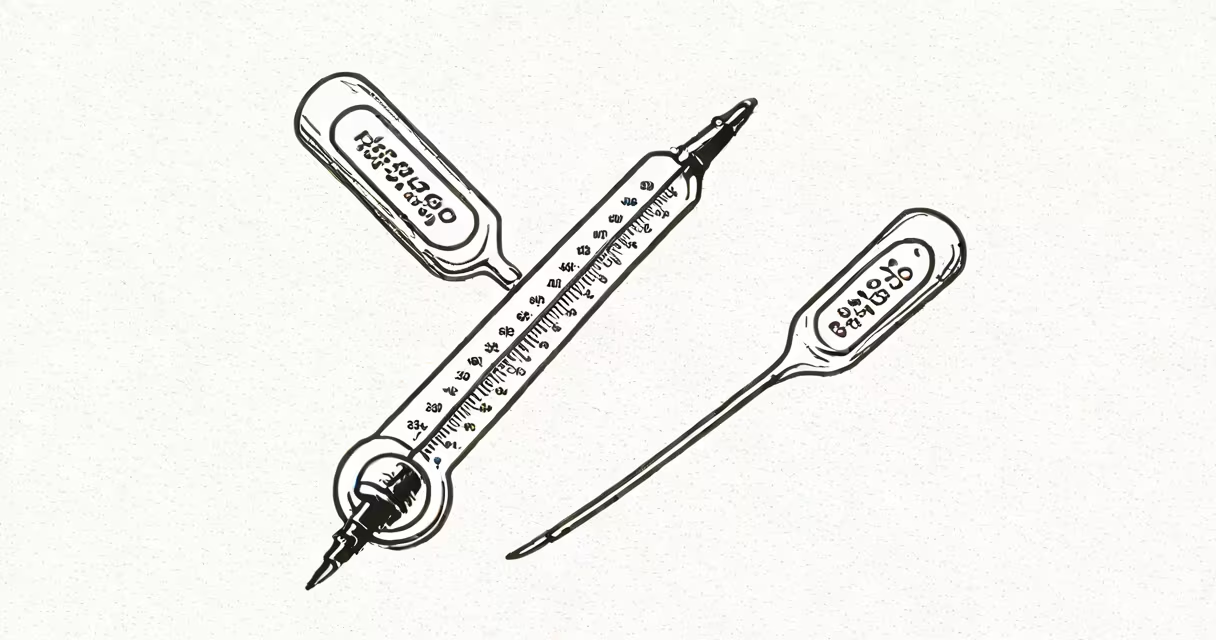
A fever begins at 100.4°F (38°C) when measured orally. This threshold is standardized by the American Academy of Pediatrics and the Centers for Disease Control and Prevention as the point at which the body's immune system activates in response to infection.
Body temperature varies throughout the day and between individuals. Normal oral readings typically range from 97.7°F to 99.5°F (36.5°C to 37.5°C). A reading above 100.4°F indicates a fever, regardless of whether the person feels unwell. The rise in temperature is a physiological response to pathogens, not a symptom itself.
Temperature measurement method affects the baseline. Rectal temperatures are generally 0.5°F to 1°F higher than oral readings. Axillary (underarm) measurements are less accurate and may underestimate fever by up to 1°F. Temporal artery thermometers, often used in pediatric settings, provide rapid results within 1 second and align closely with core temperature when used correctly.
Thermometers measure heat output from the body's core. Oral readings require the mouth to remain closed for 3 minutes. Rectal probes are inserted about 1 inch into the anus and are most accurate for infants under 3 months. Axillary readings are taken under the arm and are less reliable due to environmental interference.
Temporal artery thermometers scan the forehead's blood vessels using infrared sensors. They are non-invasive and ideal for children who resist oral or rectal methods. However, accuracy drops if the device is not held flush against the skin or if the room is cold.
For adults, a fever is confirmed when two consecutive oral readings exceed 100.4°F. In children, the threshold remains the same, but behavior changes such as irritability, lethargy, or refusal to eat are key indicators alongside temperature. A single elevated reading does not confirm illness-trends matter more.
Fever is categorized by height: low-grade (100.4°F-102.2°F), moderate (102.3°F-104.0°F), and high (104.1°F and above). High fevers are rare in healthy adults and may signal serious conditions like meningitis or sepsis.
Febrile seizures occur in children aged 6 months to 5 years during rapid temperature spikes. These are not linked to long-term neurological damage and typically resolve within 5 minutes. Parents should seek care if a seizure lasts longer than 5 minutes or if the child remains unresponsive afterward.
| Measurement Site | Normal Range | Fever Threshold |
|---|---|---|
| Oral | 97.7°F - 99.5°F | 100.4°F |
| Rectal | 98.0°F - 100.0°F | 100.4°F |
| Axillary | 96.6°F - 98.6°F | 100.4°F |
| Temporal Artery | 97.5°F - 99.0°F | 100.4°F |
Despite common belief, fever does not cause brain damage in otherwise healthy people. The body maintains tight control over core temperature. Even at 104°F, the hypothalamus prevents overheating through sweating and vasodilation. However, prolonged high fevers in infants under 3 months warrant immediate evaluation due to increased risk of bacterial infection.
Some assume that a fever must be above 102°F to be significant. This is incorrect. The CDC states that any oral temperature above 100.4°F qualifies as a fever. A 100.5°F reading in a child with mild cough and fatigue still requires monitoring.
Another misconception is that fever suppresses immunity. Research shows that elevated temperature enhances immune cell activity. A 2021 study published in Nature Immunology found that mice with induced fevers cleared viral infections 30% faster than those kept at normal temperature.
I've used a temporal artery thermometer on my daughter during a daycare outbreak of respiratory syncytial virus (RSV). Her initial reading was 100.6°F. After 15 minutes of rest, she read 100.2°F. The fluctuation confirmed that the first reading was likely influenced by recent crying and movement. I waited until her temperature stabilized before contacting her pediatrician.
Adults should consult a provider if a fever exceeds 103.1°F for more than 48 hours or is accompanied by chest pain, confusion, or difficulty breathing. In children under 3 months, any temperature above 100.4°F requires urgent evaluation.
For older children and adults, fever duration matters more than peak height. A fever lasting longer than 72 hours without improvement suggests a bacterial infection, viral persistence, or another underlying condition. Persistent fevers may indicate autoimmune disorders, lymphoma, or chronic infections like tuberculosis.
Antipyretics like acetaminophen or ibuprofen reduce fever symptoms but do not treat the underlying cause. They are effective for comfort, especially in children experiencing discomfort. Dosing should follow weight-based guidelines to avoid toxicity.
Understanding the precise fever threshold-100.4°F orally-is essential for accurate assessment. This standard applies across age groups and measurement methods. Knowing the difference between normal variation and clinically significant elevation prevents unnecessary anxiety and guides timely care.