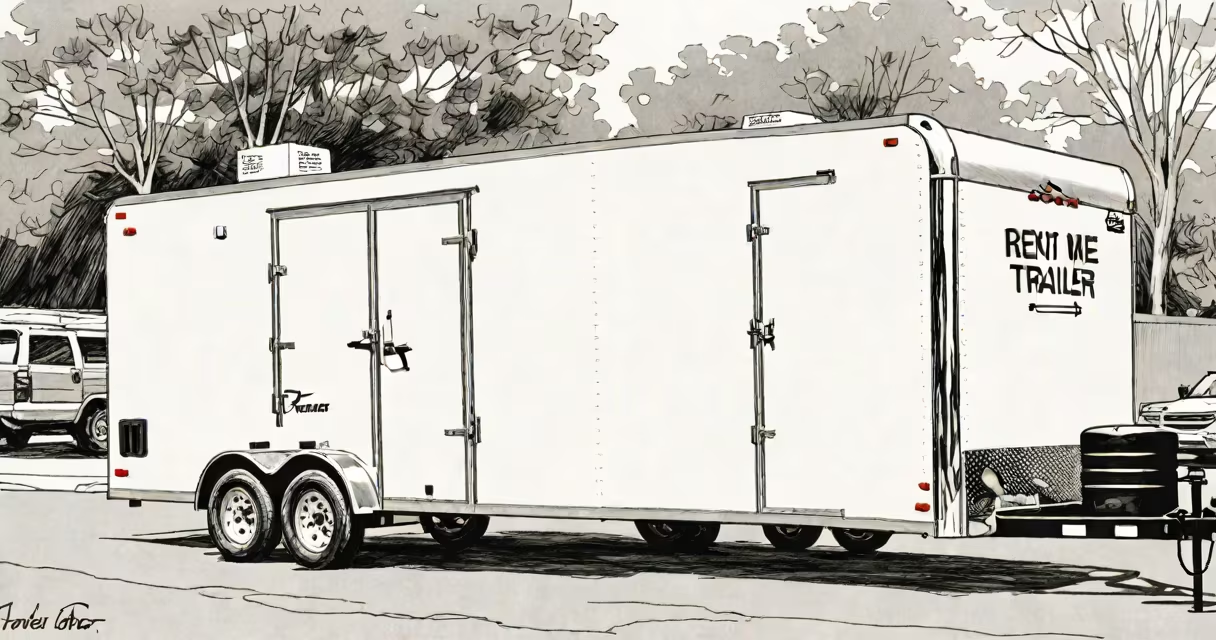
Renting your trailer means leasing it to someone else for temporary use, typically for moving, hauling, or transporting equipment. You retain ownership while earning income from short-term access. This model turns idle assets into revenue streams.
When you rent your trailer, you're offering a service: temporary access to a vehicle-sized storage unit with wheels. The renter pays a fee to use it for a set period-usually hours, days, or weeks-then returns it in working condition. This differs from selling the trailer outright or using it yourself.
Platforms like Neighbor, Turo, and local classifieds help rentals. You set the price, availability, and terms. Most platforms require you to verify your identity, provide photos, and agree to insurance and liability policies. You don't need a business license to start, but you may need to report rental income to the IRS.
You begin by creating a listing with key details: trailer size (e.g., 6x12 feet), weight capacity (e.g., 2,000 lbs), hitch type (e.g., 2-inch receiver), and features (e.g., electric brakes, LED lights). You then set a daily rate-typically $20 to $50 depending on location and demand.
Once listed, renters browse and book through a platform's app or website. You receive a confirmation and payment via credit card or digital wallet. Before pickup, both parties inspect the trailer for damage. You may require a security deposit (often $100-$300).
After the rental ends, the renter returns the trailer. You inspect it again. If damage exceeds agreed-upon wear-and-tear, you charge the renter's deposit. If not, you refund it. Some platforms offer automatic damage detection using AI-powered photo analysis.
Not all trailers are equally rentable. Demand varies by size, purpose, and region. Utility trailers dominate rental searches due to their versatility. Here's a breakdown:
| Type | Common Size | Typical Daily Rate | Best For |
|---|---|---|---|
| Utility | 6x12 ft | $25-$45 | Moving furniture, hauling lawn mowers |
| Car hauler | 16x7 ft | $50-$80 | Transporting vehicles, show cars |
| Gooseneck | 12x7 ft | $60-$100 | Heavy loads: farm equipment, construction materials |
| Enclosed cargo | 8x10 ft | $40-$70 | Protecting tools, bikes, or sensitive gear |
Urban areas see higher demand for small utility trailers. Rural regions favor larger models for farming or logging. A 2023 survey by the National Association of RV Parks and Campgrounds found that 68% of trailer owners who rent report doing so at least once a year, with most rentals lasting under 3 days.
People rent trailers for moves, weekend trips, home improvement projects, and seasonal work. A homeowner in Austin renting a 6x12 utility trailer for $35/day moved a couch, washer, and dryer in one trip. The renter saved $150 compared to hiring a moving company.
Landlords and contractors often rent trailers to transport tools. A roofing contractor in Denver used a gooseneck trailer to move shingles and ladders across three job sites. He paid $75/day instead of buying a new trailer.
Some people rent trailers for events. A wedding planner in Seattle booked a 10x12 enclosed trailer to transport decor and tables between venues. The trailer kept items dry during a rainstorm.
Many owners assume they must cover all liability. That's false. Most rental platforms provide primary coverage. Turo, for example, offers $1 million in liability protection per incident. You still need to confirm your personal auto policy covers trailer use-some do, others don't.
Another misconception: "I'll lose my trailer." In practice, 94% of trailers returned are undamaged, according to a 2022 study by the American Rental Association. Damage rates are lower than for car rentals.
Some think they need special permits. You don't. But if you rent frequently-say, more than 10 times a year-you may need to file Schedule C with the IRS. The IRS treats trailer rental income as self-employment income, subject to 15.3% self-employment tax.
In 2022, I listed my 6x12 utility trailer on Neighbor. I took five photos: front, side, rear, interior, and hitch. I wrote: "6x12 utility trailer, 2,000-lb capacity, electric brakes, includes tie-down straps. Clean, well-maintained. Ideal for moving, hauling yard waste, or weekend trips."
I set the rate at $30/day. I required renters to pass a background check and pay a $100 refundable deposit. Within 48 hours, a renter from nearby town booked it for a weekend move. I met them at a gas station parking lot. We inspected the trailer together. They returned it on time, with no damage. I received $90 after platform fees.
That single rental earned me more than I'd spent on trailer maintenance in six months. I've since rented it nine times, averaging $25/day.
"Rent my trailer" is not the same as selling it. Selling removes you from ownership. Renting keeps you in control. It's also not the same as leasing through a dealership. Dealerships lease trailers long-term, often with contracts and mileage limits. Renting is short-term, flexible, and peer-to-peer.
It's also not a substitute for proper insurance. You cannot rely solely on the renter's auto policy. Most states require the trailer owner to carry liability coverage. Check your state's minimum requirements-California requires $15,000 per accident for trailers.
Finally, it's not a passive income stream. You must respond to inquiries, verify renters, and handle pickups and returns. But the effort is low compared to the return. The average U.S. trailer renter earns $1,200 annually from rentals, according to a 2023 report by Statista.
With minimal setup and ongoing oversight, renting your trailer generates consistent income. It turns unused space into revenue. It's not a full-time job-but it's a proven way to make money from an asset you already own.