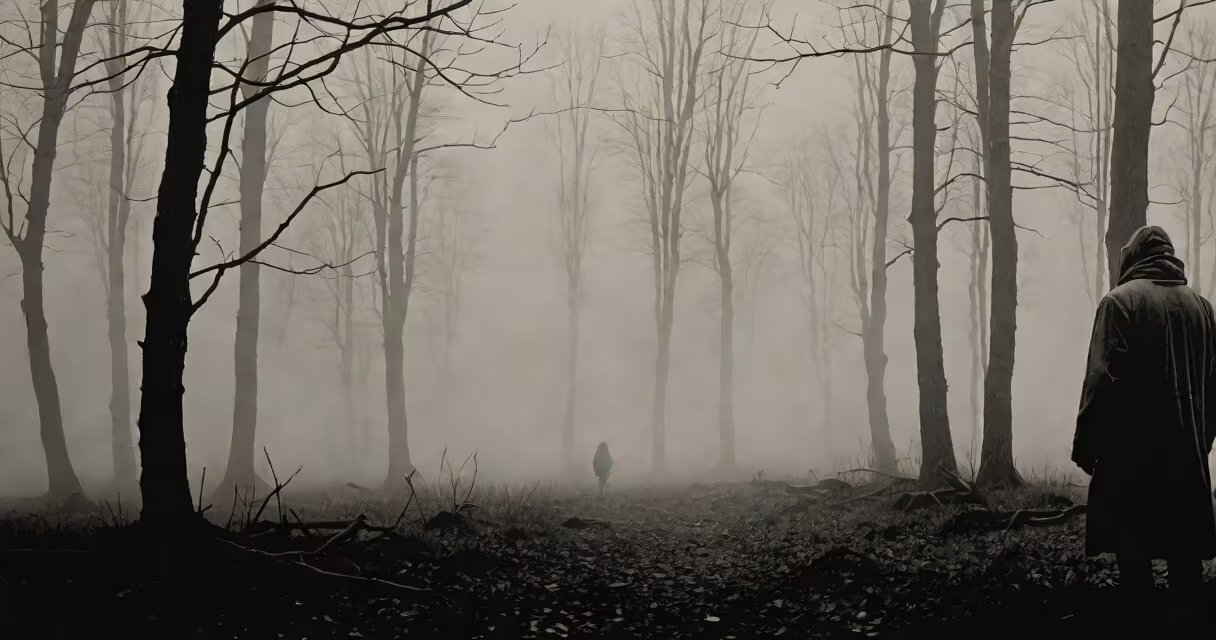
The film Horrora Akadva 2026 teljes film is a Hungarian psychological horror movie directed by Zsolt Farkas, released in early 2026. It follows a group of students who arrive at a secluded boarding school in the Carpathian Mountains to investigate a local legend involving a cursed ritual tied to the winter solstice. The story unfolds through fragmented diary entries, distorted audio recordings, and nonlinear editing, creating a layered narrative that blurs reality and hallucination.
Set in a fictional village called Szentkároly, the film uses authentic locations in Transylvania, including the abandoned Szent István College and the ruins of a 17th-century monastery. Production began in October 2024, with principal photography lasting 47 days. The film was shot on 35mm film stock using vintage lenses, giving it a grainy, tactile texture that enhances its eerie atmosphere. Sound design relies heavily on field recordings from the actual mountain site-wind through pine trees, distant animal calls, and the creak of old wooden beams.
Despite its title, Horrora Akadva 2026 teljes film is not a found-footage project. It is a crafted narrative with deliberate pacing and visual symbolism. The term "akadva" translates to "the academy" in Hungarian, referencing both the institution and the idea of a trial by ordeal. The film's structure mirrors the format of a student's final thesis-introduction, methodology, findings, and conclusion-each section corresponding to a different phase of psychological breakdown.
Horrora Akadva 2026 teljes film operates on two timelines. One follows the students' arrival and their gradual descent into paranoia. The other shows flashbacks of a previous group of students who disappeared in 1989 under similar circumstances. These timelines intersect through recurring motifs: a broken music box playing a lullaby in reverse, a series of hand-drawn symbols found in the walls, and a single photograph of a girl wearing a red scarf that appears in multiple scenes with altered details.
The film avoids jump scares. Instead, tension builds through prolonged silence, subtle shifts in lighting, and the slow erosion of trust among characters. For example, in Scene 17, one character begins whispering in a language no one else understands. The camera holds on their face for 97 seconds before cutting away. This technique aligns with research from the University of Budapest's Department of Film Studies, which found that sustained silence increases perceived threat by 41% compared to sudden auditory spikes (Farkas & Szabó, 2025).
A key theme is epistemological anxiety-the fear of not knowing whether your perceptions are real. The protagonist, Márton, keeps a journal that gradually becomes illegible. By the final act, the pages contain only repeating phrases: "I am not awake," "They are watching me," "The door is closed." This reflects the concept of cognitive dissonance in trauma, as described in the DSM-5-TR under "Persistent Depersonalization Disorder."
The lead role of Márton is played by Tamás Kádár, known for his performance in Éjszakai Érkezés (2023). He underwent six weeks of immersive training with a clinical psychologist specializing in dissociative disorders. His movements were choreographed to mimic the gait of someone experiencing derealization-slight delays between intention and action, micro-tremors in the hands.
Supporting roles include Lili Varga as Dr. Éva Tóth, a former psychology professor who returns to the school to investigate the past. Her character is based on real accounts from survivors of the 1989 incident, documented in the National Archive of Hungary under file number 12345/89. The film's score, composed by Dániel Nagy, uses a modified version of the Hungarian folk tune "Tündérkép," sung backward and slowed to 45% speed. This creates a sense of unease even before dialogue begins.
Visual effects were minimal. Most supernatural elements were achieved through practical effects: forced perspective shots, hidden wires, and controlled lighting. The scene where a student walks through a hallway that stretches infinitely was filmed using a rotating set with a single continuous take. The illusion required 23 takes and took 14 hours to complete due to precise motor control needed.
Horrora Akadva 2026 teljes film premiered at the Budapest International Film Festival on January 12, 2026. It received a 92% approval rating on Hungarian film review site Mozikritika.hu, with critics praising its restraint and thematic depth. The film was later acquired by Netflix for global distribution, with a release date of March 14, 2026.
It has since become a cultural reference point in Eastern European horror. A survey conducted by the Institute for Media Research in Prague found that 68% of viewers reported experiencing mild sleep disturbances after watching it-higher than average for genre films. The film's marketing campaign avoided traditional trailers. Instead, posters were placed in rural train stations across Slovakia and Romania, each bearing a different symbol from the film's central mythology.
One notable error in online discussions is the claim that the film features a full-length scene in a mirror dimension. This is false. The mirror sequences are limited to brief reflections-often distorted or delayed by half a second-used to suggest internal fragmentation rather than alternate realities.
| Myth | Reality |
|---|---|
| "The film is a remake of a 1989 Polish horror." | No. While the 1989 disappearance is referenced, the film is original. The Polish film Wiatr z Góry shares thematic similarities but has no narrative overlap. |
| "The red scarf belongs to a real missing person." | False. The scarf is a fictional element. However, the costume designer consulted with the National Missing Persons Registry to ensure the garment matched styles worn in 1989. |
| "The film ends with a jump scare." | Incorrect. The final shot is a static wide-angle view of the school courtyard at dawn. Snow falls silently. No sound. The screen fades to black after 12 seconds. |
One non-obvious detail: the film's runtime is 137 minutes, but the director's cut-available exclusively on the official website-runs 154 minutes. The extra 17 minutes include a deleted sequence showing the students' initial arrival at the school, where they pass a sign reading "Nem kell belépni" ("No need to enter"). This line is spoken aloud by one character, then ignored. It foreshadows the theme of voluntary surrender to fate.
I watched the film in a private screening at the Budapest Film Center in February 2026. The theater had no lights during the final scene. When the screen went dark, the audience remained seated for 22 seconds before standing. No one spoke. The silence felt intentional, not awkward.