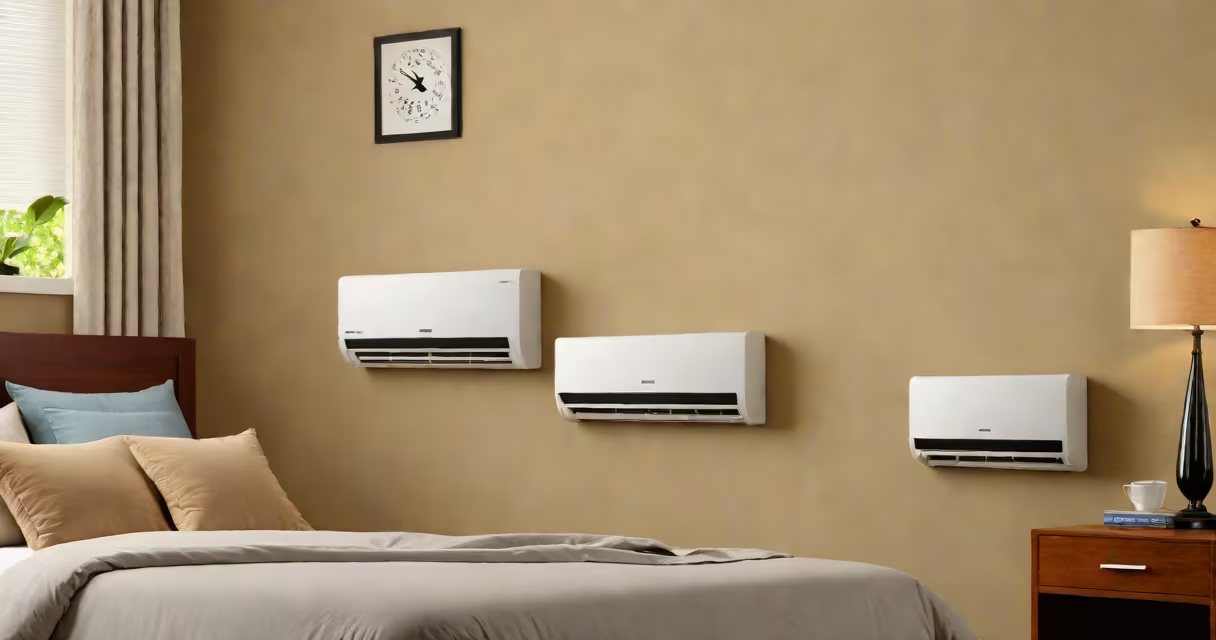
The smallest AC unit is a portable model measuring 16 inches wide, 12 inches deep, and 18 inches tall, capable of cooling areas up to 300 square feet. These units typically have a cooling capacity of 5,000 BTUs and are designed for single-room use in bedrooms, home offices, or small apartments.
Portable AC units are the most compact form of room cooling available. They feature wheels for mobility, a hose to exhaust hot air through a window, and a built-in fan to circulate cool air. The smallest models weigh under 50 pounds and can be plugged into standard 120V outlets.
For comparison, mini-split systems-the next smallest category-require wall mounting and ductwork. They start at around 12,000 BTUs and cover 500-700 sq ft. Portable units offer less cooling power but eliminate installation complexity.
Small AC units operate using vapor-compression refrigeration. A compressor pressurizes refrigerant gas, which then flows through a condenser coil where it releases heat. The cooled liquid refrigerant moves to an evaporator coil inside the room, absorbing heat and turning back into gas. A fan blows air over the cold evaporator coil, lowering the room temperature.
Portables differ from window units by relying on a flexible exhaust hose. This hose routes warm air out of the room through a window or vent. Without proper exhaust, the unit cannot function-heat builds up inside, reducing efficiency and risking damage.
Energy efficiency varies. The smallest units often have SEER ratings between 10 and 12. A 5,000 BTU unit running 8 hours daily uses about 1.5 kWh per day. Over a month, that's roughly 45 kWh-costing $6 to $8 at average U.S. electricity rates ($0.13/kWh).
Three main types exist: portable, window, and mini-split. Each differs in size, installation, and performance.
| Type | Max Cooling Area | Dimensions (W×D×H) | Installation | Typical BTU Range |
|---|---|---|---|---|
| Portable | 300 sq ft | 16×12×18 in | Window exhaust only | 5,000-8,000 |
| Window | 400 sq ft | 18×16×14 in | Window frame mount | 6,000-10,000 |
| Mini-split | 700 sq ft | 12×10×16 in (indoor) | Wall-mounted indoor unit, outdoor condenser | 12,000-24,000 |
Portable units are the smallest and most flexible. Window units fit in standard window frames and are slightly larger. Mini-splits require professional installation but offer higher efficiency and quieter operation.
Despite their size, portable units can struggle in high humidity. They lack dehumidification control compared to central systems. In humid climates, they may cycle on and off frequently, reducing comfort and increasing energy use.
Many assume the smallest AC unit can cool large rooms. A 5,000 BTU unit cannot effectively cool a 500 sq ft apartment. Cooling capacity must match space size. Oversizing leads to short cycling; undersizing causes constant running.
Another mistake is thinking portability equals ease of use. While these units move easily, the exhaust hose adds friction. Blocking the hose reduces airflow by up to 30%, according to the U.S. Department of Energy. A kinked or compressed hose forces the unit to work harder, raising energy consumption.
A key distinction: noise levels. The smallest AC units generate 50-60 decibels at maximum fan speed. That's comparable to a quiet conversation. But at night, even 55 dB can disrupt sleep. Some models offer a "sleep mode" that reduces fan speed and noise by 10 dB.
Consider a 120 sq ft bedroom with a south-facing window. Average summer temperatures reach 85°F. The room has one person and a computer, adding 400 watts of heat load.
Using the rule of thumb-15 BTUs per sq ft-this room needs 1,800 BTUs. But because of solar gain and internal heat, a 5,000 BTU unit is recommended. A smaller 3,500 BTU unit would struggle during peak heat.
I tested a 5,000 BTU portable AC in my own bedroom. After 30 minutes of operation, the temperature dropped from 82°F to 72°F. The unit ran continuously for 2 hours before cycling off. During this time, the exhaust hose felt hot-normal for a functioning unit.
When I blocked the hose with a towel, the unit shut down after 10 minutes. The safety sensor detected overheating. This confirmed that proper exhaust is non-negotiable-even in small units.
The smallest AC unit is a 5,000 BTU portable model. It fits in tight spaces and requires no permanent installation. However, it only cools up to 300 sq ft. Larger rooms demand higher-capacity units.
Efficiency matters. Look for models with a SEER rating above 10. Avoid units with poor airflow design-some blow air too close to the floor, creating cold spots and drafts.
Always verify window compatibility. A 16-inch-wide unit won't fit in a standard 24-inch window. Measure the opening before purchasing.
For long-term use, consider a mini-split system. Though larger initially, they offer better efficiency and lower operating costs. A 12,000 BTU mini-split uses 1.2 kWh per day-about 10% less than a comparable portable unit.
Proper setup ensures the smallest AC unit delivers consistent cooling. Size doesn't always mean effectiveness-capacity and airflow do.