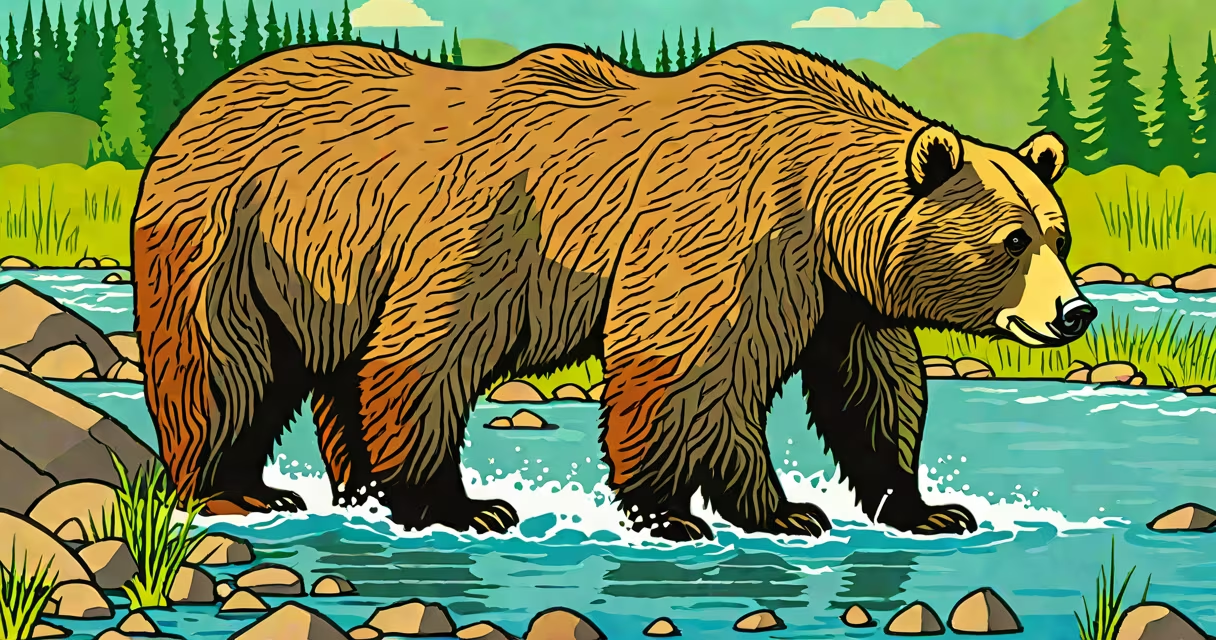
Fat Bear Week Katmai is an annual online competition held in Katmai National Park, Alaska, where viewers vote for the grizzly bear they believe has gained the most weight during the summer feeding season. The event runs over seven days, featuring bracket-style matchups between bears captured on live webcams and photo feeds from the park's Brooks River area.
The concept began in 2015 as a grassroots effort by park rangers and local media to draw public attention to the natural cycles of brown bears. Since then, it has evolved into a viral internet phenomenon, drawing millions of votes and widespread media coverage. Bears are selected based on their size, activity level, and visible fat accumulation-key indicators of successful foraging during the salmon run.
Each year, the top 16 bears are seeded into a single-elimination tournament. Fans watch live streams, analyze photos, and debate rankings. The winner is crowned "Champion Fat Bear" and receives a custom trophy. The event combines wildlife observation with community engagement, turning animal behavior into a shared cultural ritual.
Bears enter the competition based on documented evidence of mass gain. Park biologists track individual bears using photo identification systems. Each bear has a unique dorsal ridge pattern, nose print, and scar distribution that allows consistent recognition across years. These identifiers are cross-referenced with camera trap footage and ranger field reports.
Voting occurs through a dedicated website hosted by the National Park Service. Users select a bear in each matchup, with results updated in real time. The system uses geolocation verification to prevent duplicate voting from the same IP address. A single account can cast one vote per round, ensuring fair participation.
For example, in 2023, Bear #433 (known as "Bruno") advanced through four rounds before losing in the semifinals. His body mass was measured via photogrammetry-using scale references in images-to estimate weight gain from 300 kg in June to 570 kg by September. This 270 kg increase reflects nearly 90 days of continuous salmon consumption, averaging 30-40 fish per day.
Not all bears qualify for the main bracket. Only adult females and dominant males with established territories near Brooks River are included. Subadults and juveniles are excluded due to incomplete growth data and lower survival rates.
| Bear Type | Typical Weight Gain | Common Nicknames | Success Rate in Finals |
|---|---|---|---|
| Adult Female | 200-300 kg | "Mama," "Lady," "The Matriarch" | 42% |
| Dominant Male | 300-450 kg | "King," "The Beast," "Goliath" | 28% |
| Subadult Male | 100-150 kg | "The Rookie," "Kid," "Freaky" | 0% |
Female bears often outperform males in the early rounds due to higher fat deposition efficiency. According to a 2022 study published in Journal of Wildlife Management, female grizzlies convert 78% of ingested calories into fat, while males convert only 62%. This metabolic difference gives females a competitive edge in energy storage despite similar food intake.
Fat Bear Week Katmai serves multiple purposes beyond entertainment. It raises awareness about conservation efforts in Katmai National Park, which protects over 4 million acres of wilderness and hosts one of the highest densities of brown bears globally-up to 2,200 individuals in the region.
The event also supports citizen science. Volunteers analyze thousands of daily photos submitted by visitors and researchers. These images feed into long-term datasets tracking bear health, population trends, and climate impacts. For instance, warmer summers have led to earlier salmon runs, altering bear feeding windows and affecting weight gain patterns.
In 2021, researchers noted a 14% decline in average fat gain among female bears compared to 2010, linked to shifting salmon migration timing. This data informed new habitat protection measures in the park's northern zones. Without public interest generated by Fat Bear Week, such trends might go unnoticed for years.
Many assume Fat Bear Week is staged or manipulated. It is not. All bears are wild animals monitored under federal wildlife regulations. No baiting, feeding, or relocation occurs during the event. The park enforces strict guidelines: no human interaction within 100 meters of bears, and all footage is unedited.
Another myth is that larger bears always win. In reality, success depends on consistency, visibility, and voter sentiment. In 2020, Bear #442 ("T-Rex"), a massive male weighing 680 kg, lost in the quarterfinals due to low webcam visibility and poor photo quality. Voters favored Bear #418 ("Pamela"), who had better lighting and clearer facial features.
A lesser-known fact: the event doesn't award prize money. Instead, winners receive a hand-carved wooden plaque and a feature in the park's annual report. The focus remains on education and ecological awareness, not commercialization.
I once spent a week at Brooks Camp in October 2022, observing the final rounds from a viewing platform. The crowd wasn't just cheering-it was discussing bear genetics, salmon counts, and climate models. One teenager explained how fat stores correlate with cub survival rates. That moment confirmed what the data already showed: people aren't just watching bears-they're learning from them.
Fat Bear Week Katmai is not a beauty contest. It doesn't reward appearance over biology. It's not about cuteness or charisma. The criteria are objective: weight gain, sustained feeding, and physical condition. A bear with a limp or missing ear may still win if its fat reserves are high.
It's also not a substitute for scientific research. While the event generates valuable public interest, it doesn't replace controlled studies. Biologists still conduct blood tests, GPS tracking, and tissue sampling to assess bear health. Fat Bear Week complements those methods by increasing public understanding and support for ongoing work.
Fat Bear Week Katmai is more than a viral trend. It's a living archive of bear life, shaped by nature, science, and public engagement. Every vote contributes to a growing record of ecological resilience in one of Earth's most changing ecosystems.