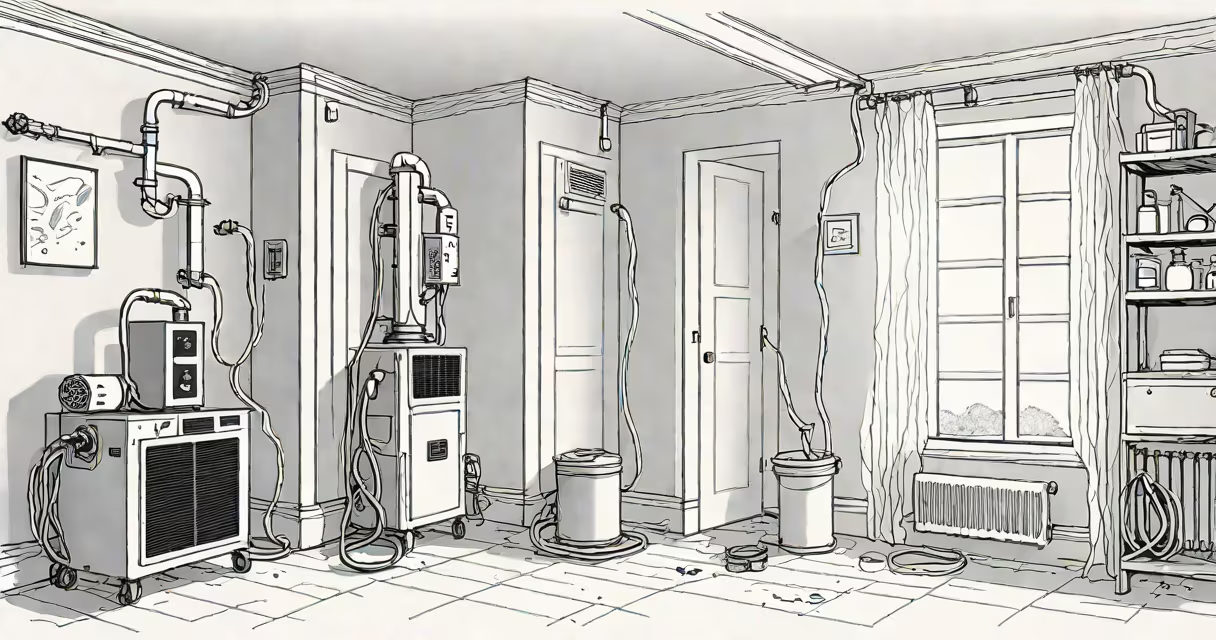
What kills mold in the air involves removing airborne mold spores through physical filtration and germicidal irradiation. High-efficiency particulate air (HEPA) filters capture particles as small as 0.3 microns, including most mold spores. Ultraviolet-C (UV-C) light disrupts the DNA of living mold cells, preventing reproduction. Together, these technologies reduce mold concentrations in indoor environments.
Mold spores float in the air after becoming dislodged from damp surfaces like walls, carpets, or HVAC systems. When inhaled, they can trigger allergies, asthma flare-ups, or respiratory infections. The primary goal of air treatment is to eliminate viable spores before they settle and grow. This requires targeting both particle size and biological viability.
HEPA filters trap mold spores by forcing air through a dense mesh of fibers. According to the U.S. Environmental Protection Agency (EPA), HEPA filters remove at least 99.97% of particles 0.3 microns in diameter. Mold spores typically range from 2 to 30 microns-well within the effective range of HEPA filtration. Once trapped, spores cannot escape back into the airstream.
UV-C light operates differently. It emits short-wavelength ultraviolet radiation (254 nanometers) that damages microbial DNA. A study published in the Journal of Applied Microbiology confirmed that UV-C exposure at 10 mJ/cm² reduces airborne Aspergillus and Penicillium spores by over 90% in controlled conditions. Unlike filtration, UV-C doesn't remove particles-it neutralizes live organisms.
For maximum effectiveness, HEPA and UV-C must be used together. A HEPA filter captures spores physically, while UV-C treats those that pass through or linger near the lamp. This dual approach prevents recirculation of viable spores in ductwork or room air.
Three main types of systems address mold in the air. Each combines different technologies based on installation method and performance needs.
| System Type | Primary Mechanism | Best For | Limitations |
|---|---|---|---|
| Portable HEPA Air Purifiers | Filtration only | Small rooms, allergy relief | Doesn't kill spores; limited coverage |
| UV-C in HVAC Ducts | Germicidal irradiation | Whole-home air cleaning | Requires professional installation |
| Hybrid Units (HEPA + UV-C) | Filtration + sterilization | High-risk areas (basements, bathrooms) | Higher cost and maintenance |
Portable units are common in homes with mild mold concerns. They often include activated carbon layers to reduce odors. However, they do not destroy mold cells-only trap them. Spores remain alive inside the filter until disposal.
Integrated UV-C systems installed in central HVAC ducts offer continuous protection. The EPA notes that UV-C lamps placed downstream of cooling coils can reduce microbial load by up to 70% over time. These systems require access to ductwork and regular bulb replacement every 9,000 hours of use.
Many people assume that air fresheners, essential oils, or ozone generators eliminate mold in the air. These products do not meet scientific standards for microbial control. Ozone generators, in particular, are banned by the EPA for indoor use due to health risks. Ozone can irritate lungs and react with VOCs to form harmful secondary pollutants.
Another error is relying solely on ventilation. While opening windows helps dilute indoor air, it can introduce outdoor mold spores. A 2021 study in *Indoor Air* found that outdoor mold counts spiked during spring pollen season, increasing indoor concentrations by 40% in poorly sealed homes.
Some believe that visible mold growth is required for air contamination. This is false. Mold spores exist in the air even when no visible colonies are present. The American Lung Association states that airborne mold levels above 50 spores per cubic meter are associated with increased respiratory symptoms.
In 2022, a homeowner in Portland, Oregon, reported chronic coughing and sinus issues. An indoor air quality test revealed 120 mold spores per cubic meter in the basement-well above the EPA's recommended threshold of 50. The source was a leaking pipe behind a wall, causing hidden mold growth.
The solution involved three steps: drying the affected area with dehumidifiers (to reduce humidity below 50%), sealing the leak, and installing a hybrid air cleaner with HEPA and UV-C. After 72 hours of continuous operation, follow-up testing showed a drop to 18 spores per cubic meter. Symptoms improved within five days.
This case illustrates that treating mold in the air requires addressing both the source and the airborne particles. Removing the moisture source stops new spore release. Filtration and UV-C then clear existing contamination.
What kills mold in the air is not a single product but a combination of proven technologies. HEPA filtration removes spores from the air stream. UV-C light destroys their ability to reproduce. Neither works alone. For lasting results, pair air treatment with moisture control and source remediation. The most effective systems integrate both mechanisms in a sealed environment to prevent recontamination.