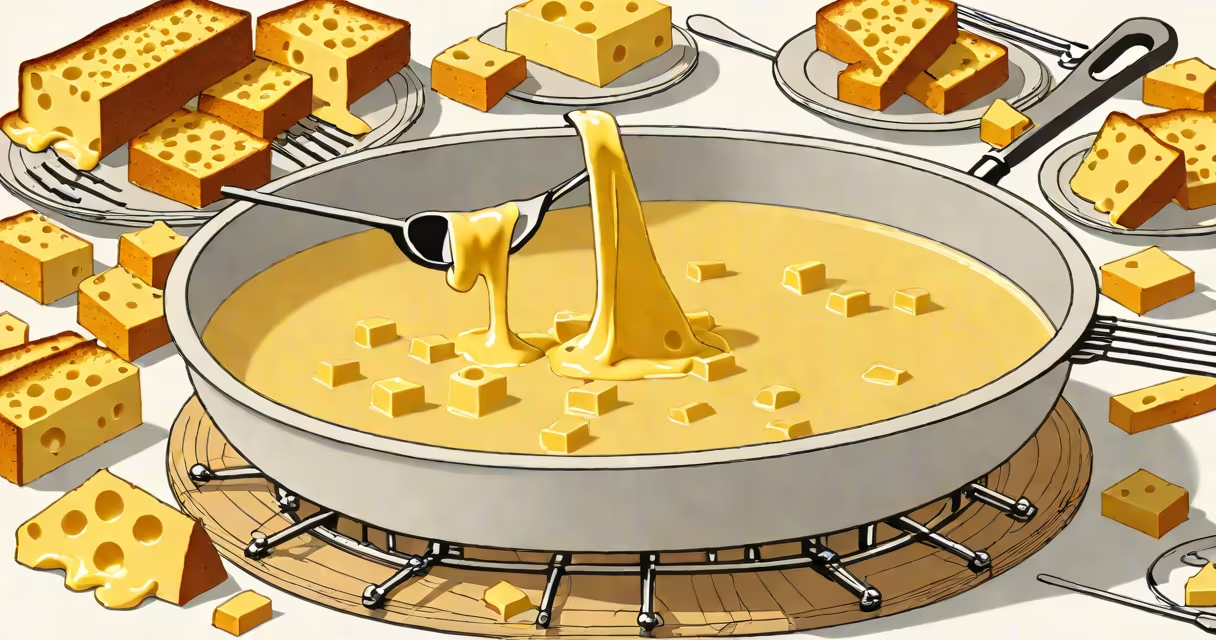
Swiss cheese fondue is a hot, savory dish made by melting Swiss cheese-typically Gruyère and Emmental-in a mixture of white wine and garlic, then serving it in a shared pot for dipping with bread cubes. It originated in the Swiss Alps as a way to use leftover cheese and stale bread, turning them into a communal meal.
The core components are aged Swiss cheeses, dry white wine, garlic, and freshly baked or toasted bread. The mixture is heated slowly until smooth and bubbling, then served at the table in a portable metal or ceramic pot over a flame or electric burner. Diners use long-handled forks to spear bread pieces and dip them into the molten cheese.
While often associated with luxury dining, fondue was historically a frugal meal in mountain villages. Families would gather around a single pot during winter months, stretching limited ingredients into a satisfying communal experience. Today, it remains a centerpiece of Swiss cultural identity and a popular choice for gatherings.
Fondue relies on controlled heat and consistent stirring to prevent separation. As the cheese melts, the alcohol in the wine evaporates, leaving behind flavor and helping emulsify the fat and water. Garlic is rubbed inside the pot before adding the liquid to infuse the base with aroma.
Once the wine and cheese begin to blend, the mixture thickens slightly. Too much heat causes curdling; too little results in a grainy texture. The ideal consistency is silky, coating the back of a spoon without dripping off.
A well-made batch takes about 15 minutes to prepare. The pot stays warm for 30-45 minutes if kept on low heat. After that, the fondue begins to thicken and may separate if left unattended.
Traditional recipes call for specific cheeses. Gruyère provides nutty depth and melts smoothly. Emmental contributes mild sweetness and visible holes, which release air bubbles during melting. A small amount of kirsch (cherry brandy) adds complexity and cuts through richness.
Not all fondue is cheese-based. Some versions use chocolate for dessert fondue, while others incorporate meats or vegetables. But authentic Swiss cheese fondue uses only dairy and wine-no cream, no flour, no stabilizers.
| Ingredient | Role | Typical Quantity |
|---|---|---|
| Gruyère cheese | Primary flavor and meltability | 250g (about 1 cup grated) |
| Emmental cheese | Texture and mild taste | 150g (about 3/4 cup grated) |
| Dry white wine | Acid balance and emulsification | 150ml (1 cup) |
| Garlic clove | Flavor infusion | 1 whole, halved and rubbed inside pot |
| Kirsch | Depth and aroma | 15ml (1 tbsp) |
For those avoiding alcohol, substitute the wine with chicken broth and add a splash of lemon juice. This version still emulsifies but lacks the complexity of fermented wine.
Many assume fondue is a French dish. It is not. While France has its own versions, such as "fondue bourgeoise" (with onions and mushrooms), the original Swiss cheese fondue emerged in the 16th century among farmers in the Bernese Oberland region.
Another myth is that fondue requires expensive equipment. A basic setup includes a fondue pot, a burner (candle or electric), and long forks. You can make it on a stovetop using a heavy-bottomed saucepan and a heat diffuser.
Some think the bread must be fancy. It doesn't. Sourdough, rye, or even baguette cut into 2cm cubes work. The key is texture: firm enough to hold the cheese without disintegrating.
In 2019, the Swiss Federal Office of Culture designated fondue as part of the nation's intangible cultural heritage. The decision recognized its role in preserving regional traditions and social bonding.
I prepared a batch at home using 250g Gruyère, 150g Emmental, 150ml dry white wine, and 15ml kirsch. I rubbed a garlic clove inside a 1.5-liter ceramic fondue pot, added the wine, and warmed it over medium heat. Once simmering, I stirred in the grated cheese gradually. After five minutes, the mixture became glossy and cohesive. I served it with thick-cut sourdough, which held up well under the weight of the cheese.
After 30 minutes, the fondue began to thicken. I stirred in 2 tablespoons of cold milk to restore fluidity. The result was smooth and rich-perfect for sharing.
Swiss cheese fondue is not a soup. It is not meant to be eaten with a spoon. It is not a meal for one. The act of dipping, sharing, and conversation is central to the experience.
It's also not interchangeable with other dips. Unlike queso fundido or spinach artichoke dip, fondue is served hot and consumed immediately. Cold or room-temperature fondue loses its texture and flavor.
One non-obvious fact: the word "fondue" comes from the French verb *fondre*, meaning "to melt." It entered English usage in the 1950s, but the dish predates the term by centuries.
Today, Swiss cheese fondue appears at holiday dinners, family reunions, and ski lodges. It's especially common during winter festivals in Switzerland, such as the Fête des Vignerons in Vevey.
Restaurants in Zurich and Lucerne serve it in traditional settings-wood-paneled rooms, linen tablecloths, and live accordion music. The dish signals warmth, hospitality, and connection.
It's also used in culinary education. The University of Applied Sciences in Lausanne teaches fondue preparation as part of its food science program, focusing on emulsion chemistry and temperature control.
For travelers, visiting a Swiss chalet during a snowstorm and sharing fondue around a fire is a quintessential experience. The ritual-rubbing garlic, heating the pot, passing the forks-creates shared memory.