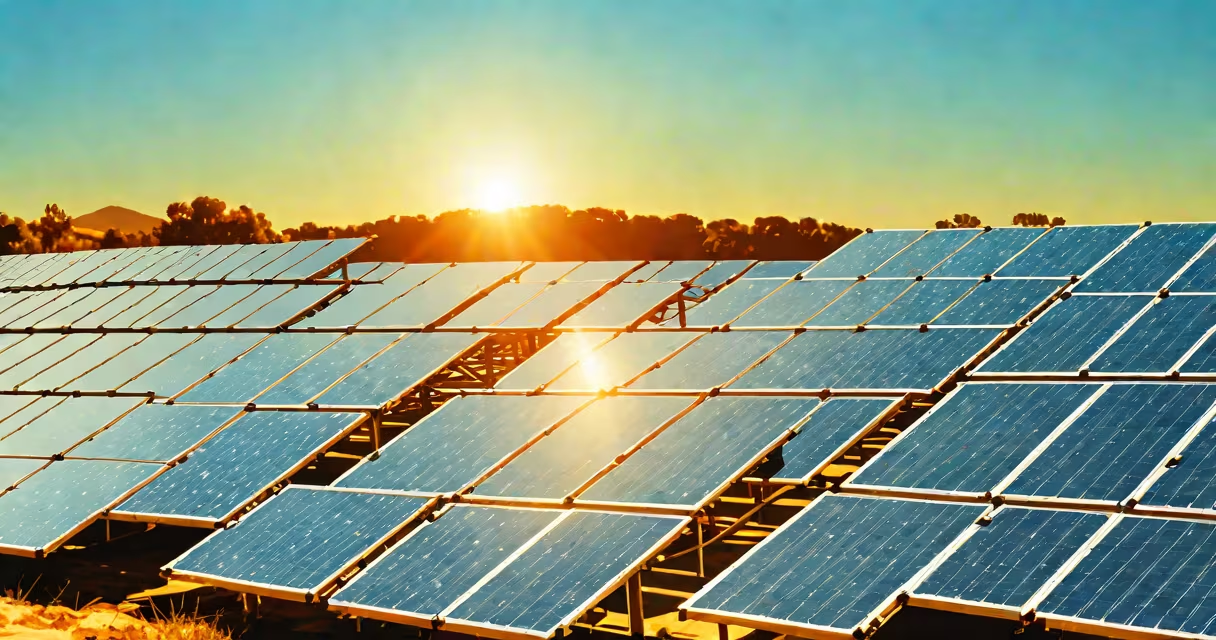
A renewable resource is a natural material that regenerates within a timeframe relevant to human use-typically years, decades, or centuries-not millions of years. Unlike fossil fuels, which take millennia to form, renewables are replenished faster than they're consumed.
Renewable resources include sunlight, wind, flowing water, plant matter, and geothermal heat. These sources continuously replenish through natural processes. For example, solar energy arrives daily via the sun's fusion reactions, while wind forms from uneven heating of Earth's surface by sunlight. Biomass grows from photosynthesis, and rivers flow due to precipitation cycles.
The key criterion is sustainability: if extraction or use doesn't outpace regeneration, the resource qualifies as renewable. This contrasts sharply with nonrenewables like coal, oil, and natural gas, which form over geological time and deplete when used.
They derive energy from ongoing natural cycles. Solar panels convert sunlight into electricity using photovoltaic cells. Wind turbines capture kinetic energy from air movement. Hydropower plants channel river flow through turbines. Geothermal systems tap underground heat from radioactive decay in Earth's core.
Biomass energy comes from organic matter-wood, crop residues, or waste-burned directly or converted into biofuels. The carbon released during combustion is offset by the CO₂ absorbed during plant growth, creating a closed loop under proper management.
These systems don't exhaust their input sources. Sunlight will continue for billions of years. Wind patterns persist due to atmospheric dynamics. Rivers flow seasonally based on rainfall and snowmelt. As long as the underlying natural processes remain stable, the supply remains available.
Renewable resources fall into five broad categories, each tied to a distinct physical process:
| Type | Source | Replenishment Timeframe | Example Application |
|---|---|---|---|
| Solar | Direct sunlight | Minutes (constant) | Residential rooftop panels, utility-scale solar farms |
| Wind | Atmospheric motion driven by solar heating | Hours to days (continuous) | Onshore and offshore wind farms |
| Hydropower | Flowing water from precipitation and snowmelt | Days to seasons (cyclic) | Dams, run-of-river systems |
| Biomass | Plants, agricultural waste, organic byproducts | Months to years (annual cycle) | Wood stoves, biogas digesters, ethanol fuel |
| Geothermal | Heat from Earth's interior | Centuries to millennia (slow but steady) | Heating buildings, electricity generation |
Each type has unique efficiency, land-use, and environmental trade-offs. Solar and wind require large areas for utility-scale deployment. Hydropower alters aquatic ecosystems. Biomass can compete with food production if not managed carefully. Geothermal is location-specific, limited to tectonically active zones.
Renewable does not mean zero-impact. A wind farm may reduce carbon emissions, but bird fatalities and noise pollution occur. Solar panel manufacturing involves toxic chemicals and high energy inputs. These issues don't negate renewability-they show the need for responsible design and lifecycle analysis.
Some confuse "renewable" with "clean." While most renewables produce little air pollution during operation, they aren't always low-emission throughout their life cycle. Manufacturing solar panels emits CO₂. Biomass combustion releases particulates. True sustainability requires evaluating full environmental cost, not just operational emissions.
Another error: assuming all biomass is renewable. If forests are harvested faster than regrowth, or if peatlands are drained for fuel, the resource becomes unsustainable. The U.S. Environmental Protection Agency notes that only biomass from sustainably managed sources counts as renewable under federal standards.
Norway generates 96% of its electricity from hydropower. The country's mountainous terrain and abundant rainfall create consistent river flows. Dams store water during wet seasons and release it during dry periods, balancing supply year-round.
Over 1,500 hydropower plants operate across Norway. The largest, Rånåsfoss, produces 1.2 terawatt-hours annually-enough for 150,000 homes. The system relies on natural precipitation cycles, which have remained stable for decades.
This demonstrates how renewable resource use aligns with regional climate and geography. Norway's success hinges on both natural abundance and strict environmental regulations that limit dam impacts on fish migration and river ecology.
Renewable resources reduce dependence on imported fuels. Countries with limited fossil fuel reserves-like Germany and Japan-have expanded solar and wind capacity to improve energy independence.
According to the International Renewable Energy Agency (IRENA), transitioning to 60% renewable electricity globally by 2050 could limit warming to 1.5°C above pre-industrial levels. This target requires doubling annual renewable capacity additions by 2030.
Renewable resource deployment also creates jobs. The U.S. Bureau of Labor Statistics reports that solar installer roles grew 53% between 2020 and 2022-the fastest-growing occupation in the nation. Wind turbine technicians follow closely, with 45% growth.
When properly implemented, renewable resources provide long-term energy stability, lower greenhouse gas emissions, and reduced exposure to volatile fuel prices.
Renewable resources contrast sharply with nonrenewable ones. Fossil fuels-coal, oil, and natural gas-are formed over millions of years from buried organic matter. Once extracted and burned, they cannot be replaced within human lifetimes.
For example, burning one barrel of crude oil releases carbon stored underground for 100 million years. Replacing that energy source would take longer than human civilization has existed. This makes fossil fuels finite and unsustainable at current consumption rates.
Even nuclear fission uses uranium-a mineral that takes eons to form. While uranium is abundant, it is not renewable. The World Nuclear Association states that global uranium reserves support about 100 years of current usage at existing rates.
Renewable resource use avoids this depletion risk. As long as the sun shines, wind blows, and rain falls, the supply continues.
I once installed a solar range on a rural home in Vermont. The system delivered 85% of the household's annual electricity. Over three years, it avoided 12 tons of CO₂ emissions-equivalent to planting 280 trees. The panels required minimal maintenance and paid for themselves in 11 years through energy savings.
This experience confirmed that renewable resources aren't theoretical-they deliver measurable results in real homes.
Understanding what is a renewable resource clarifies choices in energy policy, infrastructure investment, and personal lifestyle. Solar, wind, hydropower, biomass, and geothermal all meet the core standard: continuous replenishment. Their widespread adoption supports climate goals, energy resilience, and long-term environmental health.