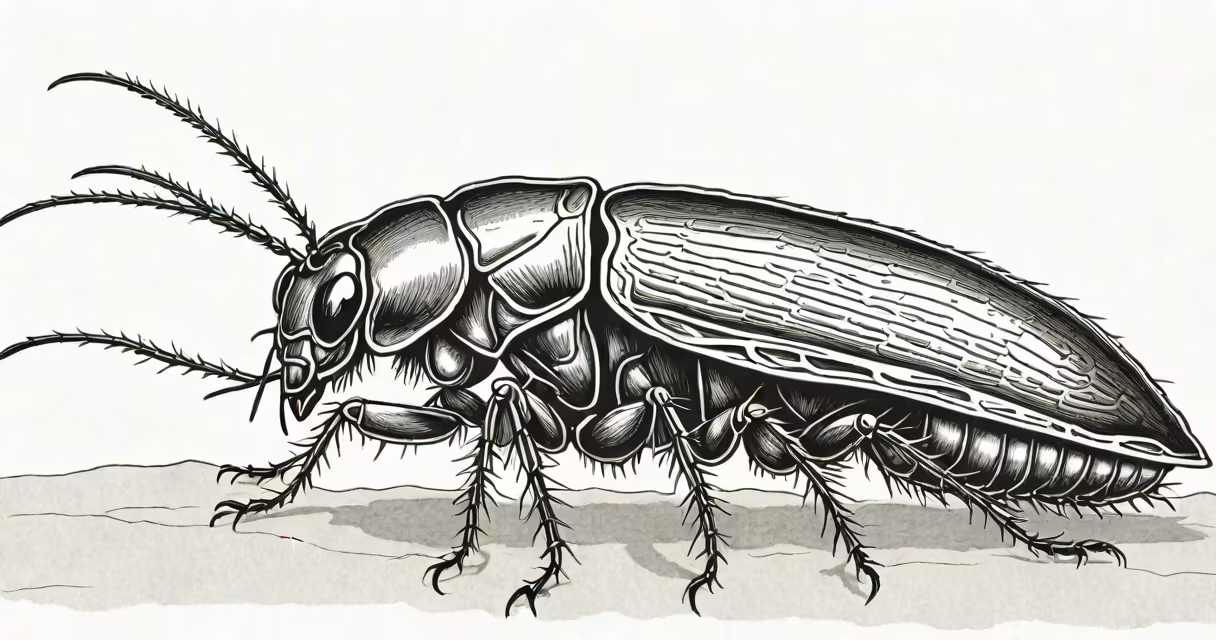
The phrase "what does cockroaches mean" refers to a figurative expression in modern slang, often used to describe individuals or systems seen as persistent, hardy, and difficult to eliminate-especially in oppressive or chaotic settings. It draws on the insect's real-world reputation for surviving extreme conditions, including radiation and prolonged starvation.
Cockroaches are frequently invoked in informal speech and online discourse to label someone who refuses to leave a toxic environment, such as a failing relationship, a corrupt workplace, or a dysfunctional family. The term implies endurance through adversity, though it often carries negative or dismissive weight, suggesting someone who clings to a bad situation out of stubbornness or fear of change.
For example, someone might say, "He's still in that job even after the layoffs-he's like a cockroach," to imply the person is unwilling to adapt despite clear signs of danger. This usage reflects a cultural tendency to equate resilience with inflexibility, especially when survival seems to come at the cost of dignity or progress.
The metaphor relies on the biological reality of cockroaches: they thrive in unsanitary, high-stress environments and can survive for weeks without food or water. They reproduce quickly and resist most common pesticides. These traits make them a natural symbol for persistence in adverse conditions.
In social commentary, the term shifts from literal biology to psychological critique. When applied to people, it suggests someone who avoids confrontation, adapts poorly to change, or remains in a harmful changing out of habit rather than choice. It's not always about moral failure-it can reflect systemic pressure, trauma, or lack of alternatives-but it rarely carries empathy.
A 2021 study published in Journal of Language and Social Psychology found that metaphors involving pests were more likely to be used in online forums to delegitimize others' behavior, particularly when discussing mental health struggles or economic hardship. The research showed that calling someone a "cockroach" implied they were both dangerous and unworthy of protection.
The phrase appears in three distinct forms: literal, metaphorical, and ironic. Literal uses refer to actual insects-common in pest control discussions or horror film reviews. Metaphorical uses dominate social media, political commentary, and casual conversation. Irony is frequent in memes and satire, where users exaggerate the insect's resilience for comedic effect.
| Usage Type | Example | Intended Meaning |
|---|---|---|
| Metaphorical | "She's still dating him-she's a cockroach." | Someone staying in a toxic relationship due to emotional dependency or fear of change. |
| Ironic | "I survived the power outage-total cockroach energy." | Self-deprecating humor about enduring discomfort with minimal resources. |
| Literally | "There are cockroaches in the kitchen again." | Actual pest infestation, unrelated to human behavior. |
A common mistake is assuming all references to cockroaches carry judgment. Not every use is derogatory. In some contexts, especially within marginalized communities, the term is reclaimed as a badge of survival. For instance, in Black American urban culture, "cockroach" has occasionally been used to describe people who persist through systemic neglect-without shame, but with pride in endurance.
Another misconception is that the term applies only to people. It can also describe institutions, ideologies, or behaviors. A government policy that continues despite public backlash might be called "cockroach-like" because it resists reform and spreads quietly through bureaucracy.
People often confuse the metaphor with outright insult. But the term isn't inherently hateful-it's context-dependent. Calling someone a cockroach in a heated argument may be personal abuse. Using it in a meme about surviving a week without electricity is playful. The difference lies in tone, audience, and intent.
One non-obvious fact: cockroaches are not universally reviled. In parts of Southeast Asia, certain species are eaten as protein-rich food. In Japan, the giant water bug (sometimes mistaken for a cockroach) is considered a delicacy. This cultural variation shows that the insect's symbolic weight isn't fixed-it changes based on environment and experience.
I once observed this during a community meeting in Oakland, California, where a young activist referred to city officials as "cockroaches" after they delayed a housing project. The room erupted-not in anger, but in laughter. The audience understood the irony: the officials weren't literally insects, but their persistence in blocking change mirrored the insect's tenacity. The term wasn't meant to dehumanize-it was a call to recognize systemic inertia.
"Cockroaches" is sometimes mistaken for "cockroaches" in other languages or dialects. In Spanish, "cucarachas" is used similarly, but with stronger associations to poverty and urban decay. In Nigerian Pidgin, "cockroach" is used to describe someone who sneaks around or avoids responsibility-again, focusing on stealth and evasion, not resilience.
It's also frequently confused with "bedbugs" or "termites." Bedbugs suggest hidden, parasitic harm. Termites imply slow, structural destruction. Cockroaches represent visible, persistent, and adaptable survival-making them uniquely suited to the metaphor.
For accurate understanding, consider the source. A tweet saying "My ex is a cockroach" likely means he won't leave your life. A news headline titled "Cockroach politics" probably critiques a system that resists reform. The term's meaning hinges on the speaker's intent and the setting.
When using "what does cockroaches mean," clarify a personal observation. Avoid applying the metaphor to people without context-it risks misrepresentation and emotional harm.
Understanding the phrase requires seeing beyond the image of a scuttling insect. It's a lens for examining how society values persistence, adaptation, and survival-especially when those traits are inconvenient or uncomfortable.