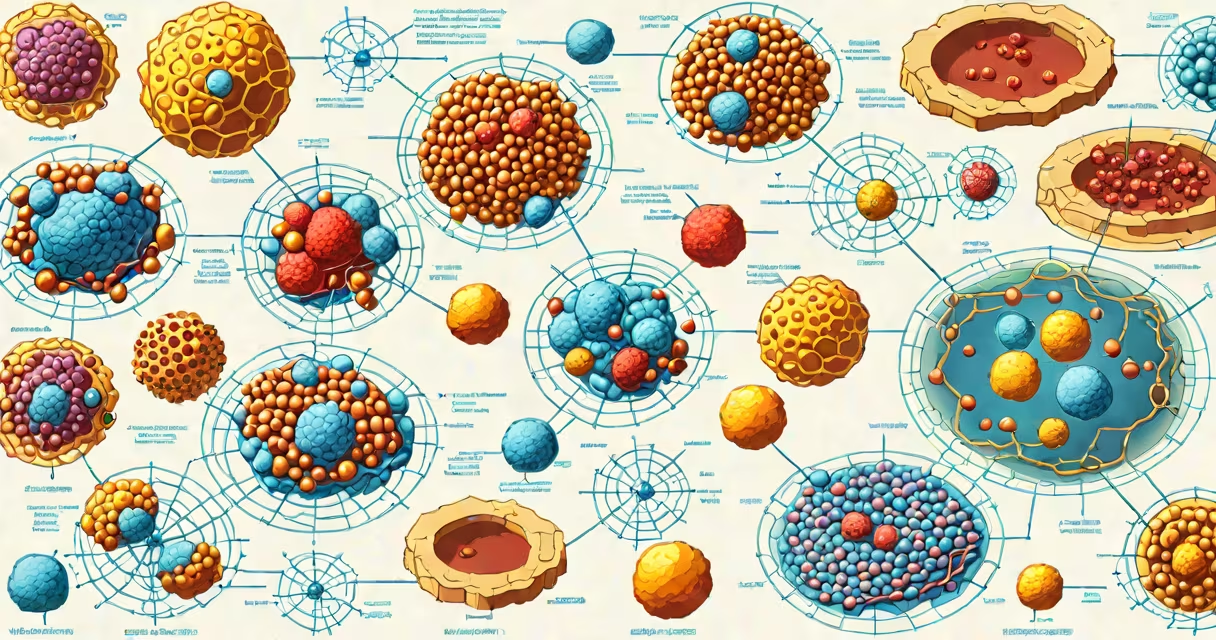
A cellular biology course is a university-level academic program focused on the structure, function, and behavior of cells-the fundamental units of life. It covers topics such as organelle specialization, membrane transport, protein synthesis, and cell cycle regulation, using experimental models and microscopy to illustrate core principles.
These courses form the core of modern life sciences education. They integrate biochemistry, genetics, and physiology to explain how cells maintain homeostasis, respond to signals, and reproduce. Students engage with lab techniques like staining, centrifugation, and fluorescence imaging to observe cellular dynamics firsthand.
At institutions like MIT and Stanford, cellular biology courses are required for majors in biology, biochemistry, and biomedical engineering. The curriculum typically spans one semester with weekly lectures, discussion sessions, and hands-on labs. Grading emphasizes problem-solving, data interpretation, and written reports based on experimental results.
Courses begin with the historical development of cell theory. Rudolf Virchow's 1855 assertion that "omnis cellula e cellula" (all cells come from cells) remains central. Modern courses build on this foundation by examining subcellular components through electron microscopy and live-cell imaging.
Laboratory modules simulate real-world research. For example, students may isolate mitochondria from liver tissue using differential centrifugation, then measure oxygen consumption via respirometry. This demonstrates how energy production occurs within organelles and connects theory to measurable outcomes.
Assessments often involve analyzing published datasets. A typical assignment asks students to interpret fluorescence intensity changes in HeLa cells treated with a drug that disrupts microtubule formation. This requires understanding both the biological mechanism and statistical significance of observed effects.
Cellular biology courses vary by institution and level. Undergraduate programs emphasize conceptual mastery and basic lab skills. Graduate-level offerings explore advanced topics like autophagy, apoptosis signaling cascades, and synthetic biology applications.
| Level | Typical Duration | Key Topics | Lab Focus |
|---|---|---|---|
| Undergraduate | 1 semester (14 weeks) | Cell membrane dynamics, mitosis, glycolysis | Staining, phase contrast microscopy |
| Graduate | Full academic year | Apoptosis pathways, endocytosis mechanisms, CRISPR-based gene editing | Confocal imaging, flow cytometry |
| Professional Certificate | 6-12 weeks | Cell culture techniques, quality control in biomanufacturing | Contamination prevention, sterile technique |
Some programs offer hybrid formats combining online lectures with in-person lab rotations. For instance, a course at Johns Hopkins uses virtual reality simulations to model vesicle trafficking in neurons, allowing students to manipulate variables in real time.
These courses serve multiple purposes. In medical school admissions, strong performance in cellular biology correlates with success in MCAT exams. According to the Association of American Medical Colleges, students scoring above the 75th percentile in biology-related MCAT sections are 2.3 times more likely to gain acceptance to MD programs.
Research institutions rely on trained personnel who understand cellular systems. At the National Institutes of Health, postdoctoral fellows use cellular biology training to design experiments involving primary cell lines derived from patient tumors. This enables targeted therapy development based on tumor cell metabolism.
Biotech companies also depend on this knowledge. A 2022 study published in *Nature Biotechnology* found that employees with formal cellular biology training were 40% faster at troubleshooting issues in recombinant protein expression systems compared to those without structured coursework.
People often confuse cellular biology with molecular biology. While both study biomolecules, molecular biology focuses on DNA, RNA, and proteins at the chemical level. Cellular biology examines how these molecules interact within the context of whole cells and tissues.
Another misunderstanding is that cellular biology is purely theoretical. In reality, it demands rigorous lab practice. During my time teaching at a public university, I observed that students who skipped lab prep consistently failed to identify nuclear condensation in apoptotic cells during histology exams-even after reviewing lecture slides.
A lesser-known fact: many cellular biology courses now incorporate single-cell sequencing data analysis. Students learn to process raw FASTQ files using tools like Cell Ranger and visualize clusters in UMAP plots. This reflects a shift toward computational literacy in the field, driven by advances in high-throughput screening technologies.
In 2021, a team at the University of California, San Diego used a cellular biology course structure to investigate how SARS-CoV-2 enters human lung cells. Students analyzed viral spike protein binding affinity to ACE2 receptors using surface plasmon resonance data. They then modeled entry efficiency under varying pH conditions, linking biochemical parameters to infection risk.
The project resulted in a peer-reviewed paper published in *Journal of Virology*. It demonstrated how classroom learning translates into actionable scientific insight. The findings helped refine early-stage antiviral drug screening protocols.
Understanding the structure and purpose of a cellular biology course clarifies its role in science education. It is not merely a prerequisite-it is a gateway to comprehending life at its most fundamental level. Mastery of this subject enables breakthroughs in health, agriculture, and environmental science.