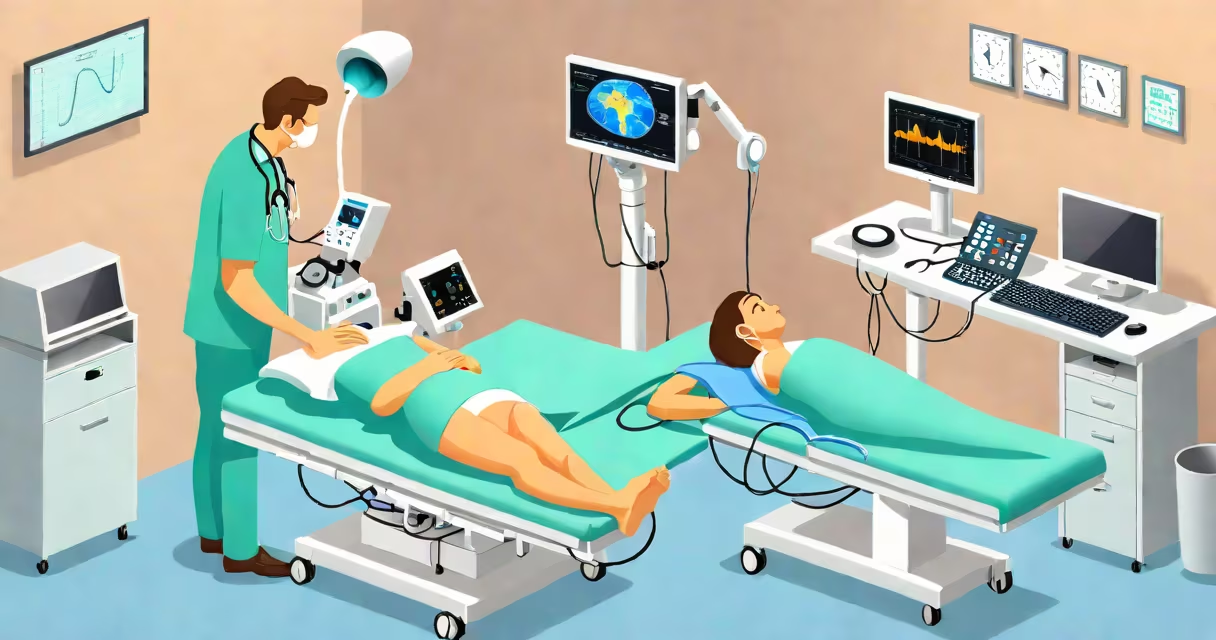
A doctor who performs ultrasounds is most often a registered diagnostic medical sonographer or a radiologist. Sonographers operate the equipment and capture images, while radiologists interpret them. The term "doctor" applies only to radiologists, who are physicians with medical degrees.
Sonographers are certified healthcare professionals trained specifically in ultrasound technology. They use high-frequency sound waves to create real-time images of internal organs, blood flow, and developing fetuses. These images help diagnose conditions such as gallstones, heart abnormalities, and pregnancy complications. According to the American Registry for Diagnostic Medical Sonography (ARDMS), sonographers must pass rigorous exams to earn credentials like RDMS (Registered Diagnostic Medical Sonographer).
Radiologists are physicians who complete medical school, a four-year residency in radiology, and often additional fellowship training. They interpret ultrasound images alongside other imaging modalities like MRI and CT scans. When a patient receives a diagnosis based on an ultrasound, it is usually the radiologist who signs off on the report. The American Board of Radiology confirms that radiologists must maintain board certification through continuing education and periodic assessments.
Ultrasound uses sound waves above human hearing range-typically between 2 and 18 megahertz-to generate images. A transducer sends pulses into the body, which bounce off tissues and return as echoes. The machine converts these echoes into visual images displayed on a screen. Because ultrasound does not use ionizing radiation, it is safe for pregnant women and children.
For example, during a prenatal ultrasound, a sonographer moves the transducer across the mother's abdomen to visualize fetal development. Images show the baby's limbs, heart, and brain structure. If anomalies are detected, a radiologist reviews the scan and may recommend further testing. This process ensures accurate monitoring of both maternal and fetal health.
Some specialized ultrasound procedures require advanced expertise. Doppler ultrasound measures blood flow velocity and direction, useful in detecting blocked arteries or deep vein thrombosis. Echocardiograms assess heart function and are performed by sonographers trained in cardiac imaging. These exams demand precise technique and interpretation skills.
Not all ultrasound providers are doctors. The following table outlines key roles and their responsibilities:
| Role | Training Required | Scope of Practice | Can Interpret Results? |
|---|---|---|---|
| Sonographer | Associate degree or certificate program; ARDMS certification | Operates ultrasound equipment; captures images | No - reports are reviewed by physicians |
| Radiologist | Medical degree; 4-year radiology residency; board certification | Interprets ultrasound results; diagnoses conditions | Yes - legally responsible for findings |
| Cardiologist | MD or DO; cardiology fellowship; echocardiography training | Performs cardiac-specific ultrasounds | Yes - interprets heart-related scans |
While sonographers are essential to image acquisition, they do not diagnose. Their role ends when the scan is complete. The final interpretation and clinical decision-making rest with a physician. Misunderstanding this division leads to confusion about who "does" the ultrasound.
Many people assume that anyone operating an ultrasound machine is a doctor. This is incorrect. A sonographer may have years of experience and advanced training, but unless they hold an MD or DO degree, they are not a physician. The title "doctor" in medicine refers exclusively to individuals who have completed medical school and residency.
Another misconception is that ultrasound is always performed by a specialist. In reality, many general practitioners and emergency room physicians perform point-of-care ultrasounds during acute care visits. For instance, a doctor might use a handheld ultrasound to check for fluid around the heart in a trauma patient. However, these are limited-use applications and not replacements for formal diagnostic imaging.
A lesser-known fact: some sonographers advance into leadership roles, such as department managers or educators. Others specialize in research or develop new imaging techniques. The field offers diverse career paths beyond direct patient care. According to the U.S. Bureau of Labor Statistics, employment for diagnostic medical sonographers is projected to grow 12% from 2022 to 2032-faster than average for all occupations.
I once observed a pelvic ultrasound at a community clinic. The sonographer, a woman with over ten years of experience, guided the patient through positioning and explained each step. She adjusted the probe pressure and angle to clarify tissue boundaries. After capturing several views, she handed the images to a radiologist for review. The patient later received a written report stating no masses were detected. The sonographer never diagnosed the condition-she only captured the data.
This moment highlighted the clear division of labor: sonographers collect, radiologists interpret. Both are important, but neither replaces the other. Confusing the roles can lead patients to misattribute responsibility or misunderstand test results.
If your doctor orders an ultrasound, you'll likely meet a sonographer first. They'll explain the procedure, apply gel, and move the probe. You may not see a physician until the results are ready. In some cases, especially for complex or abnormal findings, a radiologist may consult directly with your primary care provider.
For example, if an abdominal ultrasound shows a suspicious liver lesion, the radiologist will send a detailed report to your doctor. They'll discuss whether a biopsy or follow-up scan is needed. In rare cases, a radiologist may perform a guided ultrasound procedure, such as inserting a needle into a cyst under real-time imaging. These interventions require advanced training and are not routine.
Understanding the difference between sonographer and radiologist prevents miscommunication. Knowing who performs the scan and who interprets it helps patients ask informed questions and understand their care path.
When you ask "what is the doctor called that does ultrasounds," the answer depends on context. If you mean the person operating the machine, it's a sonographer. If you mean the physician who analyzes the images and makes a diagnosis, it's a radiologist. Both are essential to effective ultrasound use.