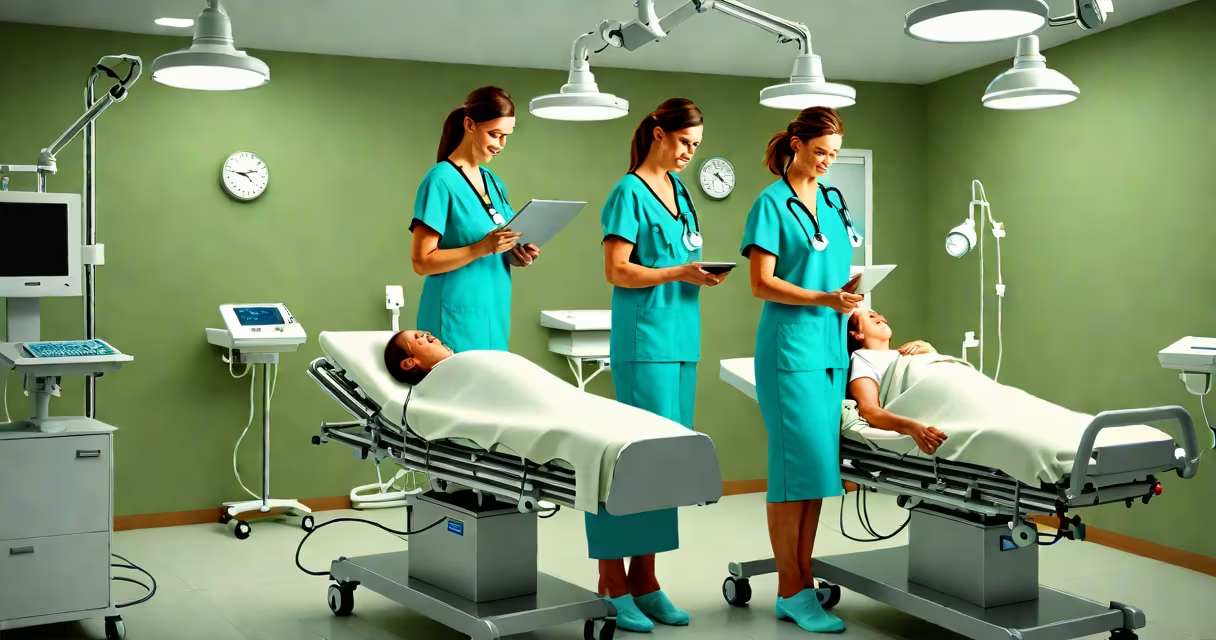
Labor and delivery nurses must hold a registered nurse license, a Bachelor of Science in Nursing (BSN), and certification in maternal-newborn care. They work in hospitals, monitoring pregnant patients during labor, supporting birth, and providing immediate postpartum care.
These nurses are responsible for tracking fetal heart rates, administering medications, managing complications like hemorrhage or preeclampsia, and guiding new parents through early newborn care. Their role demands clinical precision, emotional resilience, and rapid decision-making under pressure.
The National Association of Neonatal Nurses (NANN) reports that 92% of labor and delivery units require at least one certified maternal-newborn nurse (RNC-MNN) on staff during shifts. This standard reflects the complexity of care delivered during childbirth.
Labor and delivery nurses assess patients every 15 to 30 minutes during active labor. They interpret electronic fetal monitoring strips, detect signs of fetal distress, and communicate findings to obstetricians or midwives. A drop in fetal heart rate below 110 beats per minute sustained for more than 10 minutes may trigger an emergency cesarean section.
Nurses administer epidurals under physician orders, manage IV fluids, and assist with episiotomies or vacuum deliveries. After birth, they perform newborn assessments using the Apgar score-measuring heart rate, breathing, color, reflexes, and muscle tone at 1 and 5 minutes post-birth.
One shift can include multiple births. A nurse in a high-volume urban hospital may support five deliveries in a 12-hour shift, often with minimal staffing. The American College of Nurse-Midwives notes that nurse-to-patient ratios in such settings average 1:3, compared to 1:1 in low-risk home births.
Every U.S. state requires a registered nurse (RN) license obtained through passing the NCLEX-RN exam. Most labor and delivery positions prefer candidates with a BSN, though associate degree (ADN) graduates may qualify with additional training.
Certification in Maternal-Newborn Nursing (RNC-MNN) is offered by the National Certification Corporation (NCC). To qualify, applicants must have at least 1,000 hours of direct labor and delivery experience within the past two years. The exam covers antepartum, intrapartum, and postpartum care, including medication safety and emergency response protocols.
| Requirement | Details |
|---|---|
| Education | BSN preferred; ADN accepted with experience |
| Licensure | State RN license via NCLEX-RN |
| Certification | RNC-MNN required by 68% of hospitals (NCC, 2023) |
| Experience | Minimum 1,000 hours in labor and delivery |
Some facilities offer paid orientation programs lasting 6 to 12 weeks. New nurses typically shadow experienced staff before working independently. Hospitals in rural areas may accept less experience due to staffing shortages.
Labor and delivery nurses are not midwives. Midwives are independent practitioners who deliver babies without physician oversight. In contrast, L&D nurses work under medical supervision and focus on patient monitoring and procedural support.
Another misconception is that L&D nurses only assist with vaginal births. In reality, they manage all delivery types-including cesarean sections. During C-sections, they prepare the operating room, monitor important signs, and assist surgeons with instrument handling.
A key distinction: L&D nurses do not provide long-term neonatal care. That responsibility falls to neonatal intensive care unit (NICU) nurses. For example, a baby born at 34 weeks with respiratory distress requires transfer to the NICU. The L&D nurse ensures stable transport, while the NICU team assumes ongoing management.
In a 2022 case documented by the Journal of Perinatal Education, a labor and delivery nurse identified late decelerations on a fetal monitor during a 38-week pregnancy. The fetus showed a heart rate dropping to 80 bpm for 45 seconds. The nurse initiated oxygen via face mask, changed the mother's position, and alerted the obstetrician.
After 10 minutes of stabilization, the fetal heart rate remained abnormal. The team decided on an emergency cesarean section. The nurse prepared the mother for surgery, administered prophylactic antibiotics, and coordinated with anesthesia. The baby was delivered at 3:17 PM, scored 8/10 on the Apgar test, and transferred to the nursery.
This scenario illustrates how L&D nurses act as frontline clinicians during critical moments. Their ability to recognize patterns, respond quickly, and coordinate care directly impacts outcomes.
I once assisted in a delivery where the mother had a history of gestational diabetes. Her blood sugar spiked during labor. I monitored glucose levels every 30 minutes and adjusted insulin doses based on protocol. The baby was born with mild hypoglycemia but recovered fully after feeding. This experience confirmed that L&D nurses manage both maternal and neonatal physiology simultaneously.
According to the Bureau of Labor Statistics, demand for registered nurses in obstetrics grew 12% between 2021 and 2031-faster than average. This growth stems from rising birth rates and increased access to prenatal care in underserved communities.
Hospitals with Level III perinatal centers-those equipped to handle high-risk pregnancies-require L&D nurses trained in advanced airway management and emergency obstetric care. These units often serve as regional referral centers.
For example, the University of California San Diego Medical Center performs over 5,000 births annually. Its L&D unit employs 45 nurses, all certified in maternal-newborn care. The facility uses standardized checklists for every delivery, reducing error rates by 34% since implementation in 2020.
Being a labor and delivery nurse requires formal education, clinical experience, and specialized certification. The role blends technical skill with emotional support, making it one of the most demanding yet rewarding paths in nursing.