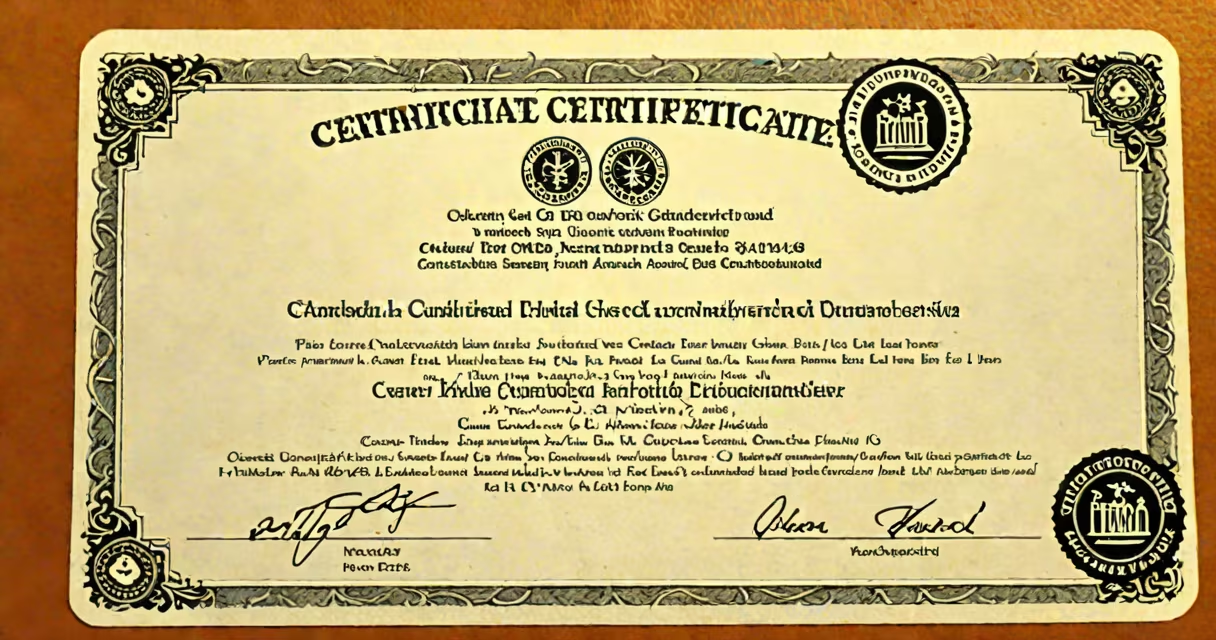
A CNA certificate is a laminated, wallet-sized card issued by a state's nursing board after passing the CNA exam. It contains the holder's name, state-issued license number, expiration date, and official state seal. The card is typically issued within 10 business days of passing the state competency exam.
Certification is mandatory for working as a certified nursing assistant in the United States. The U.S. Department of Health and Human Services confirms that all states require CNA certification for employment in long-term care facilities, home health agencies, and hospitals.
The card is not a license to practice independently but serves as proof of training completion and successful examination. It must be renewed every two years through continuing education credits or retaking the state exam.
Each CNA certificate follows a standardized format, though design elements vary slightly by state. The front side includes:
The back side typically contains:
For example, New York State issues a blue-and-white card with a holographic security strip. California uses a dark green card with a raised embossed seal. Both include a unique 9-digit license number and a photo.
Many confuse a CNA certificate with a CNA license. The certificate is the physical document; the license is the legal authorization to work. The license is verified via the state's nurse aide registry, not the card itself.
Another common error is assuming all CNA certificates are identical. While federal guidelines exist, each state sets its own design standards. Florida's card features a red border and a palm tree icon; Texas uses a silver-gray card with a state flag motif.
Some individuals mistake temporary training completion certificates for official CNA credentials. These documents, often issued during CNA program enrollment, lack state seals and expiration dates. They are valid only for program progression, not employment.
Employers must verify CNA status through the National Nurse Aide Assessment Program (NNAAP) database. The NNAAP, managed by the U.S. Department of Health and Human Services, maintains a public registry accessible at nursingassistance.org.
To verify a CNA certificate, enter the license number and state of issuance. For example, entering "NYCNA1234567" and selecting New York returns the name, certification status, and last renewal date. This process prevents fraud and ensures compliance with federal staffing regulations.
During facility inspections, surveyors check both the physical card and the registry entry. A mismatch between the two results in immediate noncompliance findings. In 2022, the Centers for Medicare & Medicaid Services reported that 14% of nursing homes failed initial audits due to unverified CNA staff.
Consider two scenarios:
Only the first meets federal requirements. The second cannot be used for patient care under CMS rules.
After completing a state-approved CNA training program and passing the state exam, candidates receive their certificate by mail within 10 business days. The process takes longer if the application is incomplete or the test score is below passing threshold (typically 80%).
If lost or damaged, replacement requires submitting a formal request to the state board. Fees range from $10 to $30 depending on the state. For example, Illinois charges $25 for a replacement card and processes requests within 14 days.
I once replaced my own CNA certificate after a flood damaged the original. I submitted the form online, paid $15, and received a new card in 12 days. The new card had the same design and license number as the original.
These differences show the importance of checking state-specific requirements before applying for certification.
Always verify a CNA certificate using the official state registry. Never accept a card without a photo, expiration date, or state seal. Fraudulent cards are increasingly common in job postings and staffing agencies.
According to the National Council of State Boards of Nursing, 3% of CNA applicants in 2023 submitted falsified documentation. Most were caught during employer verification steps.
Understanding what a CNA certificate looks like ensures safe staffing practices and protects patients. Always confirm the document's authenticity before accepting someone into a healthcare role.