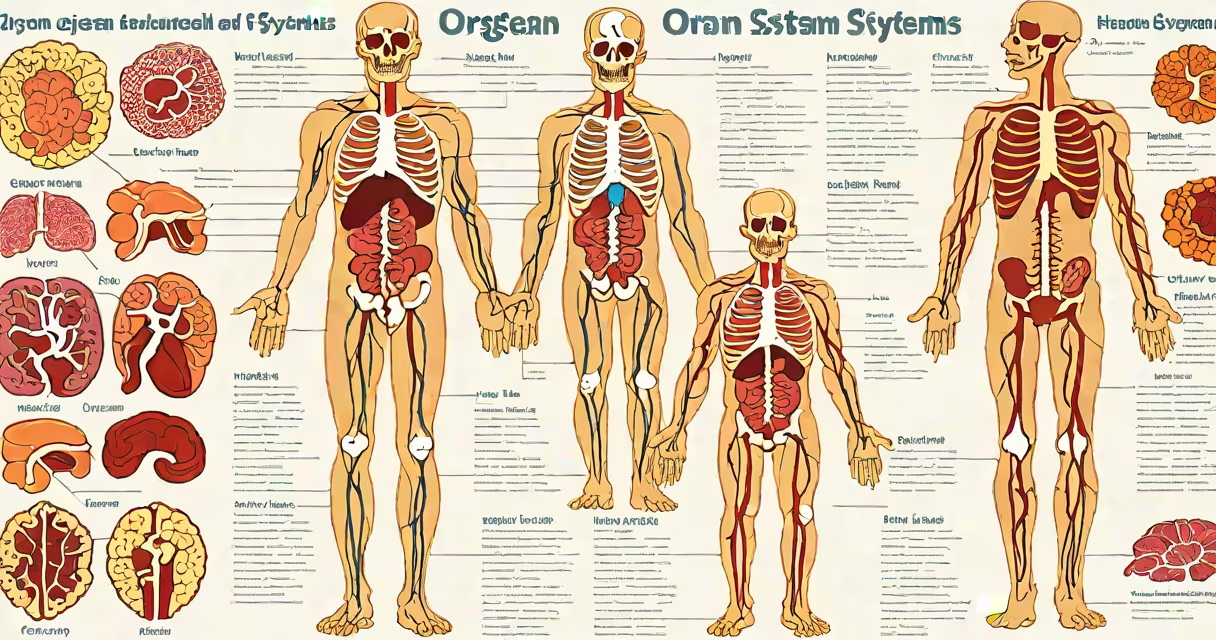
Organ systems are groups of organs that work together to perform specific bodily functions essential for survival. The human body contains eleven major organ systems, including the cardiovascular, respiratory, digestive, nervous, and reproductive systems.
Each system coordinates multiple organs to maintain homeostasis-the stable internal environment needed for life. For example, the circulatory system moves oxygen, nutrients, and waste throughout the body using the heart, blood vessels, and blood.
These systems do not operate in isolation. They interact constantly, such as when the respiratory system supplies oxygen to the circulatory system, which then delivers it to cells used by the muscular system during movement.
Every organ system performs a unique set of tasks. The nervous system processes sensory input and controls muscle activity through electrical signals. The skeletal system provides structure and protection, while the muscular system enables motion and heat production.
The endocrine system regulates metabolism, growth, and mood via hormones released into the bloodstream. The kidneys, part of the urinary system, filter toxins and balance fluids and electrolytes. The immune system defends against pathogens using specialized cells and antibodies.
When one system fails, others compensate. For instance, during dehydration, the renal system reduces urine output, while the endocrine system releases antidiuretic hormone (ADH) to conserve water. This coordination ensures stability despite changing conditions.
There are eleven primary organ systems in humans. Each serves a distinct purpose, and their combined effort maintains health and function.
| System | Key Organs | Main Function |
|---|---|---|
| Circulatory | Heart, blood vessels, blood | Transports oxygen, nutrients, hormones, and waste |
| Respiratory | Lungs, trachea, diaphragm | Exchanges oxygen and carbon dioxide between air and blood |
| Digestive | Mouth, esophagus, stomach, intestines, liver, pancreas | Breaks down food into absorbable molecules |
| Nervous | Brain, spinal cord, nerves | Processes information and coordinates responses |
| Endocrine | Pituitary gland, thyroid, adrenal glands, pancreas | Regulates body processes through hormone release |
| Skeletal | Bones, cartilage, ligaments | Supports body, protects organs, enables movement |
| Muscular | Skeletal muscles, cardiac muscle, smooth muscle | Produces movement and generates heat |
| Urinary | Kidneys, ureters, bladder, urethra | Filters blood, removes metabolic waste, balances fluids |
| Reproductive | Ovaries, uterus, testes, penis | Produces gametes and supports fetal development |
| Integumentary | Skin, hair, nails | Protects against injury and infection, regulates temperature |
| Immune | Spleen, lymph nodes, bone marrow, white blood cells | Fights infections and monitors abnormal cells |
Some systems have overlapping roles. The integumentary system acts as a physical barrier and also helps regulate body temperature through sweat glands-a function shared with the nervous system's thermoregulation centers.
One non-obvious fact: the lymphatic system, often grouped under immunity, is technically a separate network that drains excess fluid from tissues and transports fats from the digestive tract. It lacks a pump like the heart and relies on muscle contractions and valves to move fluid.
People often confuse organ systems with individual organs. The heart is an organ, but it belongs to the circulatory system. Similarly, the brain is part of the nervous system-not a standalone entity.
Another misconception is that systems act independently. In reality, they communicate continuously. When you exercise, your muscular system demands more oxygen. Your respiratory system increases breathing rate, and your circulatory system boosts blood flow-all coordinated by the nervous system.
Even the term "system" can mislead. A system implies a structured hierarchy, but organ systems are changing networks. For example, the endocrine system doesn't have a central control unit-it uses feedback loops across glands and target organs.
Consider eating a sandwich. As you chew, salivary glands in your mouth begin breaking down carbohydrates. The food travels down the esophagus via peristalsis-wave-like muscle contractions.
In the stomach, acid and enzymes further break down proteins. The small intestine absorbs nutrients through villi-tiny finger-like projections that increase surface area. The liver produces bile to emulsify fats, and the pancreas secretes digestive enzymes into the duodenum.
Once absorbed, glucose enters the bloodstream. The circulatory system carries it to cells. Insulin, released by the pancreas, signals cells to take up glucose for energy. Any excess is stored in the liver and muscles as glycogen.
This entire process involves six organ systems working in sequence: digestive, circulatory, endocrine, nervous, muscular (for chewing), and urinary (to excrete waste products).
Knowledge of organ systems helps explain disease progression. Diabetes results from dysfunction in the endocrine system-specifically insulin production or response. Heart attacks occur when the circulatory system fails due to blocked coronary arteries.
Medical professionals diagnose based on system involvement. A patient with shortness of breath may have issues in the respiratory or circulatory system. Doctors use tests like chest X-rays, EKGs, and blood panels to pinpoint the affected system.
For students, understanding organ systems builds a foundation for advanced topics in anatomy, physiology, and pathology. It also clarifies how lifestyle choices affect long-term health-such as how smoking damages the respiratory system and increases risk of lung cancer.
I once observed a high school biology class where students dissected a frog. One group struggled to locate the heart until they understood it was part of the circulatory system and thus positioned near the center of the body. Once they connected the organ to its system function, identification became straightforward.
Understanding what are examples of organ systems isn't just academic-it's practical. It reveals how the body integrates thousands of processes into a single functioning whole.
Recognizing the role of each system allows better decision-making about health, fitness, and medical care. managing a chronic condition, knowing how organ systems work together gives clarity and context.
Learning about organ systems begins with identifying them-like the nervous system controlling reactions, or the reproductive system enabling new life. These are not abstract ideas. They are real, measurable, and important components of human existence.