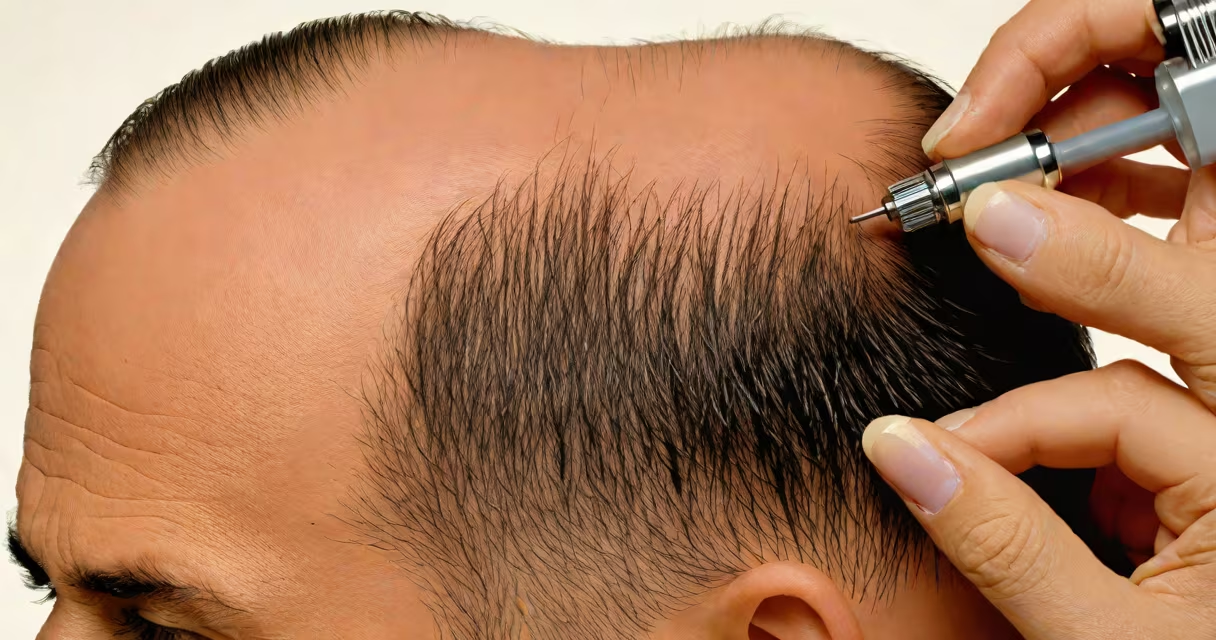
Alopecia, particularly alopecia areata, occurs when the immune system mistakenly targets hair follicles, leading to patchy hair loss. Stopping its spread requires early intervention, medical treatment, and consistent management to suppress immune activity and protect remaining hair.
Alopecia areata affects about 2% of the global population at some point in life, according to the American Academy of Dermatology Association (AAD). The condition often begins with one or more round patches of hair loss on the scalp, eyebrows, or beard. Without treatment, these patches may grow larger or merge into more extensive bald areas. Early action improves outcomes.
While alopecia cannot always be reversed, progression can be halted or slowed through targeted therapies. The goal is to reduce inflammation around hair follicles and restore immune tolerance. Treatment success varies by individual, but response rates improve when therapy begins within six months of symptom onset.
Alopecia areata is an autoimmune disorder. In healthy individuals, the immune system defends against pathogens. In alopecia, it misidentifies hair follicles as threats and launches an attack. This causes inflammation, follicle miniaturization, and eventual hair shedding.
The process starts with T-cells infiltrating the hair follicle bulge-the region housing stem cells responsible for hair regeneration. Once activated, these immune cells release cytokines like interferon-gamma and tumor necrosis factor-alpha, which disrupt the hair growth cycle. As follicles enter a prolonged resting phase (telogen), they fail to produce new hairs.
Spread happens when immune activity extends beyond initial sites. New patches form as the autoimmune response migrates across the scalp or spreads to other body regions. Factors like stress, infections, or genetic predisposition can trigger or worsen flare-ups. Research shows that people with a family history of autoimmune diseases are at higher risk of progression.
Topical corticosteroids are often the first-line treatment. Applied directly to affected areas, they reduce local inflammation and suppress immune cell infiltration. A 2021 study published in *JAMA Dermatology* found that 60% of patients using 0.05% clobetasol propionate twice daily showed visible regrowth after 16 weeks, with reduced spread in 72% of cases.
Intralesional corticosteroid injections deliver higher concentrations directly into the scalp. They're effective for small, stable patches. A single injection every 3-4 weeks can halt progression in 80% of treated lesions, according to the National Alopecia Areata Foundation (NAAF).
For widespread or rapidly progressing alopecia, systemic therapies are used. Janus kinase (JAK) inhibitors like ruxolitinib and tofacitinib block signaling pathways involved in immune activation. Clinical trials show that 50-60% of patients achieve significant hair regrowth and halting of spread after 24 weeks of treatment. These drugs are FDA-approved for severe cases but require monitoring due to infection risks.
| Treatment Type | Application Method | Effectiveness in Halting Spread | Common Side Effects |
|---|---|---|---|
| Topical corticosteroids | Applied twice daily | 72% reduction in spread over 16 weeks | Thinning skin, striae, rebound flares |
| Intralesional steroids | Injected every 3-4 weeks | 80% lesion stabilization | Pain, hypopigmentation, atrophy |
| JAK inhibitors (oral) | Daily pill | 50-60% halting rate in 24 weeks | Increased infection risk, elevated liver enzymes |
Stress does not cause alopecia, but it can trigger flares or accelerate spread. Chronic psychological stress elevates cortisol levels, which may alter immune function. A 2020 study in *Psychosomatic Medicine* linked high-stress events to a 3.2-fold increase in relapse risk among patients with existing alopecia areata.
Nutritional deficiencies can also impact disease course. Low serum levels of vitamin D, iron, and zinc correlate with increased severity and faster progression. One study found that correcting low vitamin D (<20 ng/mL) improved outcomes in 45% of patients who received supplementation alongside standard care.
Smoking is associated with worse prognosis. Data from the NAAF indicates smokers are 2.3 times more likely to experience progressive hair loss compared to non-smokers. Nicotine reduces blood flow to the scalp and increases oxidative stress, both of which impair follicle health.
Many assume that hair loss treatments like minoxidil or biotin prevent spread. Minoxidil stimulates blood flow and prolongs the anagen (growth) phase, but it doesn't address the underlying autoimmune mechanism. It may help regrow hair in stable areas but won't stop new patches from forming.
Biotin supplements are widely marketed for hair health. However, clinical trials show no benefit in preventing alopecia progression in individuals with normal biotin levels. Excess intake can interfere with lab tests and lead to false results.
Another myth is that scalp massage or essential oils can reverse immune attack. While gentle scalp stimulation may improve circulation, there is no evidence that rosemary oil, peppermint oil, or other natural remedies halt autoimmunity. Overuse of essential oils can irritate the scalp and worsen inflammation.
Consider a 32-year-old woman who noticed a coin-sized bald spot on her crown. She consulted a dermatologist within four weeks of onset. Blood work revealed low vitamin D (15 ng/mL) and mild iron deficiency. She began applying clobetasol 0.05% twice daily and started oral vitamin D3 (2000 IU/day) and iron (65 mg ferrous sulfate/day).
After eight weeks, the patch stopped expanding. By 16 weeks, she had partial regrowth. Her follow-up labs showed normalized vitamin D and iron levels. She maintained the regimen and avoided stress triggers. No new patches developed over the next 12 months.
This case illustrates that combining medical treatment with nutritional correction improves outcomes. Delayed treatment increases the chance of permanent follicle damage.
If you notice sudden, round patches of hair loss, see a board-certified dermatologist within one month. Early diagnosis allows for timely treatment and better long-term control. Delaying care increases the risk of progression to alopecia totalis (complete scalp loss) or universalis (total body hair loss).
Not all hair loss is alopecia. Other conditions like telogen effluvium (stress-related shedding), fungal infections, or traction alopecia mimic alopecia areata. Accurate diagnosis prevents ineffective treatment. A scalp biopsy or dermoscopy may be needed to confirm autoimmune involvement.
Stopping the spread of alopecia is achievable. Success hinges on recognizing symptoms early, using proven medical interventions, correcting modifiable risk factors, and avoiding unproven remedies. With consistent care, many people stabilize their condition and preserve remaining hair.