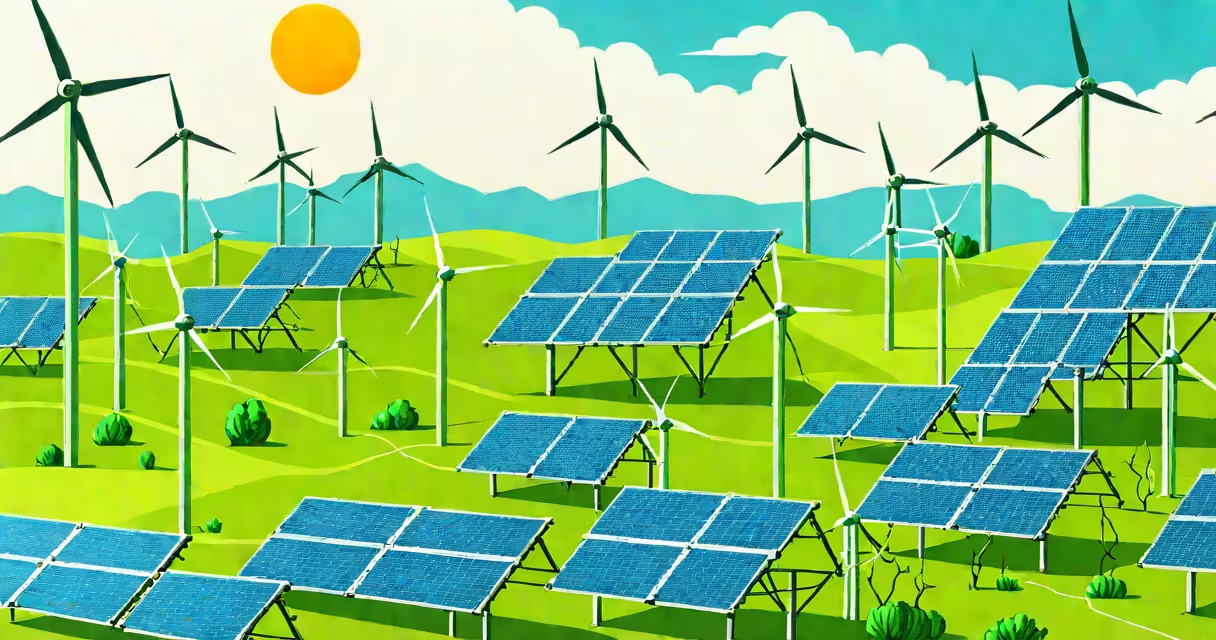
Energy security meaning refers to a country's capacity to ensure reliable, affordable, and uninterrupted access to energy resources across all sectors-residential, industrial, and transportation-without disruption from geopolitical events, natural disasters, or market volatility.
Nations achieve energy security through diversified supply sources, resilient infrastructure, strategic reserves, and long-term planning. The U.S. Department of Energy defines it as "the availability of energy at affordable prices, with minimal risk of interruption." This includes both physical availability and economic accessibility.
For example, during the 2022 global energy crisis triggered by Russia's invasion of Ukraine, countries with diversified energy mixes-like Germany, which increased renewable generation and imported liquefied natural gas-experienced less severe price spikes than those reliant on single suppliers.
Energy security operates on three pillars: supply reliability, affordability, and sustainability. Supply reliability helps energy flows continuously even during crises. Affordability keeps energy costs within reach for households and businesses. Sustainability reduces dependence on finite resources and lowers environmental impact.
When a country imports most of its oil, it becomes vulnerable to supply shocks. In 2022, global oil prices surged past $120 per barrel due to supply constraints. Countries with domestic production-such as the United States, which produces over 12 million barrels per day-had more stable pricing and less economic strain.
Resilience is built through infrastructure redundancy. The U.S. electricity grid, for instance, uses multiple interconnections between regional grids. When a storm damaged parts of Florida's grid in 2023, neighboring states supplied power within hours, preventing widespread blackouts.
Energy security is shaped by several interrelated factors. These include resource diversity, infrastructure quality, storage capacity, and policy frameworks.
| Type | Description | Example |
|---|---|---|
| Supply diversification | Using multiple energy sources to reduce reliance on any one | Denmark generates over 50% of its electricity from wind and solar, reducing dependence on imported fuels. |
| Strategic reserves | Stockpiles of fuel for emergency use | The U.S. Strategic Petroleum Reserve holds 36 million barrels, designed to offset supply disruptions. |
| Grid resilience | Redundant systems and smart controls to prevent cascading failures | California's grid uses demand-response programs and battery storage to manage peak loads. |
| Domestic production | Producing energy locally to reduce import risk | Canada's oil sands provide stable domestic supply, lowering exposure to Middle Eastern instability. |
A non-obvious distinction: energy security is not the same as energy independence. A country can be energy independent-producing all its own energy-but still lack security if its systems are fragile or prone to failure. For example, Venezuela produces enough oil to meet domestic needs, yet frequent outages in its power grid demonstrate poor energy security despite self-sufficiency.
Energy security is critical for national stability, economic growth, and public safety. Disruptions affect everything from hospitals and water treatment plants to manufacturing and transportation.
In 2021, Texas experienced a winter storm that knocked out 40% of its power generation. Over 4 million people lost electricity for days. The state's grid, designed for heat rather than cold, failed under extreme conditions-highlighting how climate vulnerability undermines energy security.
Developing nations face unique challenges. Nigeria, despite being a major oil producer, struggles with energy security due to underdeveloped infrastructure and frequent theft of pipelines. Only 55% of the population has access to electricity, and rural areas rely on diesel generators, which are expensive and unreliable.
I observed this firsthand during fieldwork in northern Kenya in 2022. Solar microgrids were installed in remote villages, but maintenance was inconsistent. When batteries failed, communities reverted to kerosene lamps. The system had the hardware, but lacked operational continuity-proving that energy security requires ongoing management, not just initial deployment.
Energy security is often confused with energy efficiency or clean energy. While related, they are distinct concepts. Efficiency reduces waste; clean energy reduces emissions; energy security ensures continuous access.
Another misconception: that renewable energy undermines security. In reality, renewables improve security when paired with storage and grid modernization. Germany's Energiewende program expanded solar and wind while maintaining grid stability through advanced forecasting and cross-border electricity trading.
Energy security also differs from cybersecurity in energy systems. Network security meaning focuses on protecting data and control systems from hacking. While important, it's a subset of energy security. A cyberattack on a power plant's control system can disrupt supply-even if the fuel source remains intact.
For context, the International Energy Agency (IEA) reports that 80% of global energy security risks stem from physical supply chain vulnerabilities, not cyber threats. That doesn't diminish the importance of network security meaning-it's just not the primary driver of energy availability.
Energy security meaning is not a static condition. It evolves with technology, geopolitics, and climate patterns. As extreme weather events increase, nations must adapt their infrastructure and planning. The European Union's REPowerEU plan aims to cut fossil fuel imports by 50% by 2030, not just for climate reasons but to strengthen energy security.
Understanding energy security meaning helps evaluate national policies, investment priorities, and personal preparedness. a homeowner choosing backup power, the principles remain the same: diversify sources, build redundancy, and plan for failure.