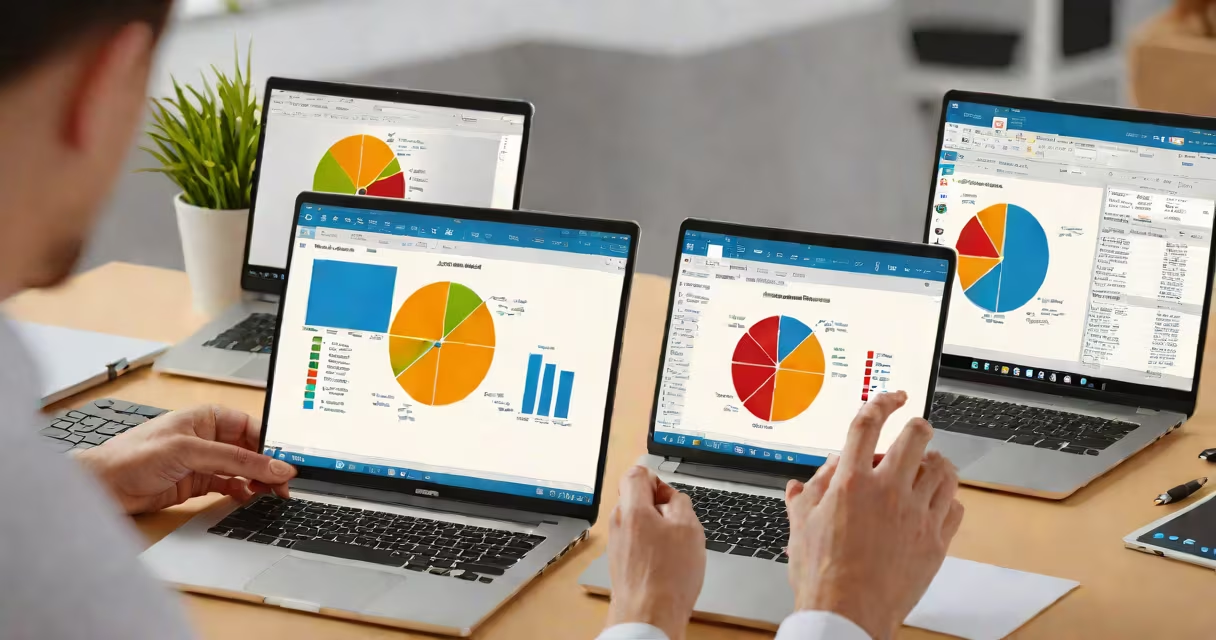
Students can use SPSS for free through institutional subscriptions, trial versions, or licensed access provided by their university's research or computing departments. These programs offer full functionality during enrollment, eliminating the need for personal payment.
SPSS, short for Statistical Package for the Social Sciences, is a software set used for managing data, performing statistical analysis, and generating reports. It is widely adopted in social sciences, business, health research, and education. The software supports data entry, transformation, descriptive statistics, regression analysis, factor analysis, and visualization tools.
Most universities provide SPSS licenses to enrolled students via campus-wide agreements with IBM, the company that owns and maintains SPSS. These licenses are typically accessed through a university portal or virtual desktop environment. Students do not pay out-of-pocket; access is tied to enrollment status and institutional authentication.
When a university purchases a site license, it grants all enrolled students and faculty access to SPSS through a secure login system. This often includes remote access via a web browser or installation on personal devices using a unique activation key. The software runs under a time-limited license that renews automatically with continued enrollment.
For example, the University of California, Berkeley provides SPSS through its IT services portal. Students log in with their CalNet ID, download the installer, and activate the software using a license key generated dynamically based on their institution's agreement with IBM. The process takes less than ten minutes and requires no credit card.
Some institutions also offer SPSS via cloud-based platforms such as IBM SPSS Modeler Cloud or IBM Watson Studio, which allow collaboration and remote computation. These environments support shared workspaces, version control, and integration with other data tools.
There are three primary ways students obtain SPSS for free:
| Type | Access Method | Duration | Limitations |
|---|---|---|---|
| Institutional License | University portal, login with student ID | Entire enrollment period | Only valid while enrolled; may require reactivation |
| Free Trial (IBM) | Download from IBM website, create account | 14 days | Full features, but expires after two weeks |
| Academic Research Grants | Apply through department or funding body | Varies (up to 1 year) | Requires project proposal and approval |
While the free trial offers full functionality, it ends after 14 days. After that, users must either renew through a paid subscription or switch to a licensed academic version. The institutional license remains active as long as the student is registered.
SPSS is used in research projects, thesis work, capstone courses, and data-driven assignments across disciplines. A psychology major might use it to analyze survey results on mental health trends among college students. A business student could run regression models to predict sales patterns based on advertising spend.
For example, a 2022 study published in the Journal of Educational Psychology used SPSS to analyze standardized test scores from 1,200 high school students across five states. The researchers applied ANOVA and logistic regression to determine the impact of socioeconomic status on academic performance. They reported that SPSS enabled rapid data cleaning and consistent output formatting across multiple datasets.
Unlike open-source tools like R or Python, SPSS uses a graphical interface with menus and dialog boxes. This lowers the barrier to entry for students without programming experience. However, it limits advanced customization compared to command-line tools.
Many students believe they can download SPSS for free from unofficial websites or third-party repositories. This is incorrect and risky. Unauthorized downloads may contain malware, violate copyright law, or install unstable versions incompatible with academic databases.
Another misconception is that SPSS is only for social science majors. In reality, engineering, nursing, marketing, and even computer science programs use SPSS for data validation and hypothesis testing. A 2023 report from the National Center for Education Statistics noted that 68% of U.S. universities offering graduate degrees in public health require SPSS proficiency.
A lesser-known fact: IBM offers a free version called SPSS Statistics Base, which includes core functions like data transformation, descriptive statistics, and basic inferential tests. It is available through the IBM Academic Initiative for qualifying institutions. This version lacks advanced modules like SPSS Advanced Models or SPSS Text Analytics, but covers 85% of typical undergraduate coursework.
I used SPSS during my master's program in public policy at New York University. My department provided a campus-wide license through the IT helpdesk. I installed it on my personal laptop, ran a chi-square test on survey data about voter turnout, and exported the results directly into a LaTeX-formatted report. The entire workflow took under two hours.
My biggest mistake early on was trying to use a cracked version from a forum. The software crashed repeatedly and flagged my machine for suspicious activity. After switching to the official university license, everything worked flawlessly. I later learned that many schools monitor network traffic for unauthorized software use and may suspend accounts.
If your institution doesn't provide SPSS access, consider free alternatives with similar capabilities:
These tools don't replicate SPSS's exact interface, but they deliver comparable analytical power. JASP, for instance, allows drag-and-drop variable selection and produces APA-style output tables. It's particularly effective for students transitioning from SPSS to more flexible systems.
spss for students free is not a standalone product available to the public. It is a service tied to educational institutions. Always verify access through your school's IT office or library database. Avoid third-party sites promising "free" downloads-they compromise security and compliance.