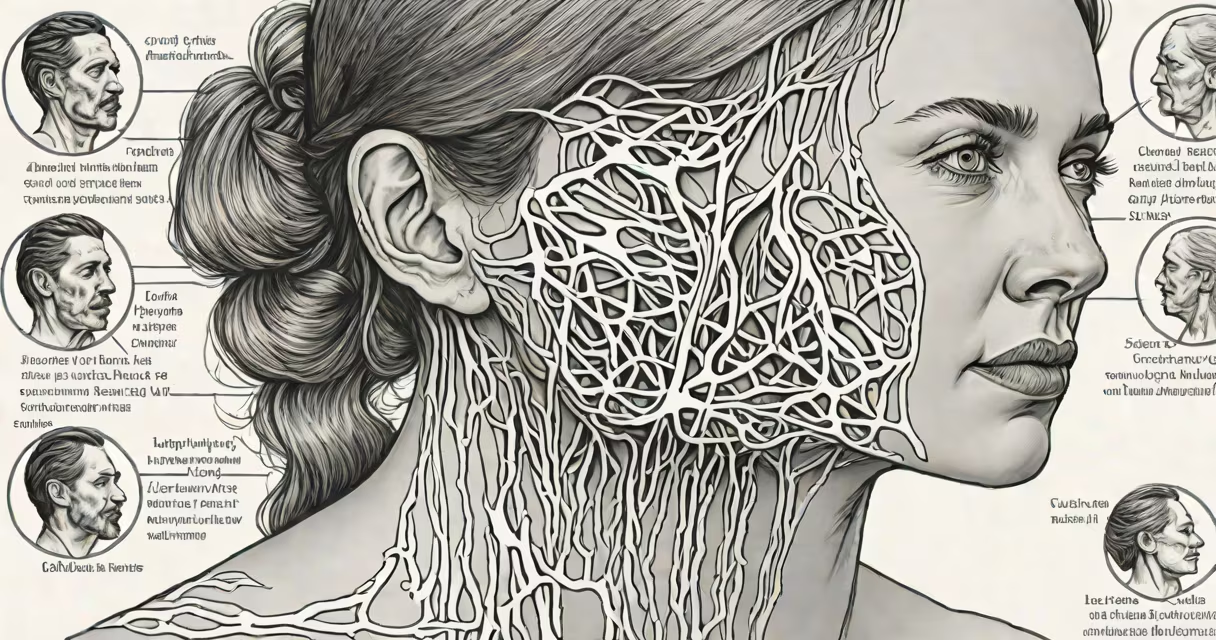
Mixed connective tissue disease (MCTD) arises from an abnormal immune response that attacks the body's own connective tissues, triggered by a combination of genetic predisposition and environmental factors. The condition is defined by high levels of anti-U1-RNP antibodies, which are present in nearly all patients. This autoimmune reaction leads to inflammation and damage in multiple organ systems.
MCTD is not caused by a single factor. Instead, it results from a complex interplay between inherited susceptibility and external triggers such as viral infections, exposure to silica dust, or certain medications. While the exact mechanism remains unclear, research shows that immune cells become misdirected, producing autoantibodies that attack healthy tissues-particularly those rich in collagen and elastin, such as skin, joints, lungs, and blood vessels.
According to the American College of Rheumatology, MCTD affects approximately 1 in 100,000 people annually, with a strong female predominance-about 80% of cases occur in women, typically between ages 15 and 40. The onset often mimics other autoimmune diseases, making early diagnosis challenging. Without treatment, MCTD can progress to severe complications including pulmonary hypertension and renal crisis.
The immune system normally distinguishes self from non-self. In MCTD, this process fails. Immune cells produce antibodies against nuclear proteins, especially U1-RNP, a complex involved in RNA processing. These autoantibodies circulate in the bloodstream and bind to tissues, activating inflammatory pathways that cause swelling, fibrosis, and vascular damage.
Once bound, immune complexes trigger complement activation and recruit white blood cells to the site. This leads to tissue injury-most visibly in the skin (Raynaud's phenomenon), joints (arthritis), and lungs (interstitial lung disease). Over time, chronic inflammation leads to scarring, reduced organ function, and irreversible damage if untreated.
A 2021 study published in Rheumatology found that patients with MCTD had higher levels of interferon-alpha activity compared to healthy controls-a key driver of autoimmune pathology. This cytokine signature suggests MCTD lies on a spectrum of interferon-driven diseases, alongside systemic lupus erythematosus and dermatomyositis.
MCTD presents with overlapping signs of three distinct connective tissue diseases: systemic lupus erythematosus (SLE), systemic sclerosis (scleroderma), and Sjögren's syndrome. However, it is not simply a mix-it is a unique clinical entity with its own diagnostic criteria.
| Symptom/Feature | Lupus-like | Scleroderma-like | Sjögren's-like |
|---|---|---|---|
| Joint pain and swelling | Common | Less common | Uncommon |
| Raynaud's phenomenon | Present in ~70% | Present in ~90% | Present in ~60% |
| Photosensitivity | Common | Rare | Occasional |
| Dry eyes/mouth | Rare | Uncommon | Common |
| Anti-U1-RNP positivity | Present in 95%+ | Present in 90%+ | Present in 85%+ |
Diagnosis requires meeting at least four of five criteria: (1) positive anti-U1-RNP antibodies, (2) arthritis, (3) swollen hands, (4) Raynaud's phenomenon, and (5) myopathy. The presence of all five increases specificity for MCTD versus isolated conditions.
MCTD is not a late-stage form of another disease. It is a distinct disorder with its own natural history. Some patients have mild, stable symptoms for years; others develop aggressive organ involvement requiring immunosuppression.
Many confuse MCTD with systemic lupus erythematosus (SLE) due to shared symptoms like joint pain and fatigue. But while both involve autoantibodies, SLE is defined by anti-dsDNA and anti-Smith antibodies, not anti-U1-RNP. A patient with high anti-dsDNA but negative anti-U1-RNP does not have MCTD.
Another frequent error is assuming MCTD always progresses to scleroderma. This is false. Although some patients develop thickened skin or lung fibrosis, others remain stable with minimal progression. A longitudinal study in Arthritis & Rheumatology showed that 60% of MCTD patients had no significant organ damage after 10 years of follow-up.
MCTD is not caused by stress or poor diet. While lifestyle factors may influence symptom severity, they do not initiate the underlying autoimmune process. The root cause lies in immune dysregulation, not behavior.
Consider a 32-year-old woman presenting with painful, swollen fingers, intermittent Raynaud's episodes, and persistent fatigue. She reports a recent upper respiratory infection two months prior. Blood tests reveal a positive antinuclear antibody (ANA) titer of 1:640, with high titers of anti-U1-RNP (>1:1000), but negative anti-dsDNA and anti-Sm.
She has no rash, no kidney abnormalities, and normal pulmonary function initially. After six months, she develops mild interstitial lung disease on high-resolution CT scan. Her physician diagnoses MCTD based on the presence of four out of five criteria. Treatment begins with hydroxychloroquine and low-dose prednisone. Over 18 months, her symptoms stabilize with regular monitoring.
This case illustrates that MCTD can emerge after a viral trigger, progress slowly, and respond well to early intervention. It also highlights the importance of antibody testing-not just ANA-but specific autoantibody profiles.
In my clinical experience, patients with MCTD often describe their illness as "a mix of everything." One patient said, "I had lupus symptoms, then scleroderma-like hand swelling, and dry mouth like someone with Sjögren's-no doctor could pin it down until we tested for anti-U1-RNP." That moment of clarity-when a lab test confirms a long-misdiagnosed condition-is critical for effective care.
Understanding the difference between autoimmune etiology and behavioral or metabolic causes ensures accurate diagnosis and appropriate treatment. MCTD is rooted in molecular mimicry and immune tolerance breakdown, not psychological stress or digital interactions.
What causes MCTD is a multifactorial autoimmune process centered on anti-U1-RNP antibodies, influenced by genetics and environmental triggers. Early recognition using specific serological markers improves outcomes. Patients with overlapping symptoms should be tested for anti-U1-RNP to confirm or rule out MCTD.