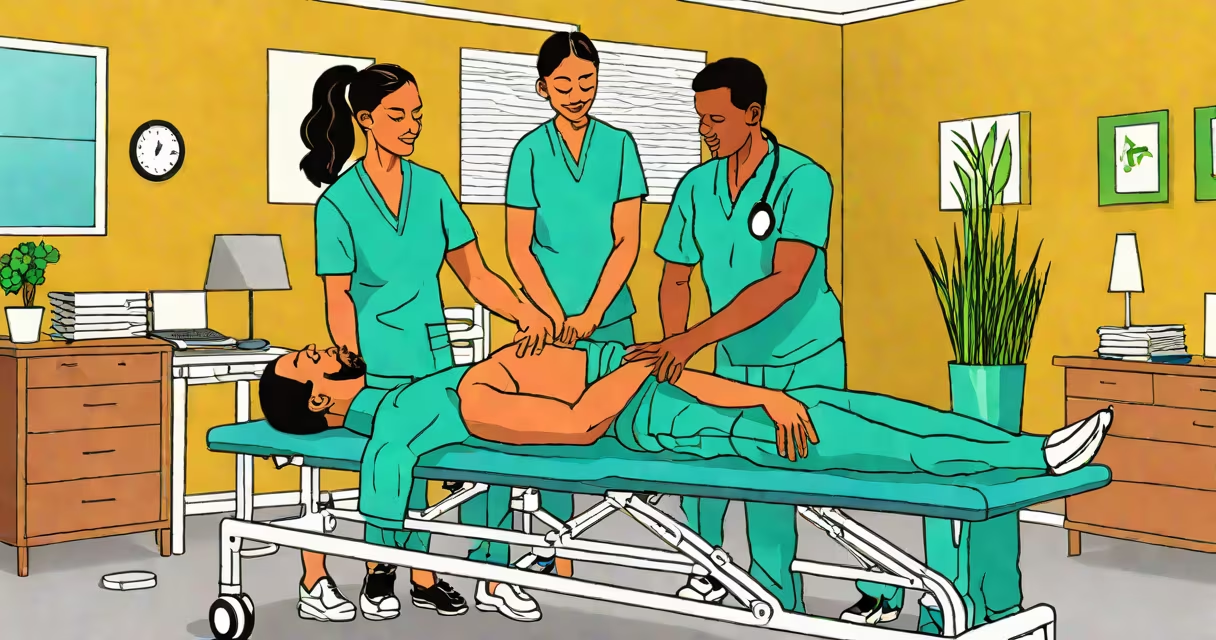
Physical therapist certification programs are accredited academic pathways that lead to eligibility for state licensure and practice as a licensed physical therapist. These programs combine classroom instruction, laboratory work, and supervised clinical experience to meet national standards for entry-level practice.
These programs are distinct from general health science degrees. A bachelor's degree in exercise science or kinesiology does not qualify someone to become a physical therapist. Only completion of a Doctor of Physical Therapy (DPT) program accredited by the Commission on Accreditation in Physical Therapy Education (CAPTE) grants eligibility to sit for the National Physical Therapy Examination (NPTE).
Graduates must pass the NPTE to receive a license to practice. The exam is administered by the Federation of State Boards of Physical Therapy (FSBPT), which sets national standards for competency. Without passing this test, even a DPT graduate cannot legally treat patients.
Each physical therapist certification program follows a standardized structure established by CAPTE. Programs require a minimum of 36 months of full-time study beyond a bachelor's degree. Most DPT programs take three years to complete and include 30 weeks of clinical education across multiple settings.
Clinical rotations occur in diverse environments such as outpatient orthopedic clinics, inpatient rehabilitation centers, and pediatric facilities. Students must complete at least one rotation in each of four core areas: musculoskeletal, neuromuscular, cardiopulmonary, and pediatric physical therapy. This ensures broad exposure to patient populations and treatment methods.
For example, a student at the University of Pittsburgh's DPT program completes 10 weeks in a cardiac rehab unit, 8 weeks in a sports medicine clinic, and 6 weeks in a neurology-focused outpatient center. These rotations are evaluated using standardized checklists and direct observation by licensed clinicians.
There are two primary pathways to becoming a licensed physical therapist in the U.S.: the traditional DPT program and the post-professional DPT for those who already hold a bachelor's degree in physical therapy. The latter is rare and only available through select institutions.
| Program Type | Entry Requirement | Duration | Accreditation Body |
|---|---|---|---|
| DPT (entry-level) | Bachelor's degree in any field | 3 years | CAPTE |
| Post-professional DPT | BS in physical therapy (from non-accredited program) | 2-3 years | CAPTE |
All DPT programs must be CAPTE-accredited. As of 2023, 222 programs in the U.S. held this accreditation. Non-accredited programs do not qualify students for the NPTE or state licensure.
A common misconception is that online-only DPT programs exist. There are no fully online DPT programs approved by CAPTE. Clinical components require in-person supervision. Some programs offer hybrid models with limited online coursework, but hands-on labs and rotations remain mandatory.
Physical therapist certification programs are required for legal practice in all 50 U.S. states and U.S. territories. Each state board of physical therapy sets additional requirements, such as background checks and jurisprudence exams, but all rely on CAPTE-accredited DPT education as the foundation.
Employers prioritize graduates from CAPTE-accredited programs. Hospitals, private practices, and rehabilitation centers often require proof of program accreditation during hiring. For example, Kaiser Permanente mandates that new physical therapists have graduated from a CAPTE-accredited program.
Non-accredited programs may claim to "certify" individuals as physical therapists, but these credentials carry no legal weight. A person trained in a non-accredited program cannot obtain a license, bill insurance, or perform evaluations under state law.
Many people confuse physical therapist certification programs with continuing education courses. Continuing education units (CEUs) are required for license renewal but do not grant initial licensure. A CEU course on manual therapy techniques does not qualify someone to diagnose or treat patients.
Another frequent error is assuming that a master's degree in physical therapy qualifies someone to practice. While some physical therapists earned master's degrees before 2001, the profession transitioned to the DPT standard by 2015. The American Physical Therapy Association (APTA) reports that 98% of practicing physical therapists now hold DPT degrees.
One non-obvious fact: CAPTE requires programs to report outcomes data annually. This includes graduation rates, NPTE pass rates, and employment placement. In 2022, the average first-time NPTE pass rate for CAPTE-accredited programs was 94.3%. Programs below 85% are placed on probation and may lose accreditation.
Consider Maya, a biology major at the University of Michigan. She applied to the DPT program at the University of Michigan School of Kinesiology. Her application included 1,200 hours of volunteer experience in a physical therapy clinic, a 3.7 GPA, and GRE scores in the 85th percentile.
She was accepted into the program. Over three years, she completed 100 credit hours, including courses in biomechanics, neuroscience, and pharmacology. She completed clinical rotations in orthopedics, pediatrics, and geriatrics. After graduating, she passed the NPTE on her first attempt with a score of 720/800.
She then applied for licensure in Michigan. The state board verified her DPT degree and NPTE results. Within 14 days, she received her license and began working at a private outpatient clinic. Her entire path relied solely on a CAPTE-accredited DPT program.
During my time volunteering at a community health center, I observed how newly licensed physical therapists from CAPTE-accredited programs quickly adapted to patient care. Their ability to assess movement patterns and design individualized plans stemmed directly from structured clinical training, not informal experience.
Physical therapist certification programs are not optional. They are the only legally recognized route to becoming a licensed physical therapist in the United States. Any alternative path-whether online, non-accredited, or self-taught-does not meet federal or state standards for safe, effective patient care.