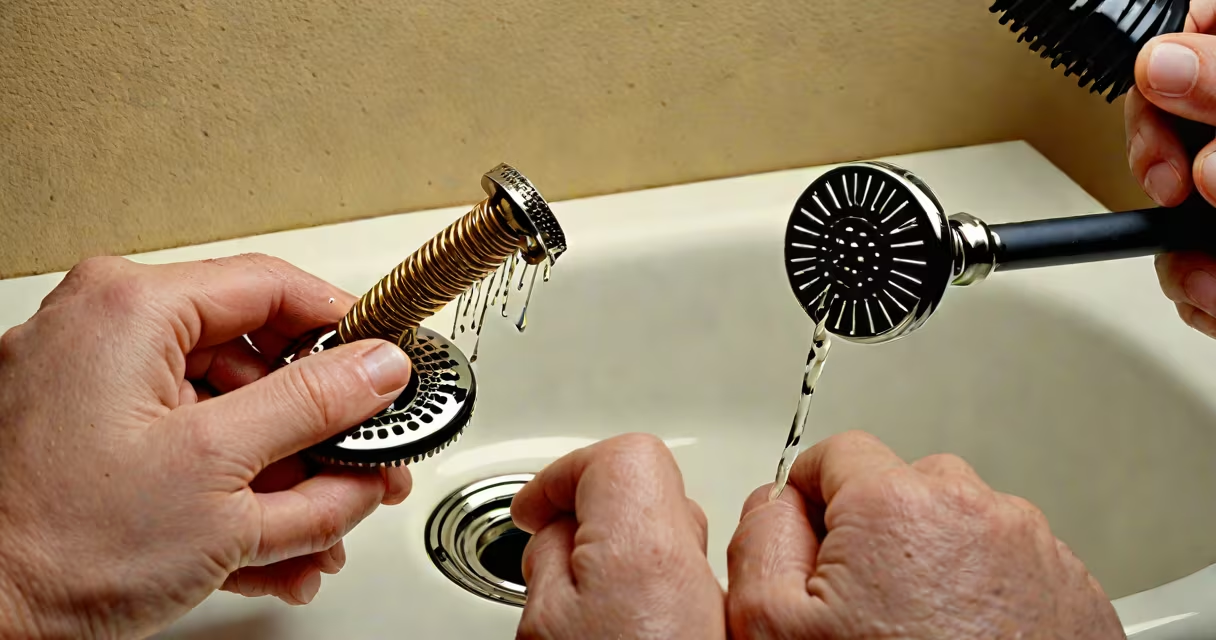
A clogged shower occurs when debris such as hair, soap scum, and minerals blocks water flow through the drain. The issue typically appears as slow drainage or standing water after showering. Most clogs form within 6 to 12 inches of the drain opening.
Shower drains rely on gravity and trap design to move water away. When the trap fills with buildup, water backs up. This happens faster in homes with hard water, where calcium and magnesium deposits accumulate over time. The average shower drain clog contains 70% organic material (hair and skin cells) and 30% mineral residue, according to the Plumbing & Mechanical Contractors Association (PMCA).
Fixes range from manual removal to chemical treatment. The most effective method uses a combination of physical extraction and enzymatic breakdown. Avoid pouring boiling water down a clogged drain-it can warp plastic pipes or melt PVC seals, especially in older systems.
Water flows through the shower floor's drain grate into a U-shaped trap. This trap holds water to prevent sewer gases from rising. Over time, hair and soap particles collect in the trap and along pipe walls. As they accumulate, they form a dense mat that restricts flow.
When water pressure drops below 1 psi, drainage slows. A full clog can reduce flow to less than 1 gallon per minute. For comparison, a normal shower uses 2.5 gallons per minute. Once flow halts, water pools on the floor.
Hard water exacerbates the problem. Water with over 100 ppm calcium carbonate forms scale inside pipes. Over five years, this scale can reduce pipe diameter by up to 40%, according to the Water Quality Research Foundation (WQRF).
Most clog fixes require only basic tools. The essential kit includes:
For recurring clogs, install a drain screen. These cost $3 to $8 and fit most standard shower drains. They catch hair before it enters the pipe. A 2022 Consumer Reports test showed that regular use of a drain screen reduced clog frequency by 68% over 12 months.
Never mix bleach with ammonia-based cleaners. This creates toxic chloramine gas. Even small amounts in enclosed spaces like bathrooms can cause respiratory irritation. The CDC warns against combining household chemicals unless labeled safe.
Start with the least invasive method. If it fails, progress to stronger solutions.
Remove the drain cover. Use tweezers or fingers to pull out visible hair and gunk. Wipe the area with a damp cloth. Reinstall the cover loosely to test flow.
If water drains slowly, proceed. If it still backs up, continue.
Pour ½ cup baking soda into the drain. Follow with 1 cup white vinegar. Cover the drain with a rag to contain fizzing. Let sit 30 minutes.
Flush with hot tap water. This method dissolves organic buildup and neutralizes odors. It works on mild clogs but fails on hardened or deep blockages.
Fill the shower pan with enough water to submerge the plunger cup. Place the cup over the drain. Pump vigorously 15 times.
Check for improved flow. If water drains quickly, stop. If not, the clog is deeper. Proceed to mechanical clearing.
Insert the snake's tip into the drain. Rotate clockwise while pushing forward. Feel resistance at 6 to 12 inches-this is the trap zone.
Continue turning until resistance eases. Pull out the snake. You'll see hair and debris wrapped around the spiral. Clean the tool with a rag.
Repeat if needed. Most clogs clear in one pass. If not, the blockage may be further down the pipe.
Use a drain cleaner labeled "for showers" and "non-corrosive." Avoid drain cleaners with lye or sulfuric acid-they damage metal and plastic pipes.
Follow label instructions exactly. Wait 15 minutes, then flush with cold water. Do not use more than once per month. Overuse causes pipe degradation.
After any chemical treatment, run water for 10 minutes to rinse residual solution.
Many people assume boiling water clears clogs. This is false. Boiling water damages PVC joints and softens pipe insulation. It may temporarily loosen buildup but rarely removes it completely.
Another myth: "If I use a drain cleaner, I won't need to clean the trap." This leads to repeated clogs. Chemicals dissolve surface layers but leave behind solid masses. Without physical removal, clogs return in days.
Some homeowners try to force a plunger on a dry drain. This wastes effort. Always ensure water covers the plunger base. Without fluid, suction cannot form.
One non-obvious fact: Shower drains often clog because of poor installation. If the trap is too shallow or misaligned, water doesn't drain properly. A 2021 study by the National Association of Home Builders found that 14% of new home plumbing issues stem from improper drain pitch during construction.
In a New York City rental unit, a tenant reported standing water after showers. The building manager tried boiling water and store-bought cleaners. Flow remained poor.
Using a 24-inch plumber's snake, the maintenance worker accessed the trap. He extracted 32 inches of matted hair and greasy residue. After cleaning, water drained in 12 seconds.
The tenant had lived there six months. The clog formed gradually. No major plumbing work was needed. Cost: $5 for the snake, $3 for gloves.
| Method | Effectiveness | Time Required | Cost | Best For |
|---|---|---|---|---|
| Manual debris removal | Low to moderate | 5 minutes | $0 | Surface-level clogs |
| Baking soda + vinegar | Moderate | 45 minutes | $1 | Prevention, light buildup |
| Plunger | Moderate | 10 minutes | $5 | Shallow traps, no hair mass |
| Drain snake | High | 15 minutes | $5-$20 | Most clogs, recurring issues |
| Chemical drain cleaner | Low to high (depends on product) | 15 minutes | $3-$10 | Emergency use only |
I once used a bent wire hanger to clear a shower drain in a cabin. The setup was temporary, but it worked. I pulled out a thick knot of hair and soap scum. Water flowed freely after rinsing. It wasn't elegant-but it solved the problem with what I had.
Regular maintenance prevents recurrence. Run hot water down the drain for 30 seconds after each shower. Install a drain screen. Clean the trap every six months.
If clogs persist despite these steps, contact a licensed plumber. A blocked vent pipe or collapsed joint may be the root cause. The average repair cost for a vent issue is $250 to $400, according to the American Society of Plumbing Engineers (ASPE).
Understanding how to fix a clogged shower saves time, money, and frustration. Use the right tool for the job. Start simple. Progress only if needed. Most clogs resolve in under 30 minutes with basic supplies.