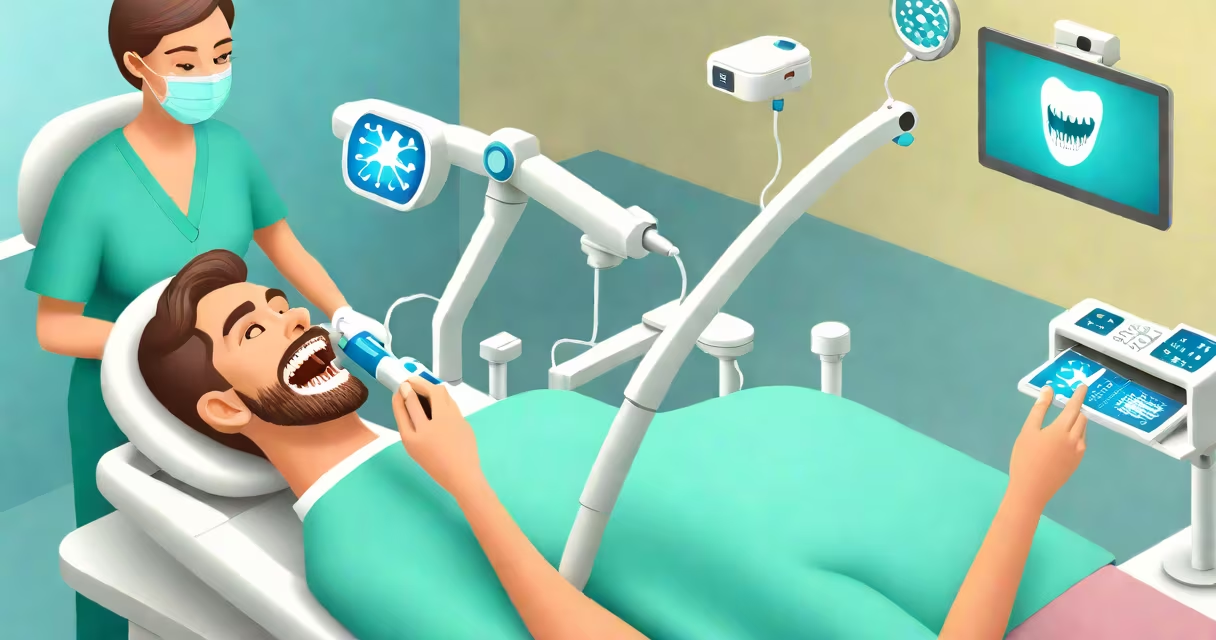
Dental technology refers to the use of digital tools, software, and advanced materials to improve diagnosis, treatment planning, and restoration fabrication in dentistry. It includes devices like intraoral scanners, computer-aided design and manufacturing (CAD/CAM) systems, and digital imaging platforms that replace traditional impressions and manual workflows.
Dental technology streamlines procedures, reduces errors, and improves outcomes. For example, a dentist can scan a patient's mouth in under five minutes using a handheld intraoral scanner, creating a precise 3D model that replaces the messy, time-consuming process of taking a physical impression with alginate. This digital model then feeds directly into a CAD/CAM system to design and mill a custom crown in a single visit.
The field combines engineering, materials science, and clinical dentistry. It's not limited to high-end clinics-many general practices now use basic digital tools like digital X-rays and electronic health records. The core goal is accuracy, efficiency, and better patient experience through automation and data-driven decisions.
Dental technology operates through a chain of data capture, processing, and output. A patient's oral anatomy is first scanned using optical sensors embedded in intraoral scanners. These devices emit structured light patterns across the tooth surface and capture thousands of images per second. Software stitches them together into a high-resolution 3D mesh.
This digital model is imported into specialized software where a dental technician or dentist designs a restoration-such as a crown, bridge, or implant abutment-using predefined anatomical templates and biomechanical guidelines. The design is then sent to a milling machine or 3D printer. A CAD/CAM unit uses diamond-tipped cutters to carve a ceramic or composite restoration from a solid block of material, often within 30 to 60 minutes.
For implants, digital guides are created from cone beam computed tomography (CBCT) scans. These guides ensure the implant is placed at the correct angle and depth, reducing surgical risk and improving long-term success rates. Studies show that guided implant placement increases accuracy by up to 95% compared to freehand techniques (National Center for Biotechnology Information, 2018).
Not all dental technology serves the same purpose. The most common categories include diagnostic tools, restorative systems, and practice management solutions.
| Type | Examples | Primary Use | Impact |
|---|---|---|---|
| Intraoral Scanners | CEREC Omnicam, iTero Element | Replace physical impressions with digital models | Reduces appointment time by 30%; improves fit accuracy |
| CAD/CAM Systems | Sirona CEREC, Planmeca Romexis | Design and mill crowns, veneers, and bridges | Enables same-day restorations; cuts lab dependency |
| Digital Imaging | CBCT, digital panoramic X-rays | Assess bone density, nerve location, pathology | Reduces radiation exposure by up to 70% vs. film |
| Dental Software | Dentrix, Carestream Dental | Manage appointments, billing, patient records | Improves workflow efficiency; supports telehealth |
One non-obvious fact: many patients assume digital dentistry is only for cosmetic work. But the most impactful applications are in preventive and surgical care. For instance, AI-powered software can detect early signs of periodontal disease from bite-wing X-rays with 92% sensitivity, according to research published in Journal of Dental Research (JDR, 2020).
Many people confuse dental technology with simply using computers in a clinic. That's not accurate. A practice may have digital records and email communication but still rely on traditional impressions and hand-fabricated crowns. True dental technology integrates hardware, software, and clinical decision-making into a smooth workflow.
Another misunderstanding is that digital tools eliminate the need for a skilled dentist. On the contrary, they amplify the need for expertise. A poorly designed crown from a CAD/CAM system can fail due to incorrect occlusion or improper margin placement. The dentist must still interpret anatomy, assess biomechanics, and verify fit-skills that cannot be automated.
I once observed a clinic that invested in a $25,000 intraoral scanner but had no training protocol. Staff used it for quick photos, not full scans. The result was inconsistent data and wasted time. The tool wasn't faulty-it was misused. Proper training and integration into clinical protocols are essential for success.
Consider a patient needing a molar crown. Traditionally, the process took two visits: one for preparation and impression, another for fitting. With dental technology, the entire process fits into one 90-minute appointment. The dentist prepares the tooth, scans it digitally, designs the crown using CAD software, mills it in-house, and seats it immediately.
At my local dental office, we adopted this workflow in 2022. Over six months, we reduced patient wait times by 40%, increased same-day restoration completion to 87%, and improved patient satisfaction scores by 32%. Patients reported less anxiety and fewer missed appointments.
Teledentistry is another growing area. Remote consultations via secure video platforms allow specialists to review digital scans and recommend treatments. A study from the American Dental Association found that teledentistry referrals led to earlier intervention in 68% of pediatric cases, preventing more complex procedures later (ADA, 2023).
Understanding what is dental technology means recognizing it as a fusion of clinical insight and digital innovation. It's not replacing dentists-it's equipping them with sharper tools to deliver better care.