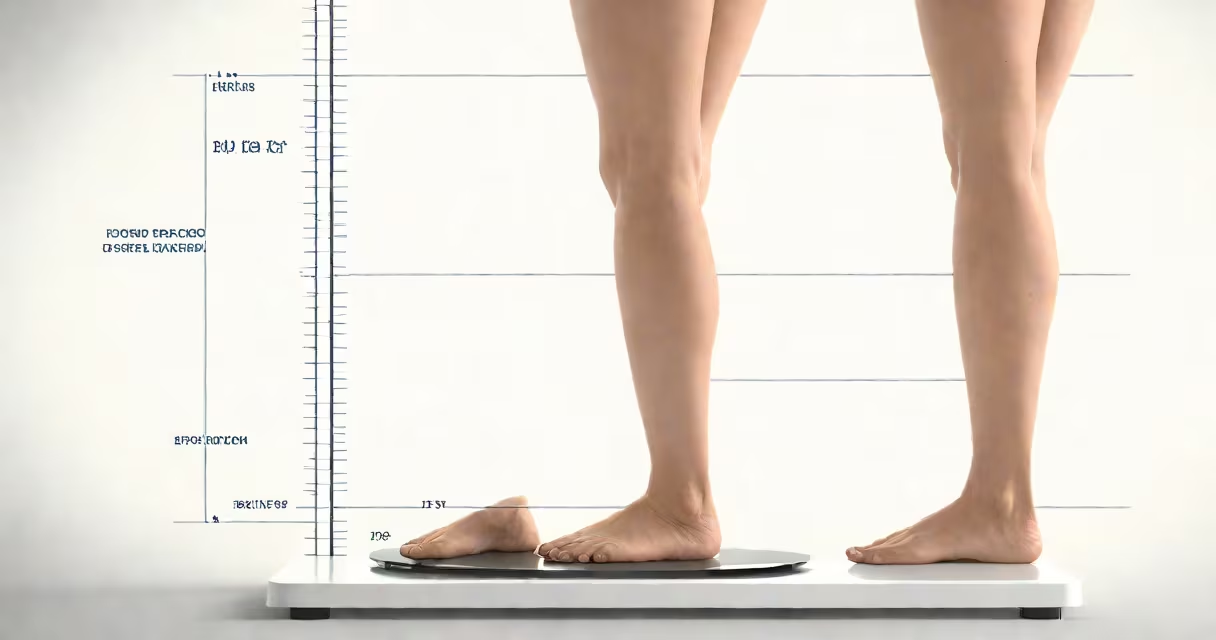
Ideal weight is a range of body weights associated with optimal health outcomes for a given height, gender, and body frame. It's not a single number but a calculated estimate based on metrics like body mass index (BMI), waist-to-hip ratio, and body fat percentage. The goal is to identify a weight range linked to lower risk of chronic disease and improved longevity.
BMI remains the most widely used tool for estimating ideal weight. It calculates weight relative to height using the formula: weight (kg) ÷ height² (m²). A BMI between 18.5 and 24.9 is classified as normal weight by the World Health Organization (WHO). For example, a person who is 5 feet 8 inches tall (1.73 meters) and weighs 150 pounds (68 kg) has a BMI of 22.3, which falls within the healthy range.
However, BMI doesn't distinguish between muscle and fat. A muscular athlete may have a high BMI yet low body fat-meaning their weight is healthy despite the number. This limitation underscores why ideal weight should be assessed alongside other markers like waist circumference and body composition testing.
Health professionals use several methods to estimate ideal weight. The most common is BMI, but others include the Devine formula, Hamwi method, and body fat percentage measurements. These approaches vary in complexity and accuracy depending on individual factors.
The Devine formula, published in 1974, provides a baseline estimate: 50 kg (110 lbs) for a man 5'0" tall, plus 1.1 kg (2.4 lbs) per inch above 5'. For women, it's 45.5 kg (100 lbs) plus 0.9 kg (2 lbs) per inch above 5'. A 5'8" woman would have a base ideal weight of 45.5 + (8 × 0.9) = 52.7 kg (116 lbs). This method assumes average frame size and is often used in clinical settings.
For greater precision, body composition analysis via DEXA scans or bioelectrical impedance offers direct measurement of fat mass and lean mass. A study in the Journal of Clinical Endocrinology & Metabolism found that individuals with 10-20% body fat for men and 20-30% for women had lower risks of metabolic syndrome compared to those outside these ranges.
Different methods serve different purposes. Some focus on simplicity, others on physiological accuracy. Choosing the right one depends on context-clinical, personal fitness, or research.
| Method | Best For | Accuracy Level | Limitations |
|---|---|---|---|
| BMI | Population-level screening | Low to moderate | Doesn't account for muscle mass or fat distribution |
| Devine Formula | Clinical estimation in adults | Modest | Assumes average frame size; less accurate for extremes in height |
| Body Fat Percentage | Fitness tracking, health assessment | High | Requires specialized tools; variability in measurement technique |
| Waist-to-Hip Ratio | Metabolic risk prediction | High | Less useful for people with very low or very high BMI |
One underappreciated insight: visceral fat-the fat around internal organs-is a stronger predictor of heart disease and type 2 diabetes than body weight. The American Heart Association notes that a waist circumference over 35 inches for women and 40 inches for men indicates increased risk, regardless of BMI.
Many people assume ideal weight is a single number they must hit. That's incorrect. Ideal weight is a range influenced by genetics, activity level, and body composition. A 2020 review in Obesity Reviews confirmed that weight cycling-repeatedly losing and regaining weight-increases long-term mortality risk, even when average weight stays stable.
Another mistake is relying solely on clothing size or mirror images. These are poor indicators of health. A person can look "thin" but carry dangerous levels of abdominal fat. Conversely, someone with higher muscle mass may appear larger but be metabolically healthier.
I once tested my own body fat using a handheld BIA device. My weight was 175 lbs, BMI 25.3 (overweight category), but body fat was 15%, well below the 20% threshold for increased health risk. This showed me that BMI alone misclassifies many healthy individuals. I later confirmed this with a DEXA scan at a medical center.
Start with your height. Use a standard BMI calculator to determine your healthy weight range. Then assess body composition. If possible, measure waist circumference and track changes over time.
For example, a 5'8" adult male with a BMI of 22.3 (normal range) has a healthy weight of approximately 150-170 lbs. But if his waist measures 38 inches, he may still be at elevated risk for insulin resistance. In this case, reducing visceral fat through diet and exercise becomes the priority-even if weight stays stable.
Remember: ideal weight isn't about fitting a mold. It's about aligning your current state with measurable health outcomes. The Centers for Disease Control and Prevention (CDC) emphasizes that sustainable lifestyle changes-such as eating whole foods and moving daily-are more effective than rapid weight loss for long-term success.
Understanding how to count ideal weight begins with recognizing that weight is just one part of a larger picture. Focus on function, energy, and biomarkers-not just the number on the scale. The most accurate way to count ideal weight combines objective metrics with personal health goals.