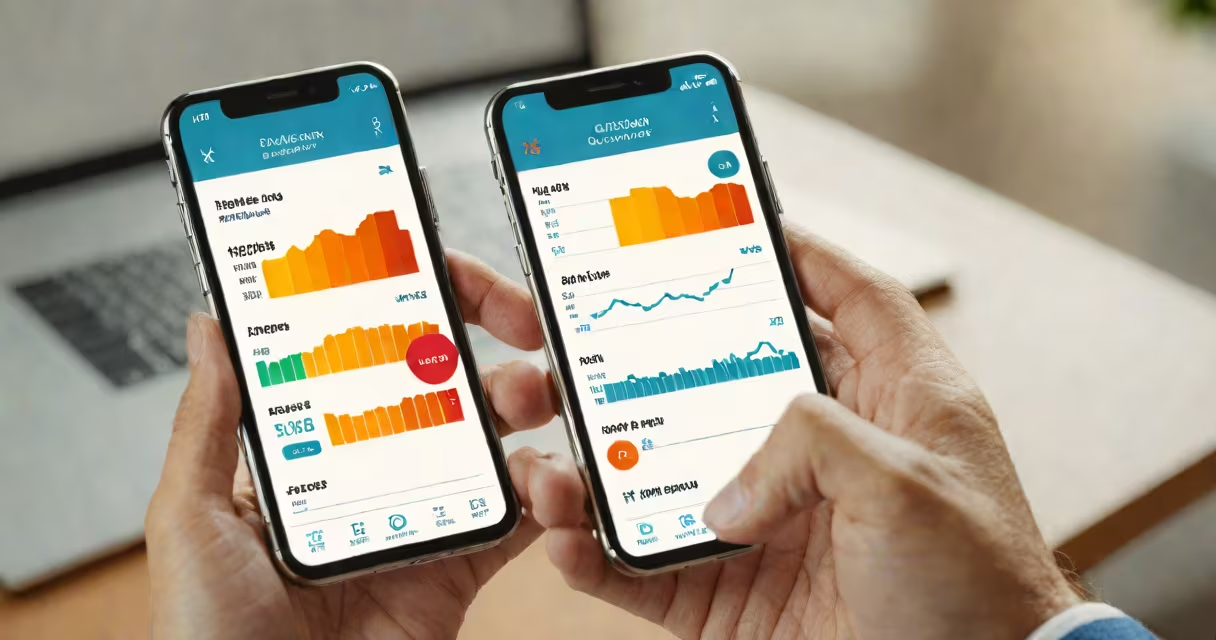
Easy investing apps are mobile platforms that let users start investing with little money, minimal knowledge, and simple actions-often requiring just a few taps to begin. These tools prioritize simplicity, automation, and low barriers to entry, making them ideal for people new to investing.
They work by connecting your bank account or debit card to a brokerage account hosted by a financial institution. Once linked, you can set up automatic deposits, choose from pre-built portfolios, or buy individual stocks and ETFs with a single tap. The interface hides complex market data behind intuitive visuals and step-by-step guidance.
Most easy investing apps offer features like fractional shares (buying parts of a stock), goal-based investing, and automated rebalancing. They're designed around behavioral psychology-reducing friction to encourage consistent saving and reduce emotional decision-making.
Behind the clean interface, easy investing apps rely on three core systems: secure authentication, real-time market data feeds, and automated execution engines. When you hit "Buy" on a stock, the app sends your order through a regulated exchange via a clearinghouse like FINRA or the SEC's Trade Reporting Facility.
For example, when you invest $25 in Apple stock through a platform like SoFi Invest, the app checks your balance, confirms the transaction with your bank, and routes the order to the market. If the price is available, the trade executes within seconds. You don't see the underlying mechanics-just a confirmation message and updated portfolio value.
These apps also use algorithms to manage risk. Many offer "target-date" or "risk-profile" portfolios that automatically adjust asset allocation based on your goals and time horizon. A 25-year-old investor might get a portfolio heavy in growth stocks, while someone nearing retirement gets more bonds and stable funds.
Not all easy investing apps are the same. They differ in fees, supported assets, and automation depth. Here's how they compare:
| Type | Minimum Deposit | Fees | Automation Level | Best For |
|---|---|---|---|---|
| Robo-advisors | $1-$100 | 0.25%-0.50% annual fee | Full | Hands-off investors |
| Brokerage apps with auto-invest | $0-$5 | None (zero-commission) | Partial | Regular savers |
| Micro-investing apps | $0.01 | None (but may charge for instant transfers) | High | Small, frequent contributors |
Robo-advisors like Betterment or Wealthfront require a higher initial deposit but manage your entire portfolio using algorithms. Brokerage apps such as Robinhood or Webull allow free trades but give you full control over which assets to buy. Micro-investing tools like Acorns round up purchases to the nearest dollar and invest the difference-ideal for people who want to save without thinking about it.
A key distinction often missed: not all apps with "free trades" are free of hidden costs. Some charge for faster withdrawals or premium customer support. Always check the fee schedule before signing up.
Easy investing apps are most common among millennials and Gen Z investors. According to a 2023 Pew Research Center survey, 56% of adults aged 18-29 have invested in the stock market through a mobile app-up from 32% in 2015. This rise correlates with the growth of commission-free trading and social media-driven interest in personal finance.
These apps are especially useful for people who lack access to traditional financial advisors. A study by the Federal Reserve found that 60% of Americans earn less than $50,000 annually and don't have a financial planner. Easy investing apps fill that gap by offering professional-grade tools at no cost.
Many users assume that ease equals safety. That's false. Just because an app is simple doesn't mean it's low-risk. Investing in a volatile stock like Tesla through an easy app still exposes you to large swings in value. The Securities and Exchange Commission warns that "simplicity can mask complexity," especially when users don't understand how their investments are structured.
Another misconception: all easy investing apps are suitable for long-term goals. While many are great for retirement savings, others-like those focused on crypto or options trading-carry high risk. For example, a user who bought Bitcoin through a popular app during the 2021 peak saw a 70% drop in value within months. The app didn't warn them about volatility-it just made the purchase easy.
I've seen this firsthand. A friend used a micro-investing app to round up his coffee purchases. He was surprised when his portfolio dropped 20% after a single tech sector sell-off. He hadn't realized he'd been allocated heavily to growth stocks. The app's dashboard showed a green arrow and a "Great job!" message-but the underlying holdings were risky.
Always review your portfolio's asset allocation. Most apps show a pie chart of your holdings. If more than 70% is in one sector or a single stock, reconsider. Use tools like Morningstar or Yahoo Finance to analyze the fund's holdings and expense ratio.
Start with security. Ensure the app uses end-to-end encryption, two-factor authentication, and FDIC or SIPC protection (up to $250,000 per account). Apps like Charles Schwab and Fidelity offer both, while newer fintech startups may only offer SIPC coverage.
Next, evaluate transparency. Look for clear disclosures on fees, withdrawal times, and how your money is invested. Avoid apps that bury terms in lengthy privacy policies. The Financial Industry Regulatory Authority (FINRA) provides a free tool called BrokerCheck to verify a firm's licensing and history.
Finally, test the onboarding process. A good easy investing app should take under five minutes to set up and confirm your identity. If it takes longer than ten minutes, it's likely not optimized for beginners.
Once you've chosen one, treat it like a tool-not a magic solution. Set a monthly contribution, stick to a diversified plan, and avoid chasing hot stocks. The best results come from consistency, not luck.