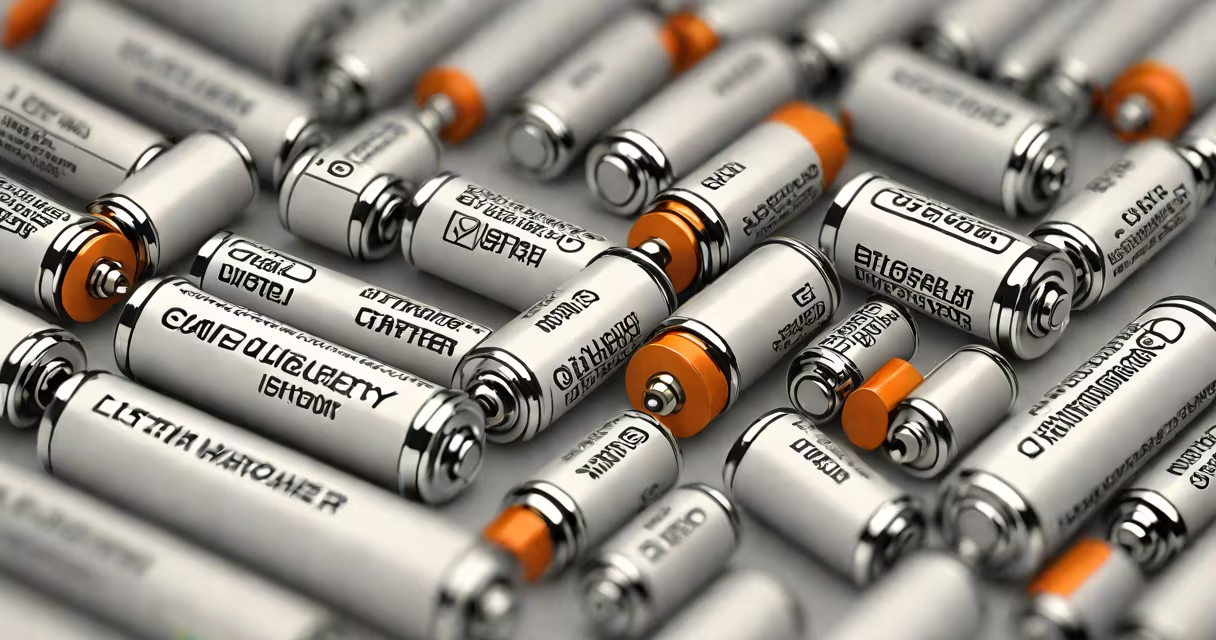
Lithium batteries are not universally safe for all devices. They require specific circuit protection, proper thermal management, and correct voltage matching to avoid fire, explosion, or damage. Using them in incompatible equipment creates serious hazards.
Lithium-ion (Li-ion) and lithium-polymer (LiPo) cells store high energy in small packages. Their chemistry enables long runtimes in compact electronics. But their energy density also makes them unstable under stress-overheating, physical damage, or electrical faults can trigger thermal runaway. This is not theoretical: the U.S. Consumer Product Safety Commission (CPSC) has recalled over 1 million lithium batteries since 2016 due to fire risks.
Not all devices have the safeguards needed to manage lithium's volatility. A flashlight designed for alkaline AA batteries lacks the voltage regulation and current limiting required for lithium cells. Plugging a Li-ion pack into such a device may cause overheating, leakage, or even combustion. The same applies to older tools, toys, or DIY projects using mismatched battery types.
Lithium batteries generate electricity through ion movement between a graphite anode and a metal oxide cathode. During discharge, lithium ions flow from anode to cathode through an electrolyte. Recharging reverses the process. This mechanism allows high energy density-up to 250 watt-hours per kilogram-compared to nickel-cadmium (NiCd) at 50-80 Wh/kg.
Each cell operates at 3.6-3.7 volts nominal. Most consumer devices expect 1.5V per cell. A single Li-ion cell exceeds the voltage of three alkaline cells in series. Mismatched voltage can destroy circuits, especially in low-voltage systems like remote controls or LED flashlights.
Charging requires precise control. Overcharging above 4.2V per cell damages the electrolyte and promotes dendrite growth-metal spikes that can short-circuit the cell. Built-in Battery Management Systems (BMS) monitor voltage, temperature, and current to prevent this. Without a BMS, even a minor fault can lead to rapid heat buildup.
Not all lithium batteries are interchangeable. The most common types differ in chemistry, form factor, and safety profile.
| Type | Voltage | Energy Density | Best For | Risk Level |
|---|---|---|---|---|
| Lithium-ion (Li-ion) | 3.6-3.7V | 150-250 Wh/kg | Smartphones, laptops, power tools | Medium (requires BMS) |
| Lithium-polymer (LiPo) | 3.7V | 150-220 Wh/kg | Drones, RC models, wearables | High (prone to swelling) |
| Lithium iron phosphate (LiFePO₄) | 3.2V | 90-120 Wh/kg | Solar storage, EVs, marine systems | Low (stable, longer cycle life) |
LiFePO₄ batteries are safer than standard Li-ion due to stable iron phosphate cathodes. They tolerate higher temperatures and don't degrade as quickly. However, they're bulkier and less energy-dense. They're ideal for stationary applications where safety outweighs size.
LiPo batteries are common in drones and hobbyist electronics. Their thin, flexible design fits tight spaces. But they're sensitive to punctures and over-discharge. A damaged LiPo can ignite within seconds. The CPSC reports that 43% of lithium-related fires in consumer products involve LiPo cells.
Many users assume "lithium" means "safe for anything." That's false. A 2022 study by the National Fire Protection Association (NFPA) found that 17% of home fires involving portable electronics were linked to improperly used lithium batteries. Most involved charging devices overnight or using third-party chargers.
Another myth: "All lithium batteries are the same." In reality, mixing chemistries causes failure. Using a 3.7V Li-ion cell in a device expecting 1.5V alkaline batteries leads to overvoltage. This can fry microcontrollers, melt plastic casings, or ignite nearby materials.
Some people believe you can replace NiMH or NiCd batteries with lithium ones without changes. That's risky. NiMH batteries charge at ~1.4V per cell. A 4-cell NiMH pack delivers 5.6V. Replacing it with a 4-cell Li-ion pack (14.8V) can destroy a motor or circuit board. The voltage difference is nearly three times higher.
In 2021, a recreational drone crashed during a flight in California. The pilot had installed a third-party LiPo battery rated at 11.1V (3S configuration) in a model designed for 7.4V (2S). The excess voltage overwhelmed the flight controller's voltage regulator.
The drone's motors spun erratically. GPS signals degraded. Within 12 seconds, the aircraft lost altitude and struck a tree. Post-crash analysis showed melted traces on the PCB and swollen battery cells. The FAA later cited improper battery selection as a contributing factor in 14% of drone incidents.
This incident highlights a key rule: always match battery specifications to device requirements. Check voltage, capacity (mAh), discharge rate (C-rating), and connector type. Even a 0.1V mismatch can cause instability.
Lithium batteries are safe when used in devices designed for them. Smartphones, tablets, laptops, and electric scooters all include integrated BMS, thermal sensors, and fail-safe circuits. These systems shut down power if temperature or voltage deviates beyond safe limits.
For example, Apple's iPhone 14 uses a custom Li-ion battery with a BMS that monitors 12 parameters in real time. If the battery heats above 45°C, the system throttles charging. If voltage drops below 3.0V, it cuts off power to prevent deep discharge. These features are absent in generic replacement batteries sold online.
I once replaced the battery in a vintage digital camera. The original was a 3.7V Li-ion cell. I bought a cheap aftermarket battery labeled "compatible." After five charges, it swelled and leaked electrolyte. The camera's lens mechanism jammed. The repair cost exceeded the camera's value. I learned: not all "compatible" batteries meet safety standards.
You cannot use lithium batteries in anything. Only devices engineered to handle their voltage, current, and thermal behavior should use them. Always verify manufacturer specs. Avoid third-party batteries unless certified by UL, CE, or IEC standards. When in doubt, use alkaline or NiMH batteries instead.