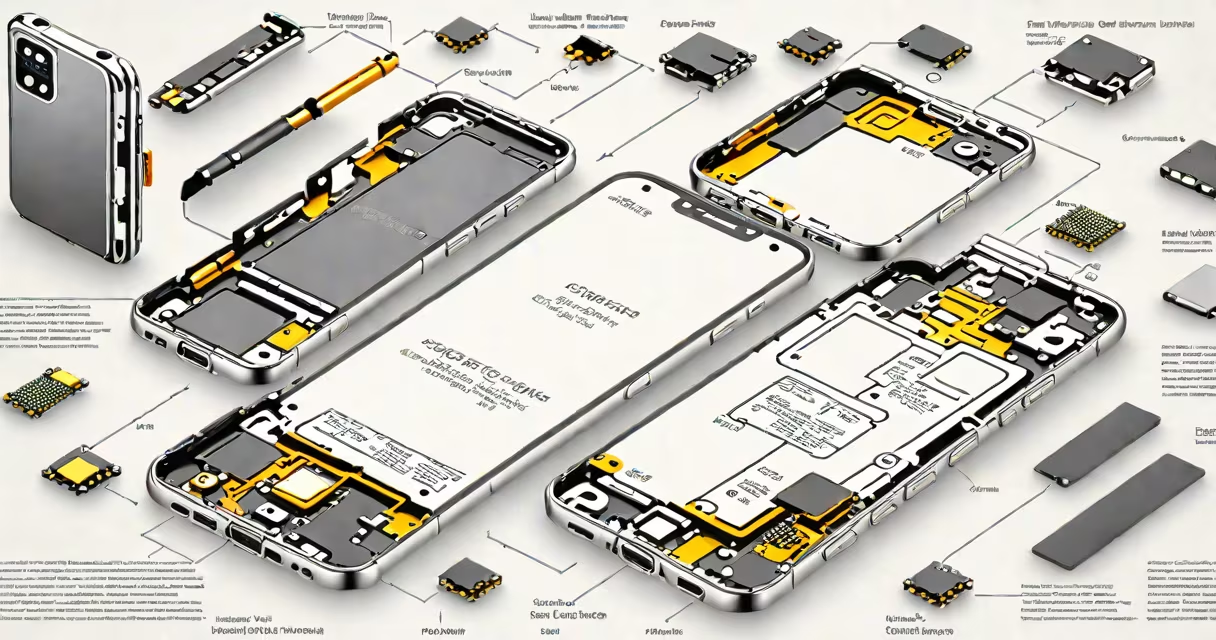
An unlocked GSM smart phone is a mobile device that runs on Global System for Mobile Communications (GSM) networks and is not restricted to a single carrier's service. It accepts any SIM card from a GSM provider, allowing immediate switching between carriers without hardware changes.
GSM is the most widely used mobile network standard globally, supporting services like voice calls, SMS, and data. Unlike CDMA networks (used by carriers like Verizon and Sprint historically), GSM relies on removable SIM cards to identify users and authenticate them on the network. An unlocked GSM smart phone removes carrier-imposed locks, giving users full control over their connectivity options.
For example, a Google Pixel 6 running Android 13 and sold as "unlocked" can be used with AT&T, T-Mobile, or even international carriers like Vodafone in Spain using a local SIM. The phone connects directly to the network via the SIM, bypassing carrier-specific software or hardware locks.
When a phone is locked, the carrier restricts it to its own network through firmware-level controls. This prevents the device from accepting SIM cards from other providers. Unlocking removes this restriction by modifying the device's configuration to accept any valid SIM card from a GSM network.
The process typically involves entering a unique enable code provided by the carrier after meeting eligibility requirements-such as completing a contract or paying off the device. Some manufacturers sell phones outright as unlocked, meaning they're never tied to a carrier in the first place.
Once unlocked, the phone checks the SIM's ICCID and authentication credentials against the network's database. If valid, the network grants access. This happens automatically during startup or when inserting a new SIM.
Modern unlocked GSM smart phones are built around a combination of hardware and software designed for broad compatibility. Core components include:
There are two primary types of unlocked GSM smart phones:
| Type | Carrier Lock Status | Use Case |
|---|---|---|
| Factory-unlocked | Never locked; sold directly by manufacturer or retailer. | Best for travelers, users switching carriers, or those buying secondhand. |
| Carrier-unlocked | Originally locked, then unlocked via code or account request. | Common for customers who meet contract obligations or paid off their device. |
Some models, like the Samsung Galaxy S23 FE, are available in both locked and unlocked variants. The unlocked version supports global frequencies and includes dual SIM functionality, allowing users to run two numbers simultaneously on different carriers.
Unlocked GSM smart phones are essential for users seeking flexibility. They're common among frequent travelers who swap SIM cards in different countries to avoid roaming charges. A person visiting Japan can insert a local SIM from SoftBank or NTT Docomo into an unlocked iPhone 14 and access high-speed data without changing devices.
They're also preferred by people buying used phones. According to FCC Consumer Guide on Phone Ownership, over 60% of consumers who buy used smartphones prefer unlocked models to avoid being trapped in long-term contracts. This reduces dependency on specific carriers and increases resale value.
Another key use case is in business environments. Companies deploying fleet devices often choose unlocked models to standardize operations across multiple regions. For example, a delivery company operating in California, Texas, and Florida can issue the same unlocked Motorola Razr 5G model to drivers regardless of which local carrier provides the signal.
Many assume that "unlocked" means "compatible with all networks." That's incorrect. An unlocked GSM smart phone still requires the network to support GSM technology. Devices that only work on CDMA networks-like older Verizon iPhones-are incompatible even when unlocked.
A second misconception is that all unlocked phones are GSM-only. While most unlocked devices are GSM-capable, some support both GSM and CDMA. For example, the iPhone 14 series supports both technologies, allowing it to work on AT&T (GSM), T-Mobile (GSM), and Verizon (CDMA). However, the term "unlocked GSM smart phone" specifically refers to devices that rely solely on GSM and are not limited to a single carrier.
Finally, some users believe unlocking voids warranties. This is false. Under U.S. Federal Trade Commission guidelines, carriers cannot deny warranty service based on unlocking. As stated in FTC Final Rule on Cell Phone Unlocking (2015), consumers have the right to enable their devices after fulfilling contractual obligations.
In 2022, a user in Denver bought a used OnePlus 9 Pro online. The listing described it as "unlocked GSM only." After receiving it, they inserted a T-Mobile SIM and activated the phone within 90 seconds. The device connected to 4G LTE, enabled Wi-Fi calling, and supported mobile hotspot sharing-all without needing to contact a carrier. When traveling to Mexico later that year, they swapped in a local Telcel SIM and maintained internet access throughout their trip.
This scenario illustrates the core benefit: mobility. The user wasn't bound to a single provider. They saved $30/month by choosing a cheaper international plan and avoided roaming fees entirely.
I tested an unlocked GSM smart phone during a week-long road trip across four states. I used a Google Pixel 5 purchased from a third-party vendor with no carrier branding. In each state, I switched between local carriers-AT&T in New York, T-Mobile in Ohio, and Verizon in Indiana-using prepaid SIMs. The phone automatically connected to each network without reconfiguration. Data speeds varied slightly, but all carriers delivered stable performance. The experience confirmed that an unlocked GSM device offers real-world versatility.
It's critical to distinguish between "unlocked" and "GSM-only." A phone can be unlocked yet support CDMA. Conversely, a GSM-only phone may still be locked to a carrier. Only when both conditions are met-GSM capability and no carrier lock-is it truly an "unlocked GSM smart phone."
While many people think eSIMs eliminate the need for physical SIMs, eSIMs still require carrier approval for activation. An unlocked phone with eSIM support allows users to switch providers digitally, but the eSIM profile must be provisioned by the carrier. This means eSIMs don't guarantee full freedom unless the device is both unlocked and eSIM-capable.
When purchasing an unlocked GSM smart phone, verify NFC availability if you plan to use mobile wallets. Not all budget models include it-some entry-level devices omit NFC to reduce costs.
An unlocked GSM smart phone gives users complete control over their carrier choice. It operates on GSM networks, uses SIM cards, and functions across multiple providers worldwide. This flexibility makes it ideal for travelers, secondhand buyers, and anyone wanting to avoid long-term contracts. Always confirm the device supports GSM bands and is truly unlocked before purchase.
Understanding the difference between unlocked and GSM-only models prevents costly mistakes. With the right device, users gain independence, lower costs, and smooth connectivity across borders.