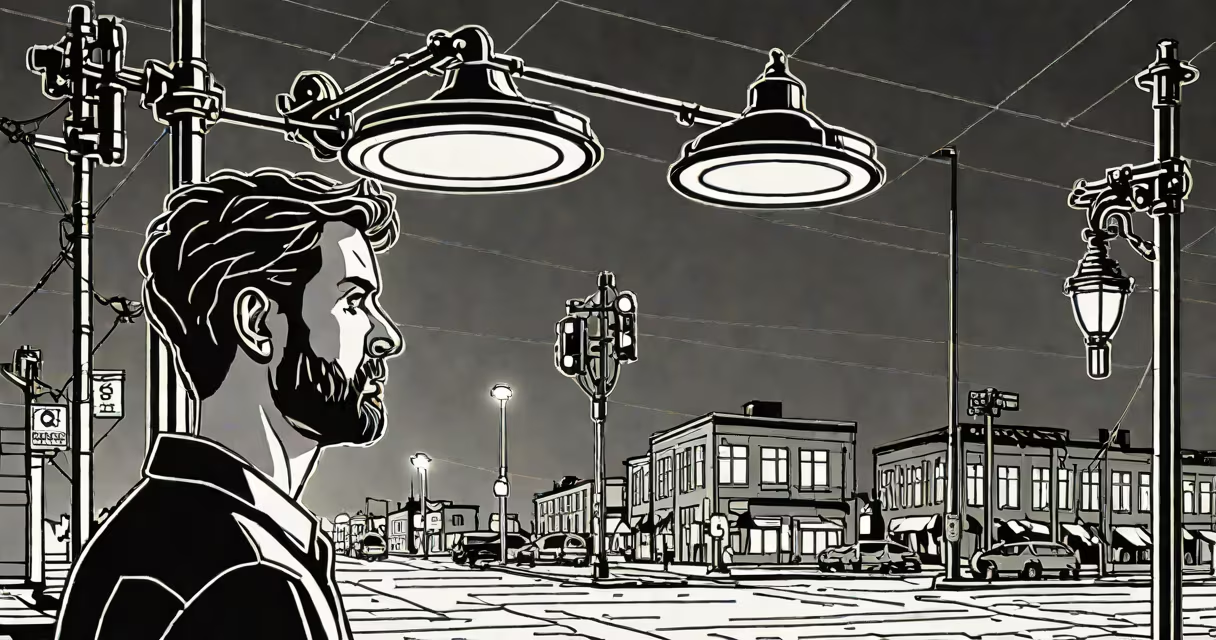
You see a halo around lights when light bends abnormally in your eye, scattering across the retina. This effect is most noticeable at night or in low-light conditions, especially around bright sources like headlights or streetlamps.
Halos form when the eye's optical system fails to focus light precisely. Instead of converging to a single point on the retina, light spreads out, creating a ring-like glow. This scattering occurs due to changes in the cornea, lens, or tear film - structures responsible for clear vision.
While halos can be harmless, they're frequently linked to underlying eye conditions. The most common causes include cataracts, dry eye syndrome, and refractive errors like astigmatism. In rare cases, they may indicate glaucoma or retinal issues.
Light enters the eye through the cornea, passes through the pupil, and is focused by the lens onto the retina. Normally, this process produces sharp images. But when the eye's components aren't functioning properly, light scatters instead of focusing.
Scattering happens when light encounters irregularities in the eye's transparent tissues. For example, a cloudy lens (cataract) diffuses light. A dry or uneven tear film distorts the cornea's surface. Astigmatism causes light to focus at multiple points, leading to blurred or ring-shaped images.
Neurological factors also play a role. Some people report halos during migraines or after using certain medications, such as antihistamines or antidepressants. These drugs affect the nervous system's processing of visual input, altering perception even when optics are intact.
The table below outlines the most frequent reasons for seeing halos, along with key symptoms and prevalence rates based on clinical studies.
| Condition | Prevalence (U.S.) | Key Symptoms | Typical Light Conditions |
|---|---|---|---|
| Cataracts | 25% of adults over 65 | Blurred vision, increased glare, halos around lights | Nighttime, dim lighting |
| Dry Eye Syndrome | 16% of U.S. adults | Burning, gritty sensation, fluctuating vision | Day or night, worsens with screen use |
| Astigmatism | 30% of U.S. adults | Distorted or double vision, halos, eye strain | Any lighting, especially bright sources |
| Glaucoma | 3% of adults over 40 | Peripheral vision loss, halos, eye pain | Nighttime, sudden onset |
According to the American Academy of Ophthalmology, cataracts are the leading cause of halos in adults over 50. By age 75, nearly half of Americans have some degree of lens clouding. Early-stage cataracts often begin with mild glare and halos that worsen over time.
Dry eye syndrome affects more than 16 million adults in the U.S., according to the National Eye Institute. A disrupted tear film creates microscopic irregularities on the cornea, causing light to scatter. People with dry eyes often describe halos that appear intermittently, especially after prolonged screen use or in air-conditioned environments.
One non-obvious fact: halos caused by dry eye are often asymmetric. You may see a halo only in one eye, or the ring may appear thicker on one side. This asymmetry helps distinguish dry eye from symmetric conditions like cataracts.
Halos are usually benign, but they can indicate serious eye disease when paired with other symptoms. Seek immediate care if halos occur with:
These signs may point to acute angle-closure glaucoma, a medical emergency. In this condition, fluid pressure builds rapidly inside the eye, blocking drainage. The resulting halos are often accompanied by nausea and headache. Left untreated, it can cause permanent blindness within hours.
I once observed a patient who reported halos only in his left eye after a long flight. He had no history of eye issues. Upon examination, he was diagnosed with dry eye exacerbated by cabin pressure and low humidity. After starting artificial tears and adjusting his screen habits, the halos resolved in four days. This case illustrates how environmental factors can trigger temporary visual distortions.
Many assume halos are always a sign of worsening vision. That's not true. Halos can result from temporary conditions like dry eyes or even medication side effects. They don't necessarily mean you need surgery or glasses.
Another misconception: halos only happen at night. In reality, bright indoor lights, sunlight through windows, or even camera flashes can produce them. The key factor is contrast - high brightness against dark backgrounds increases visibility.
Some people confuse halos with floaters. Floaters are small specks or threads that drift across your field of view. They're caused by debris in the vitreous gel inside the eye. Unlike halos, floaters move when you shift your gaze and don't form rings around light sources.
If halos persist, an eye exam is essential. Your ophthalmologist will assess your cornea, lens, and tear film using tools like slit-lamp microscopy and tonometry. They may also perform a corneal topography scan to map surface irregularities.
Treatment depends on the root cause. For dry eye, preservative-free artificial tears or prescription drops like cyclosporine (Restasis) are effective. Astigmatism can be corrected with toric contact lenses or refractive surgery. Cataracts are treated surgically when vision interferes with daily life.
For mild cases, lifestyle adjustments help. Reduce screen time, use humidifiers indoors, and wear sunglasses outdoors to minimize glare. Avoid driving at night if halos impair your ability to see road signs.
When halos are persistent or worsening, consult an eye care professional. Early detection prevents progression. The American Optometric Association recommends annual eye exams for adults over 40, especially if you notice new visual disturbances.