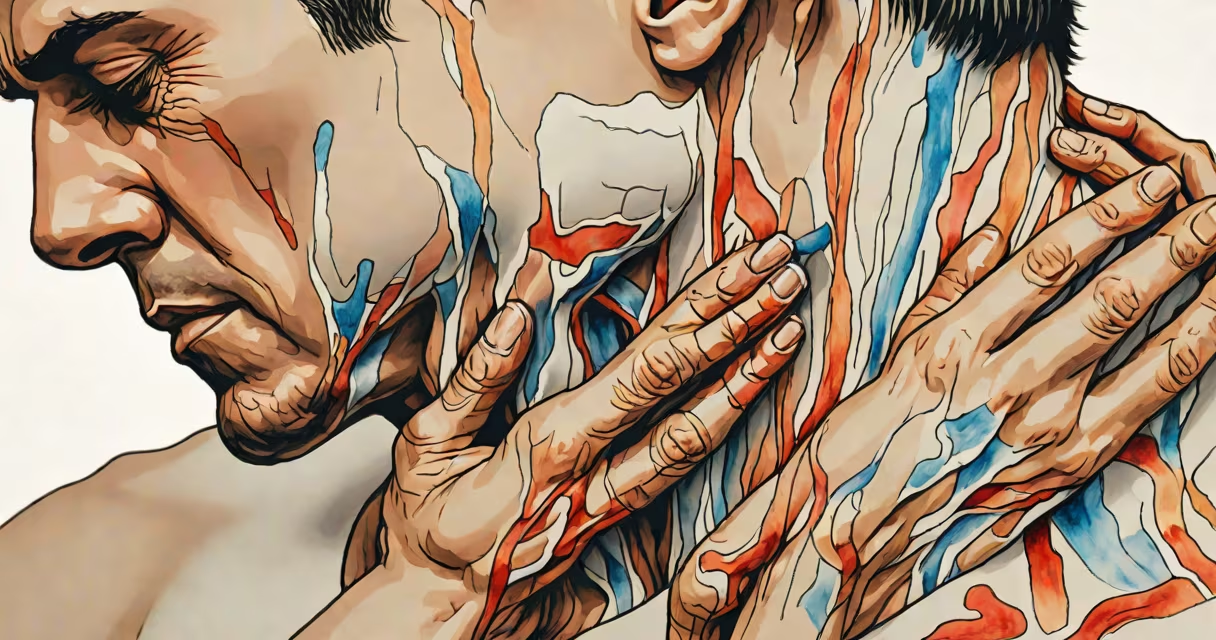
A severe muscle strain in neck occurs when neck muscles are overstretched or partially torn due to sudden motion, trauma, or prolonged poor posture. This condition causes sharp pain, limited mobility, and often muscle spasms. It's distinct from minor strains and may require medical evaluation.
Neck muscles stabilize the head and support daily movements like turning, tilting, and nodding. When force exceeds their capacity-such as during a car crash, heavy lifting, or awkward sleeping positions-the fibers tear. A severe strain involves significant damage, typically rated as Grade 2 or 3 on a scale from 1 (mild) to 3 (complete tear).
According to the American Academy of Orthopaedic Surgeons (AAOS), about 30% of acute neck injuries involve muscle strain, with higher rates among people aged 30-50 who perform repetitive overhead tasks or sit at desks for long periods. The cervical spine's complex structure makes it vulnerable to overuse and sudden impact.
Neck strain results from mechanical overload. When a muscle contracts beyond its elastic limit, microtears occur. In severe cases, multiple fibers rupture, leading to inflammation, swelling, and pain. The body responds by triggering protective spasms-muscles tighten involuntarily to prevent further injury, which increases discomfort.
Nerve endings in the muscle tissue send pain signals to the brain. These signals intensify with movement, pressure, or even changes in temperature. The trigeminal nerve, which runs through the neck region, can amplify perceived pain, making mild movements feel debilitating.
For example, a person lifting a heavy suitcase with improper form may feel a sudden "pop" in the neck. Within hours, stiffness develops, and they cannot turn their head without sharp pain. MRI scans show partial tears in the sternocleidomastoid and upper trapezius muscles-common sites for severe strain.
Strains are classified by severity:
| Grade | Description | Recovery Time | Common Symptoms |
|---|---|---|---|
| 1 (Mild) | Minor stretch; no tearing | 1-2 weeks | Mild soreness, slight stiffness |
| 2 (Moderate) | Partial tear; noticeable weakness | 3-6 weeks | Sharp pain, swelling, reduced range of motion |
| 3 (Severe) | Complete tear or detachment | 6-12 weeks or longer | Intense pain, muscle spasms, inability to move neck |
Grade 3 strains require imaging and often physical therapy. They're rare but serious-especially in athletes or those with prior neck injuries. The Mayo Clinic notes that untreated Grade 3 strains can lead to chronic instability and degenerative changes in the cervical spine over time.
Severe muscle strain in neck most commonly happens during accidents involving rapid acceleration or deceleration-like rear-end car collisions. The "whiplash" mechanism forces the head to snap forward and backward, stretching neck muscles beyond their limits.
Occupational causes include jobs requiring repetitive neck bending, such as warehouse workers stacking shelves or office employees staring at screens for 8+ hours daily. A 2022 study published in Spine Journal found that desk workers who sat with their monitors above eye level had a 40% higher risk of developing cervical strain compared to those with proper ergonomics.
Other triggers include sleeping on a pillow that's too high or too low, playing sports with contact (football, rugby), or sudden jerking motions during yoga or weightlifting. Even emotional stress can contribute-tension headaches from anxiety often stem from tight neck muscles.
Many assume that a stiff neck always means a pinched nerve or disc problem. But research from the National Institute of Neurological Disorders and Stroke (NINDS) shows that over 70% of acute neck pain cases originate in soft tissues-not nerves or bones. A severe muscle strain in neck is far more common than spinal pathology in otherwise healthy individuals.
Another error is treating it like a sprain. Sprains affect ligaments; strains affect muscles or tendons. Confusing them leads to incorrect care. For example, applying heat too early can worsen inflammation in a strain, while cold reduces swelling. Using the wrong method delays healing.
Some patients believe rest alone heals the injury. While initial rest is advised, prolonged immobility increases stiffness and weakens muscles. The American Physical Therapy Association recommends gentle movement within 48 hours to promote blood flow and reduce scar tissue formation.
In 2021, a 38-year-old office worker reported sudden neck pain after lifting boxes during a move. She couldn't turn her head left or right without shooting pain. An MRI confirmed a Grade 2 strain in the levator scapulae muscle. Her doctor prescribed 3 days of ice, then alternating heat and cold, followed by physical therapy.
She began daily neck stretches under supervision. By week 3, she regained 70% of motion. By week 6, she returned to work with ergonomic adjustments. Full recovery took 8 weeks. She later shared that avoiding heavy lifting and using a supportive chair prevented recurrence.
See a healthcare provider if pain lasts more than 7 days, worsens with activity, or includes numbness, tingling, or weakness in the arms. These signs suggest nerve involvement or a more serious issue like a herniated disc.
Emergency care is needed if there's loss of balance, difficulty walking, or trouble speaking-possible indicators of spinal cord compression. The AAOS advises against self-diagnosis when neurological symptoms appear.
For immediate relief, apply cold packs for 15 minutes every 2 hours during the first 48 hours. After that, switch to warm compresses to relax muscles. Over-the-counter NSAIDs like ibuprofen reduce inflammation and pain.
After the acute phase, gentle stretching and strengthening exercises improve resilience. A physical therapist can design a program targeting the upper trapezius, levator scapulae, and deep neck flexors. Consistent practice prevents future episodes.
Understanding the difference between mild discomfort and a severe muscle strain in neck avoids mismanagement. Early intervention improves outcomes and shortens recovery time.