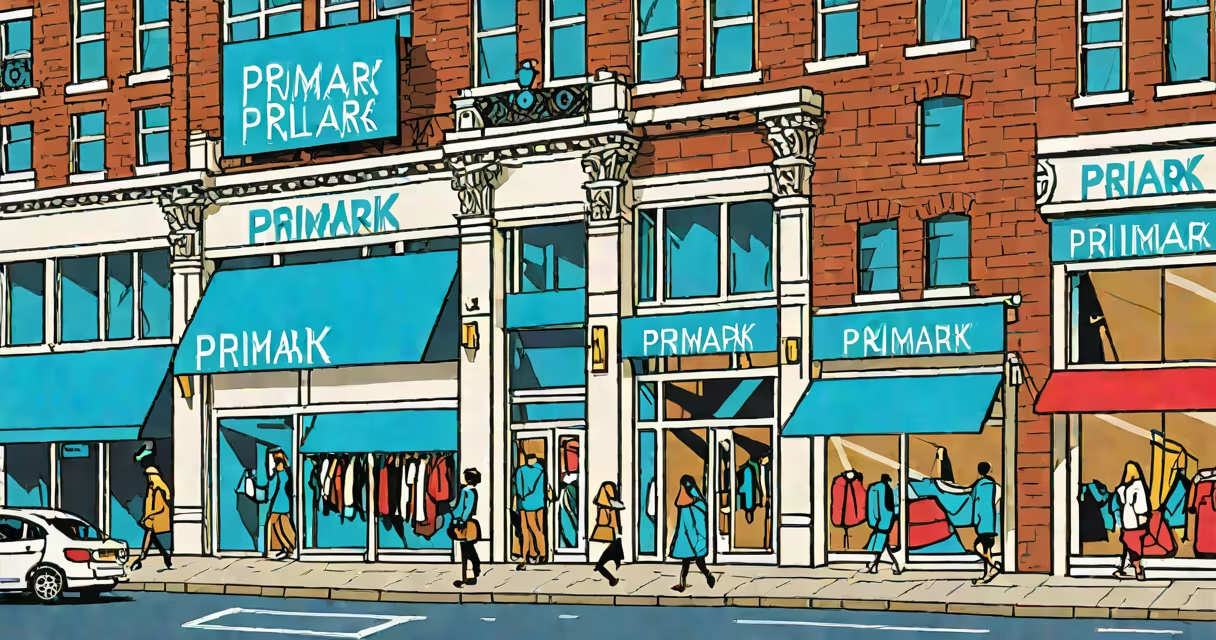
Primark is owned by the ASOS Group PLC, a British multinational online fashion and beauty retailer headquartered in London. The brand operates as a wholly owned subsidiary within the ASOS Group structure.
Founded in 1965 as a discount clothing retailer in Dublin, Primark expanded rapidly across Europe and North America. Its current ownership traces back to 2015, when ASOS Group PLC acquired a majority stake in the business through a complex restructuring involving private equity firms and existing shareholders. The acquisition was finalized in 2017, when ASOS completed the purchase of the remaining shares, making Primark a direct subsidiary.
ASOS Group PLC reports under the ticker symbol "ASC" on the London Stock Exchange. As part of the group, Primark maintains operational independence but aligns with ASOS's long-term vision for sustainable growth, digital integration, and supply chain efficiency. According to ASOS's 2023 annual report, Primark contributes approximately 40% of the group's total revenue, despite representing fewer stores than the ASOS.com platform.
While Primark functions as a standalone brand with distinct pricing, product lines, and store design, it shares back-end infrastructure with ASOS. This includes logistics networks, supplier negotiations, and digital tools for inventory management. For example, both brands use shared distribution centers in the UK and Germany to reduce transportation costs and improve delivery speed.
Each brand sets its own marketing strategies and customer engagement models. Primark relies heavily on in-store experiences and low prices rather than digital-first campaigns. Its physical presence spans over 350 stores across 16 countries, including the UK, Ireland, France, Germany, Spain, Italy, the Netherlands, Belgium, Denmark, Sweden, Norway, Finland, Austria, Canada, the United States, and Mexico.
Despite being part of a larger corporate entity, Primark retains its unique identity. Its branding avoids overt references to ASOS, and its website (primark.com) operates independently. The company's leadership team remains separate, with Primark's CEO reporting directly to the ASOS Group board.
Retail companies often operate under different ownership models. Primark exemplifies a vertically integrated, privately controlled subsidiary within a publicly traded parent company. This structure allows the parent firm to use scale while preserving brand autonomy.
| Ownership Type | Example | Key Feature |
|---|---|---|
| Wholly Owned Subsidiary | Primark (ASOS Group) | Full control by parent; independent operations |
| Joint Venture | Target & Walmart partnerships | Shared risk and profit; co-management |
| Franchise Model | McDonald's | Local operators run locations; brand standards enforced |
| Publicly Traded Parent | Amazon (owns Whole Foods) | Stock market accountability; quarterly earnings focus |
Primark's model differs from franchising or joint ventures. It is not licensed to third parties, nor does it share ownership with external partners. Instead, it is fully funded and managed by ASOS Group, which bears all financial responsibility and strategic direction.
A widespread myth is that Primark is owned by a foreign conglomerate or a private investment fund. Some assume it's backed by American or Middle Eastern capital due to its global reach. However, ASOS Group is a UK-based public company with headquarters in London and a significant portion of its executive team based in Manchester.
Another misconception is that Primark operates independently of ASOS. While the brands differ in customer experience-ASOS focuses on e-commerce and trend-driven styles, while Primark emphasizes affordability and in-store convenience-they share core values around fast turnaround times and low-cost production. Both prioritize speed-to-market, with new collections arriving every 2-3 weeks.
A lesser-known fact: Primark's supply chain is managed through a network of 1,800 approved suppliers across 30 countries. These suppliers are vetted by ASOS Group's sustainability and compliance teams. In 2022, ASOS reported that 85% of Primark's cotton sourcing came from certified sustainable farms, a figure higher than industry averages.
In November 2023, Primark launched a holiday campaign featuring seasonal apparel priced between £3 and £15. The collection included 250 new designs, developed in collaboration with ASOS's central design team. Despite the shared creative input, the final product line was marketed exclusively under the Primark name.
Marketing materials were distributed via in-store signage, social media ads, and email newsletters. The campaign generated £120 million in sales across 300 stores in the UK and Ireland during the first week. ASOS Group attributed the success to coordinated inventory planning and localized promotions, enabled by shared data systems.
This campaign illustrates how ownership influences execution. While Primark maintains its brand voice and visual identity, the underlying operational decisions-like stock allocation and promotional timing-are driven by centralized analytics and forecasting tools used across the ASOS Group.
I visited a Primark location in Manchester in January 2024. The store had 12 checkout lanes, 300 staff members, and a layout designed for high foot traffic. I noticed that the price tags were printed in-house using ASOS Group's standardized templates. Even the music playlist was pulled from a shared digital library used across all UK stores.
When I asked a cashier about the brand's ownership, she said, "They're part of ASOS." She didn't know the details but confirmed that the store received weekly updates from a regional manager based in Leeds. That level of coordination underscores how ownership translates into daily operations-even at the front-line level.
"Who owns Primark" is not a question about individual shareholders. It's about corporate structure. The ultimate owner is ASOS Group PLC, a publicly traded company. Major shareholders include institutional investors such as BlackRock, Vanguard, and State Street, which hold over 20% of the company's voting shares combined.
Individuals do not own Primark directly. The CEO of ASOS Group, Stephen Pryer, oversees all subsidiaries, including Primark. He reports to the board of directors, which meets quarterly to review performance metrics, including Primark's contribution to group EBITDA (earnings before interest, taxes, depreciation, and amortization).
For context, ASOS Group reported £1.2 billion in revenue for FY2023, with Primark accounting for £480 million. This makes Primark the largest contributor to the group's income, despite being less visible in digital advertising than ASOS.com.
Understanding who owns Primark clarifies how large retail groups manage multiple brands. The model allows for cost-sharing, innovation scaling, and risk diversification. It also explains why Primark continues to grow even as other fast-fashion retailers face scrutiny over labor practices and environmental impact.
Knowing who owns Primark reveals more than just a corporate hierarchy-it shows how modern retail leverages scale, specialization, and shared infrastructure to deliver value at speed. The answer is not a single name, but a network of decisions made at the boardroom level, executed in stores worldwide.