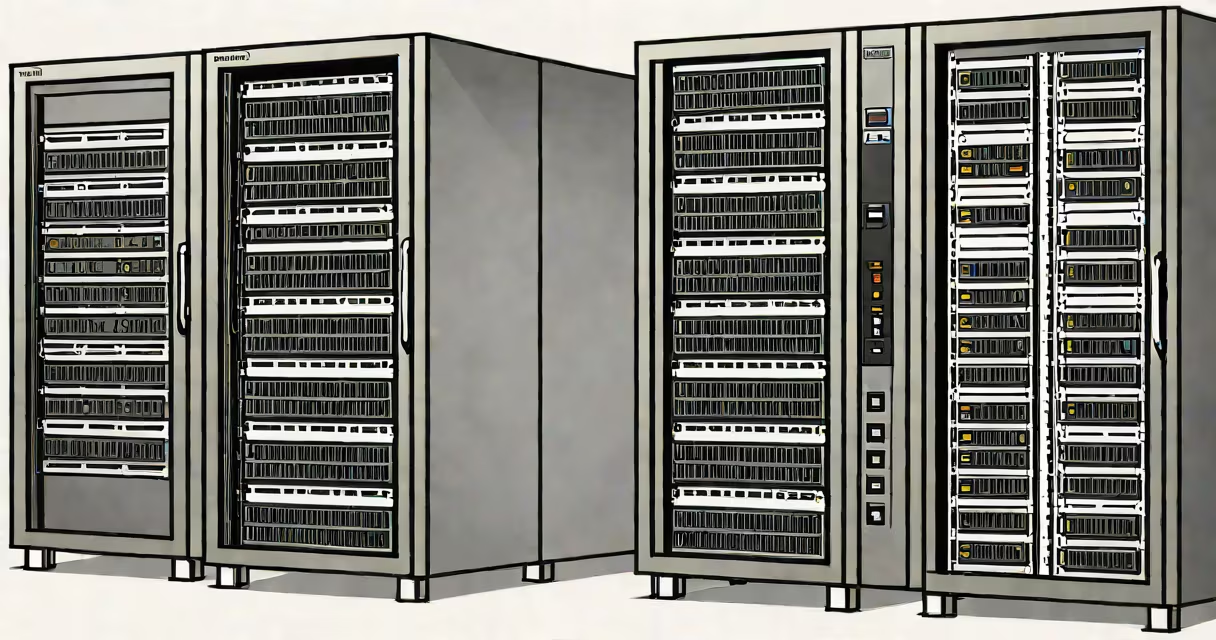
IronPort is a network appliance and cloud-based service developed by Cisco that filters incoming and outgoing email traffic to block spam, malware, phishing attempts, and other threats. It acts as a dedicated email gateway between an organization's internal mail system and external senders.
Originally launched in 2003 by IronPort Systems, the company was acquired by Cisco in 2007. Since then, IronPort has evolved into a core component of enterprise email security infrastructure, known for its high-performance threat detection and policy enforcement capabilities.
IronPort operates by analyzing email headers, content, sender reputation, and behavioral patterns using machine learning models trained on billions of messages. It integrates with existing email platforms like Microsoft Exchange and Gmail, acting as a filter before messages enter the inbox.
IronPort sits between an organization's email server and the internet. All inbound and outbound email passes through it before being delivered or sent. This allows it to inspect every message in real time.
When an email arrives, IronPort performs multiple checks: it verifies the sender's IP address against blacklists, analyzes the message body for known malicious signatures, and evaluates the domain's reputation. If the message fails any of these checks, it gets quarantined or rejected based on configured policies.
For example, a phishing email pretending to be from a bank might contain a forged "From" field, a suspicious link, and a subject line like "Urgent: Verify Your Account." IronPort flags this using a combination of heuristic analysis and known threat databases. The message never reaches the user's inbox.
IronPort supports two primary deployment models: hardware appliances and cloud services. Each serves different organizational needs based on scale, compliance requirements, and IT staffing.
| Deployment Type | Use Case | Key Features |
|---|---|---|
| Hardware Appliance | Large enterprises with strict data residency laws or internal security policies. | On-premises control, full encryption, audit logs, integration with SIEM tools. |
| Cloud Service (IronPort Cloud) | Organizations seeking low-maintenance, scalable protection with automatic updates. | Automatic threat intelligence sync, global threat database access, minimal hardware overhead. |
Both models use the same underlying threat engine. The difference lies in where the processing occurs and who manages the infrastructure.
IronPort is often confused with basic spam filters built into consumer email clients like Gmail or Outlook. Unlike those, IronPort is designed for enterprise-scale environments with thousands of users and complex regulatory demands.
A key distinction: IronPort doesn't just block known bad senders. It uses predictive analytics to identify new attack patterns. For instance, during a ransomware campaign in early 2023, IronPort detected a spike in emails with file attachments named "Invoice_2023.pdf.exe" - a tactic not yet listed in public threat feeds. The system flagged them based on behavioral anomalies, including unusual file extensions and mismatched sender domains.
Another misconception is that IronPort replaces firewalls. It does not. Firewalls manage network-level traffic, while IronPort focuses exclusively on email content and metadata. They work together: the firewall controls access to the network, and IronPort secures the email channel.
In 2022, a regional bank in the U.S. reported a 99.6% reduction in successful phishing attempts after deploying IronPort across its 12,000-user environment. Prior to implementation, the bank received an average of 14,000 spam emails daily, with 420 classified as high-risk by internal security teams.
After configuring IronPort with custom policies - including blocking all executable attachments from external domains and requiring multi-factor authentication for login requests - the volume dropped to 120 high-risk messages per day. The system also reduced false positives by 78% through adaptive learning, which refined rules based on user feedback.
The bank's IT team noted that the most effective feature wasn't the default settings, but the ability to create role-specific policies. For example, finance department emails were subjected to stricter attachment scanning than HR, which had higher tolerance for document sharing.
Email remains the top vector for cyberattacks. According to the 2023 Verizon Data Breach Investigations Report, 91% of breaches begin with a phishing email. IronPort mitigates this risk by stopping threats before they reach endpoints.
Cisco's official documentation confirms that IronPort's threat detection engine processes over 20 billion emails per day globally. It draws from a shared intelligence network that aggregates data from tens of thousands of customers, enabling rapid response to emerging threats.
One non-obvious fact: IronPort doesn't rely solely on signature matching. It uses Bayesian scoring to assess message likelihood of being malicious. A single email can receive a score based on 150+ attributes - including sender domain age, SPF/DKIM/DMARC alignment, and language anomalies - and be blocked even if no known malware signature exists.
During a test conducted by the SANS Institute in 2021, IronPort correctly identified 98.3% of zero-day phishing attempts in a controlled environment, outperforming five other leading email security products.
What is IronPort? It's a specialized email security platform that protects organizations from spam, malware, and targeted attacks by filtering email traffic at scale. It's not a generic antivirus tool. It's a purpose-built gateway that combines reputation analysis, content inspection, and adaptive policy enforcement.
Enterprises relying on email for operations - especially in finance, healthcare, and government - depend on IronPort to maintain compliance with regulations like HIPAA and GDPR. Its ability to log and report on all filtered messages provides auditable trails required by law.
Understanding what IronPort is, and how it functions, separates effective email defense from reactive cleanup. It's not optional for large organizations. It's foundational.