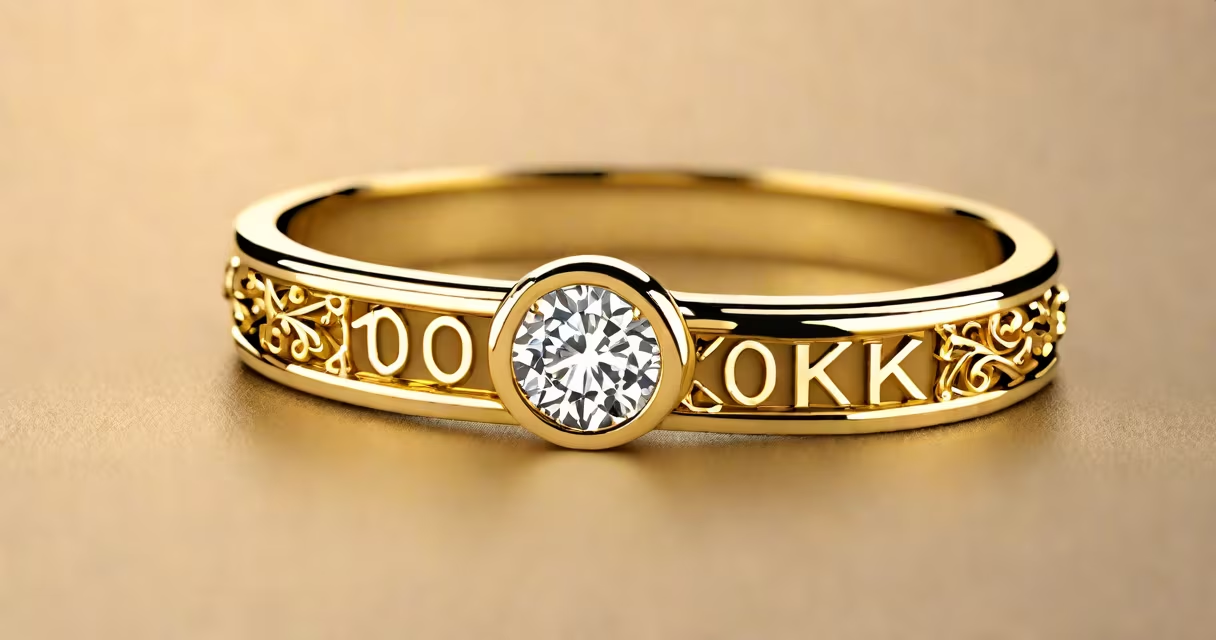
10ks on jewelry means the piece is made of 10-karat gold, which contains 41.7% pure gold and 58.3% alloy metals like silver, copper, or zinc. This standard balances affordability and durability for everyday wear.
The "10k" designation appears as a sign on gold jewelry, typically stamped inside the band or on a hidden surface. It indicates the metal's purity level, not weight or size. The term "10ks" is a common shorthand in retail and online listings, though the correct form is "10k" without the "s."
Gold purity is measured in karats, where 24-karat represents pure gold. A 10k piece has 10 parts gold out of 24 total parts. The remaining 14 parts are alloyed metals added to increase hardness and resistance to scratches and dents.
Gold in its natural state is too soft for most jewelry applications. Pure 24k gold bends easily and wears down quickly under daily use. By mixing gold with harder metals, manufacturers create alloys that maintain color while improving structural integrity.
In 10k gold, 41.7% of the metal is actual gold. The rest consists of base metals-commonly silver, nickel, or copper-chosen for their ability to strengthen the alloy without altering the yellow hue. These alloys also reduce the cost compared to higher-karat options.
For example, a 10k gold wedding band weighs 5 grams. Of that, 2.085 grams are pure gold (41.7% × 5g). The remaining 2.915 grams are alloy metals. This composition makes the ring resistant to deformation during regular handling.
Jewelry hallmarks vary by country and manufacturer. In the U.S., the Federal Trade Commission requires accurate marking of karat values. Common hallmarks include:
| Karat | Purity | Common Markings | Typical Use |
|---|---|---|---|
| 10k | 41.7% | 10k, 10K, 10KT | Daily wear rings, bracelets, earrings |
| 14k | 58.3% | 14k, 14K, 14KT | Most popular engagement rings, necklaces |
| 18k | 75% | 18k, 18K, 18KT | Luxury watches, fine jewelry, high-end accessories |
Some pieces may include additional markings like "GP" (gold plated) or "GF" (gold filled), which indicate a thin layer of gold over a base metal. These are not equivalent to solid 10k gold and have lower resale value.
For reference, the American Gem Society states that 10k gold meets minimum standards for durability and authenticity in consumer jewelry. Pieces marked 10k must contain at least 41.67% gold by weight, according to FTC guidelines.
10k gold remains widely used in mass-market jewelry due to its balance of cost, durability, and appearance. It's ideal for items worn frequently-rings, earrings, and chains-where resistance to wear is essential.
Department stores and online retailers often stock 10k gold because it offers a lower entry point for buyers. A 10k gold pendant priced at $120 includes about $50 worth of actual gold. The rest covers craftsmanship, design, and markup.
Many insurance providers require proof of metal purity when valuing jewelry. A 10k stamp supports claims for replacement value. Without a proper sign, insurers may reject claims or offer reduced payouts.
10k gold is often mistaken for "plated" or "filled" gold. Plated items have a thin layer of gold (usually less than 0.5 microns thick) applied via electroplating. They wear off within months of regular use. Filled gold has a thicker layer but still lacks the volume of solid 10k gold.
A key distinction: 10k gold is solid throughout. Its composition doesn't degrade over time unless physically damaged. In contrast, plated items lose their gold layer entirely after prolonged exposure to moisture or friction.
Another misunderstanding is that 10k gold turns green. This occurs only when the alloy metals-especially nickel-react with skin oils or sweat. Not all 10k gold contains nickel; many formulations use copper or silver instead. Hypoallergenic 10k gold exists and is labeled as such.
I once tested a 10k gold ring from a discount retailer using a scratch test kit. The mark revealed a consistent yellow color beneath the surface, confirming solid 10k gold. The ring showed no discoloration after six weeks of daily wear-proof that quality 10k gold resists tarnishing and fading.
When comparing 10k to higher karat options, the trade-offs are clear:
For practical purposes, 10k gold offers the best mix of affordability, strength, and visual appeal for everyday items. It's the default choice for many bridal bands and gift jewelry.
Always check for a clear, permanent sign. The stamp should be legible and located in a discreet area-inside the band, on the back of a pendant, or under a setting. Avoid pieces with faint, scratched, or missing stamps.
Reputable sellers provide certificates of authenticity. While not required by law, they verify the metal content and manufacturing process. Some brands also include serial numbers or holographic tags for anti-counterfeiting.
If a piece claims to be "solid 10k" but lacks a sign, it may be counterfeit. The U.S. Consumer Product Safety Commission warns against unmarked gold items sold online, especially those priced below market value.
Understanding what 10ks means on jewelry ensures informed choices when buying or selling gold items. It clarifies value, longevity, and authenticity-critical factors in any purchase.