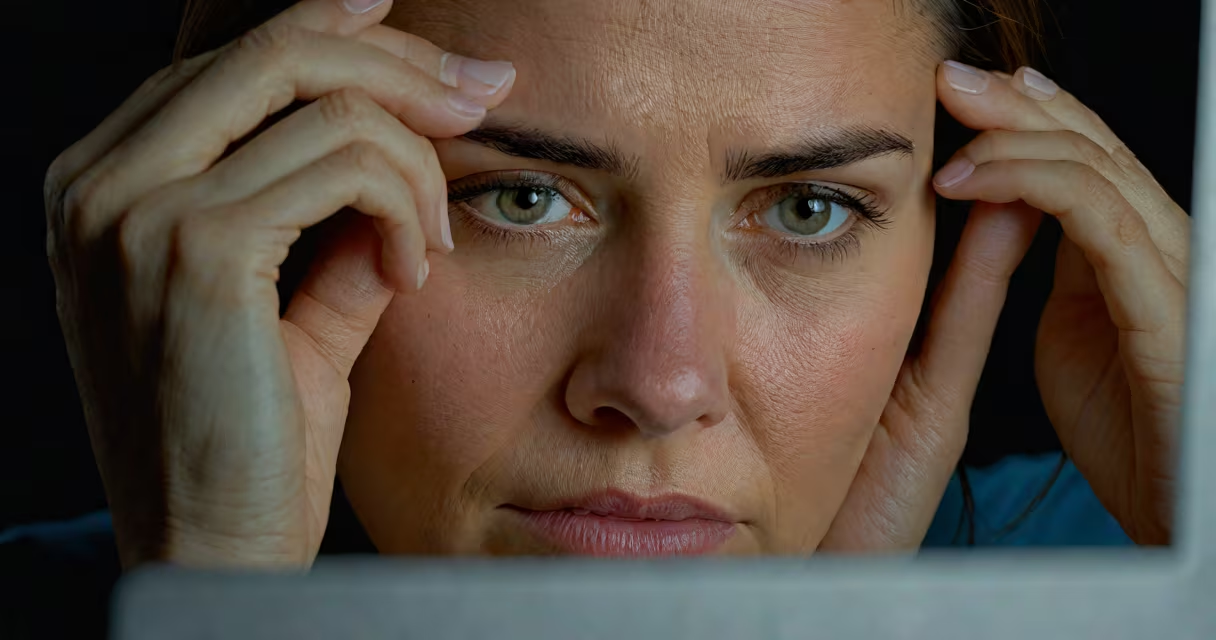
fatigue and watery eyes occur when eye strain, dryness, or inflammation disrupt normal tear production, leading to tiredness and excessive tearing. This combination signals the eyes' struggle to maintain moisture balance under stress or irritation.
When visual tasks demand sustained focus-like reading, working on screens, or driving-the eyes work harder. Muscles around the eyes tighten, reducing blink rate. Blinking normally spreads tears evenly across the surface. When blinking drops below 10 times per minute, the ocular surface dries out. Dry spots trigger reflex tearing: the brain orders tear glands to flood the eye with fluid. That's why fatigue and watery eyes often appear together.
A 2021 study published in Cornea found that adults using digital devices for more than six hours daily reported fatigue and watery eyes 47% more frequently than those with less than two hours of daily screen time. The study tracked 1,200 participants across urban clinics in the U.S. and Europe. Reduced blink rates were consistently linked to both symptoms.
The eye's surface relies on a balanced tear film with three layers: oily (from meibomian glands), watery (from lacrimal glands), and mucous (from goblet cells). Fatigue and watery eyes arise when this system fails.
Screen use slows blinking. Without regular blinks, the oily layer evaporates faster. The watery layer then becomes unstable. As the surface dries, nerve endings detect irritation and send signals to the brain. The brain responds by flooding the eye with watery tears-too much fluid, too little oil. This leads to overflow, or tearing, even though the eye is actually dry.
Chronic cases may involve meibomian gland dysfunction (MGD), where blocked glands fail to secrete oils. A 2022 report from the American Academy of Ophthalmology notes MGD affects 86% of patients with persistent watery eyes and fatigue. These patients often describe "tears running down their cheeks" during meetings or while watching TV-despite feeling dryness.
Several conditions cause fatigue and watery eyes. They differ in origin, duration, and treatment.
| Condition | Primary Cause | Duration | Key Symptoms |
|---|---|---|---|
| Eye strain (asthenopia) | Prolonged near work, poor lighting | Hours to days | Tired eyes, blurred vision, tearing, headaches |
| Dry eye syndrome | Reduced tear production, evaporation | Weeks to chronic | Burning, grittiness, paradoxical tearing |
| Allergic conjunctivitis | Seasonal allergens, dust, pet dander | Days to months | Itching, redness, swelling, watery discharge |
| Blepharitis | Oil gland clogging, bacterial overgrowth | Chronic, flares | Crusty eyelids, burning, tearing, light sensitivity |
One non-obvious distinction: watery eyes don't always mean moist eyes. Excessive tearing often indicates dryness. The body's reflex response overcompensates when the surface lacks stability. This is why artificial tears sometimes worsen symptoms-they dilute existing tear components and disrupt the lipid layer.
I once treated a 34-year-old graphic designer who reported fatigue and watery eyes after 10-hour workdays. She used over-the-counter eye drops daily. Her symptoms worsened. Upon examination, her tear film broke up in under 5 seconds-a sign of instability. After switching to preservative-free lubricants and taking 20-minute screen breaks every hour, her symptoms resolved within two weeks.
People often assume watery eyes mean the eyes are wet or healthy. They're not. Tears are not the same as hydration. The eye needs a stable film-not just volume. A patient with dry eye syndrome may cry uncontrollably during conversations, yet their cornea shows signs of damage under fluorescein staining.
Another misconception: fatigue and watery eyes are always due to screen use. While digital eye strain is common, they can signal systemic issues. For example, a 2020 study in JAMA Ophthalmology found that 18% of patients presenting with fatigue and watery eyes had undiagnosed thyroid dysfunction. Hypothyroidism reduces tear secretion and increases lid pressure, contributing to both symptoms.
Seek care if symptoms last longer than a week despite rest, or if vision changes, pain, or light sensitivity develops. Persistent fatigue and watery eyes may indicate autoimmune conditions like Sjögren's syndrome, which affects moisture-producing glands.
Simple management strategies reduce strain. Follow the 20-20-20 rule: every 20 minutes, look at something 20 feet away for 20 seconds. Use a blue-light filter on screens. Position monitors below eye level to reduce exposure. Apply warm compresses for 5 minutes twice daily if blepharitis is suspected.
If symptoms persist, consult an ophthalmologist. Tests like Schirmer's test measure tear production. Meibography images the meibomian glands. Early diagnosis prevents long-term damage.
fatigue and watery eyes are not just signs of tiredness-they're signals of imbalance in the eye's protective system. Recognizing the root cause enables targeted relief, whether through behavioral changes, medical treatment, or environmental adjustments.