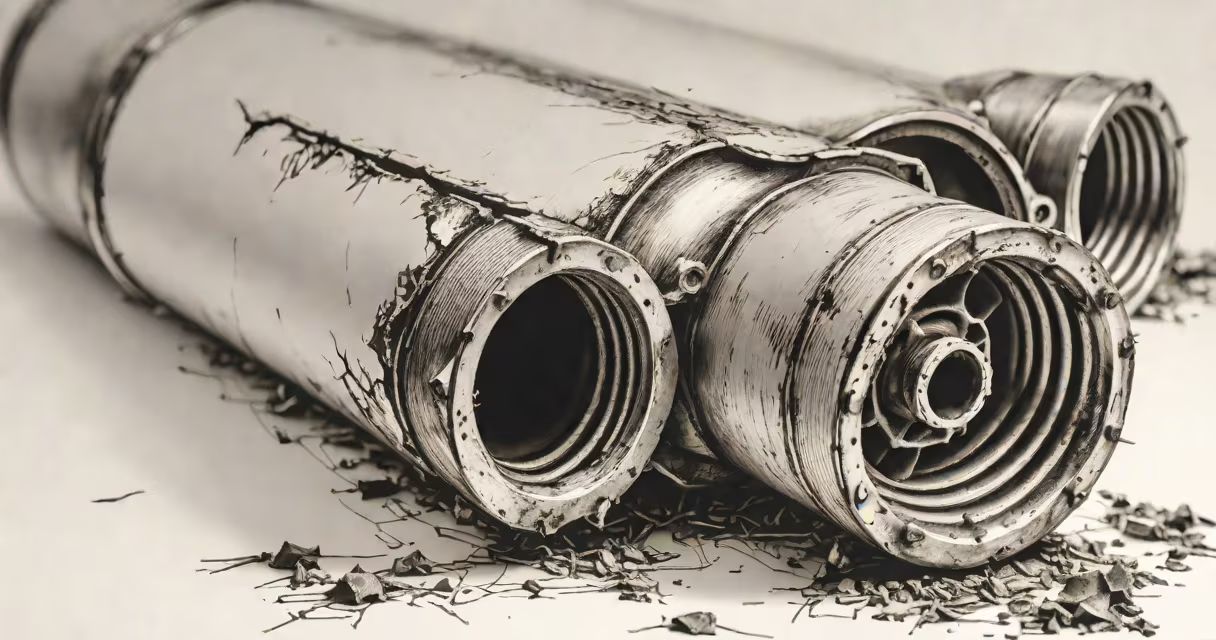
A bad catalytic converter restricts exhaust flow, leading to reduced engine performance, increased emissions, and potential failure of emissions tests. It can trigger warning lights, cause engine misfires, and result in costly damage if left unaddressed.
Catalytic converters reduce harmful pollutants in vehicle exhaust through chemical reactions. When they degrade or clog, these processes fail. The device sits between the engine and muffler, converting carbon monoxide, nitrogen oxides, and hydrocarbons into less harmful substances like carbon dioxide, nitrogen, and water vapor.
Modern vehicles monitor converter efficiency using oxygen sensors before and after the unit. If the downstream sensor detects higher levels of unprocessed pollutants, the check engine light activates. According to the Environmental Protection Agency (EPA), a failing converter is a leading cause of emissions test failure in passenger vehicles.
As the catalytic converter degrades, internal honeycomb structures collapse or become coated with ash, oil residue, or melted metal. This blocks exhaust flow, increasing backpressure. High backpressure forces the engine to work harder, reducing power and fuel efficiency.
Backpressure above 1.5 psi at idle can cause noticeable drivability issues. A 2021 study by the Society of Automotive Engineers (SAE) found that engines operating with severe backpressure experienced up to 18% loss in torque output during acceleration. Drivers report sluggish throttle response, hesitation, and difficulty maintaining highway speeds.
Excessive heat builds up behind the restriction. Temperatures inside a clogged converter can exceed 1,600°F-hot enough to melt the internal substrate. Once the ceramic core fractures, loose fragments can block the exhaust pipe or damage the exhaust manifold.
Drivers often notice symptoms in stages. Early indicators include a decrease in fuel economy-typically 5-10 mpg drop-and a persistent check engine light. The most common diagnostic trouble code is P0420, indicating low catalyst efficiency.
As the issue worsens, drivers hear a rattling noise under the vehicle, especially when accelerating. This sound comes from broken internal components vibrating against the converter housing. A 2022 Consumer Reports analysis identified this rattle as the most frequent physical symptom reported by owners prior to repair.
One mechanic observed a 2018 Toyota Camry with a severely clogged converter. The owner reported "feeling like the car was being pulled backward" during highway driving. An exhaust pressure test confirmed 3.2 psi of backpressure-well above the 1.5 psi threshold. After replacement, fuel economy improved from 24 mpg to 28 mpg.
Catalytic converter failure falls into three categories: physical blockage, chemical poisoning, and thermal damage. Physical blockages occur when debris, oil sludge, or coolant enter the exhaust system. Chemical poisoning results from leaded fuel, silicone-based sealants, or excessive oil burning. Thermal damage arises from prolonged rich fuel mixtures or engine misfires.
Engine misfires send unburned fuel into the converter. That fuel ignites inside the unit, raising temperatures beyond design limits. The EPA notes that a single misfire event can raise converter temperature by 500°F in under 30 seconds. Repeated events can melt the substrate within minutes.
| Type | Primary Cause | Typical Symptoms |
|---|---|---|
| Blockage | Oil sludge, coolant leaks, foreign objects | Rattling, power loss, poor acceleration |
| Poisoning | Leaded fuel, silicone sealants, high sulfur fuel | Reduced efficiency, emission test failure |
| Thermal Damage | Rich fuel mixture, engine misfires | Internal melting, cracked casing, overheating |
Many assume a bad catalytic converter causes immediate engine failure. In reality, the engine continues running-often poorly-but rarely stops completely. The system keeps functioning until the restriction becomes severe enough to prevent exhaust egress.
Another misconception is that replacing the converter fixes underlying engine problems. A 2020 National Institute for Automotive Service Excellence (ASE) report found that 37% of converters replaced without diagnosing root causes failed again within 12 months. Oil burning, spark plug issues, or faulty fuel injectors must be resolved before replacement.
I once diagnosed a 2016 Honda Accord with a P0420 code. The converter tested below efficiency thresholds. But after checking the upstream oxygen sensor, we found a cracked exhaust manifold gasket. Fixing the leak restored converter function-no replacement needed. The repair cost $120 versus $1,200 for a new unit.
Replace a catalytic converter when performance drops, emissions tests fail, or physical damage is evident. Federal law requires vehicles to pass emissions testing in all 50 states. In California, failure to pass the smog check results in registration denial.
Replacement costs range from $800 to $2,500 depending on make, model, and whether the part is OEM or aftermarket. Some states require certified parts meeting EPA standards. Using non-compliant units can result in fines and void warranties.
After replacement, clear fault codes with a scan tool. Drive the vehicle for 50 miles to allow the onboard computer to recalibrate. Monitor for recurring issues. If the check engine light returns, investigate the root cause again.