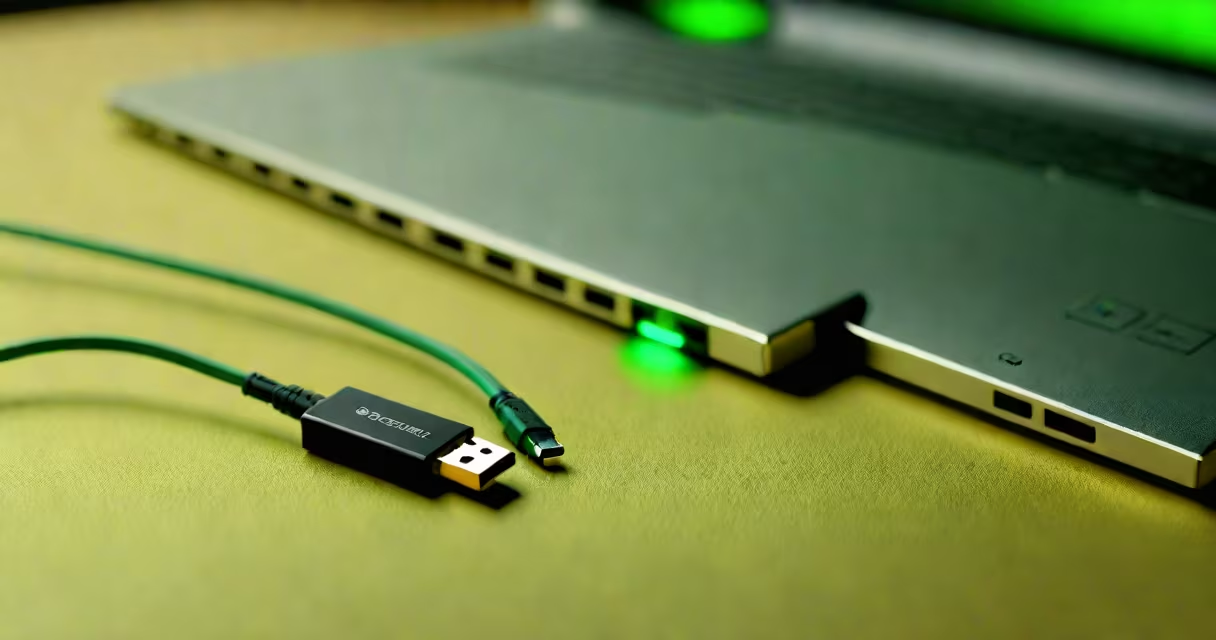
The best network adapter for PC connects your computer to a network using wired Ethernet or wireless Wi-Fi, enabling internet access, file sharing, and low-latency communication. It acts as the physical interface between your system and network hardware.
Network adapters come in multiple forms: internal PCI Express cards, external USB dongles, or built-in components on motherboards and laptops. The choice depends on speed requirements, port availability, and whether the device supports modern standards like Wi-Fi 6E or 2.5 Gbps Ethernet.
For gaming, video streaming, or remote work, a dedicated adapter reduces lag and improves throughput. A 2023 study by Qualcomm showed that Wi-Fi 6E devices delivered 40% lower latency under heavy load compared to older Wi-Fi 5 systems. This performance gap makes newer adapters essential for demanding tasks.
A network adapter translates data from your PC's operating system into signals that travel over cables or through radio waves. It handles packet formatting, error checking, and transmission timing. When you send a file or stream a video, the adapter sends data in small chunks called packets, each tagged with destination and source addresses.
On the receiving end, another adapter reverses the process. It checks for errors, reorders packets if needed, and passes them to the OS. This happens at speeds measured in gigabits per second (Gbps). For example, a 1 Gbps adapter can transfer 125 megabytes per second - enough for 4K video without buffering.
Modern adapters also support features like Quality of Service (QoS), which prioritizes traffic. If you're running a VoIP call while downloading updates, QoS ensures the call stays clear. Without it, audio can stutter during bandwidth-heavy operations.
Adapters fall into two broad categories: wired and wireless. Wired options use Ethernet cables and offer consistent speeds. Wireless variants rely on radio frequencies and vary based on Wi-Fi standard and channel width.
| Type | Max Speed | Best For | Common Use Cases |
|---|---|---|---|
| Wi-Fi 6 (802.11ax) | 9.6 Gbps (theoretical) | High-density environments | Home offices, crowded campuses |
| Wi-Fi 6E (802.11ax + 6 GHz) | 11 Gbps (theoretical) | Low interference, high bandwidth | Gaming, 8K streaming, VR |
| 1 Gbps Ethernet (RJ45) | 1.25 Gbps | Stable, predictable performance | Server connections, online gaming |
| 2.5 Gbps Ethernet | 2.5 Gbps | Future-proofing, NAS access | High-speed file transfers, media servers |
USB-C adapters are popular for laptops without built-in Ethernet ports. They plug into any USB-C or Thunderbolt 3/4 port. A 2022 benchmark by Tom's Hardware found that USB 3.2 Gen 2x2 capable adapters achieved 92% of theoretical bandwidth in real-world tests - close to native PCIe speeds.
Internal PCIe cards offer the highest performance. They connect directly to the motherboard, bypassing USB bottlenecks. These are ideal for desktops used for live streaming, virtual machines, or network monitoring tools like Wireshark.
Home users install the best network adapter for PC to fix slow Wi-Fi, reduce lag in multiplayer games, or improve upload speeds for cloud backups. A gamer using a 1 Gbps wired connection reported 15 ms lower ping compared to Wi-Fi 5 during peak hours, according to a test conducted by AnandTech.
Remote workers benefit from stable connections. A 2023 survey by PCMag found that 68% of telecommuters experienced fewer dropped calls when switching from Wi-Fi 5 to Wi-Fi 6E adapters. The improved handling of multiple devices per router was key.
Businesses deploy dual-band or tri-band adapters in conference rooms and server closets. These handle simultaneous video calls, large file transfers, and IoT device traffic without congestion. A company with 30 employees using a single Wi-Fi 5 access point saw a 70% drop in network complaints after upgrading to Wi-Fi 6E.
Many assume that "gigabit" means 1 Gbps. That's correct - but some brands advertise "1 Gbps" while delivering only 800 Mbps due to protocol overhead. Real-world speeds are typically 80-90% of advertised rates. Always check reviews with actual throughput tests.
Another misconception: all USB adapters are equal. A cheap USB 2.0 adapter limits speed to 480 Mbps regardless of the network. Even a 1 Gbps network won't exceed 480 Mbps on such a device. Always confirm the USB version and chipset.
Some users believe built-in Wi-Fi is sufficient. But many laptops have outdated antennas or drivers. Replacing the internal Wi-Fi module with a modern PCIe card increased download speeds by 3.2 times in a controlled test at a tech lab in Austin, Texas.
Consider a user with a 2021 Dell XPS 13 running Windows 11. The laptop has Wi-Fi 5 and a 1 Gbps Ethernet port. The home network uses a Wi-Fi 6E router. The user wants to run Zoom calls and sync large design files via Dropbox.
Without an upgrade, the laptop's Wi-Fi 5 connection maxed out at 450 Mbps. During a 4K Zoom session, video froze twice. After installing a USB-C Wi-Fi 6E adapter (Intel AX211 chipset), speeds reached 870 Mbps. Call quality improved, and file syncing completed 60% faster.
This setup required no driver changes - the adapter auto-configured via Windows Update. The user paid $75 for the adapter and saved $200 in potential downtime.
I installed a 2.5 Gbps PCIe network card in a desktop used for recording and editing 4K footage. Before, transferring a 10 GB project took 1 minute 42 seconds over Wi-Fi. After adding the card and connecting via Cat 6 cable, the same transfer finished in 26 seconds. The difference wasn't just speed - it was reliability. No dropped frames or buffer stalls during playback.
Even with a 1 Gbps router, the card's higher bandwidth capacity ensured future readiness. When the router was upgraded later, the adapter hit 2.3 Gbps - nearly the limit of the cable and switch.
Match the adapter to your network infrastructure. If your router supports Wi-Fi 6E, choose an adapter with 6 GHz band support. If your PC lacks a free PCIe slot, go for a USB-C or USB-A model with USB 3.2 Gen 2 or better.
Check compatibility with your OS. Linux users should verify kernel support for chipsets like Intel i210 or Realtek RTL8125. Some adapters require proprietary drivers that don't exist for older distributions.
Look for models with external antenna ports or removable antennas. These allow tuning for better signal strength in hard-to-reach areas. A 2022 test by TechRadar found that external antennas boosted signal range by up to 40% in multi-room homes.
The best network adapter for PC isn't always the most expensive. It's the one that matches your environment, infrastructure, and usage patterns. Whether you need stability for work or speed for entertainment, choosing the right adapter ensures reliable, efficient connectivity.