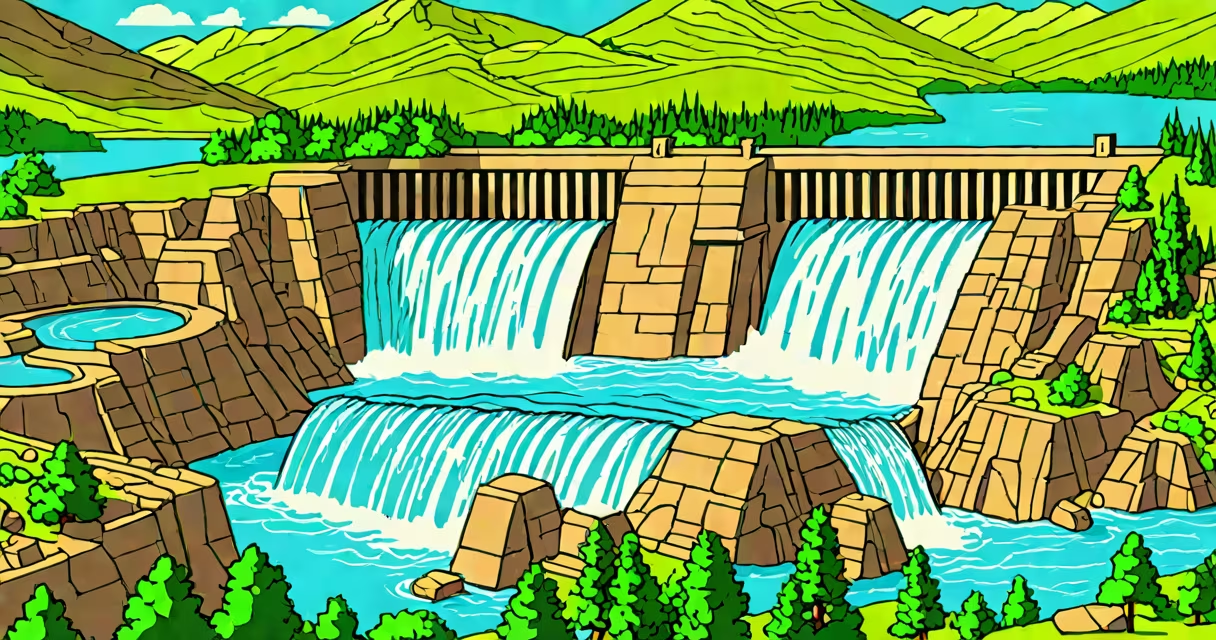
Hydro plants generate electricity by converting the kinetic energy of moving water into electrical power through turbines and generators. These facilities rely on gravity-driven water flow, typically from rivers or reservoirs, to spin turbines connected to electric generators.
Hydro plants are among the oldest and most established forms of renewable energy infrastructure. The largest installations can produce over 10 gigawatts of power-enough to supply millions of homes. The technology operates on a principle discovered in the 19th century: water movement drives mechanical rotation, which induces electrical current via electromagnetic induction.
Modern hydro plants use controlled water release systems to maintain consistent output. They differ from solar or wind farms in that they offer predictable, dispatchable power-meaning operators can turn them on or off based on demand. This makes them valuable for grid stability, especially when paired with variable renewables.
Water flows from a high elevation-often behind a dam-into a penstock, a large pipe that channels water under pressure toward a turbine. The force of the water spins the turbine blades, which rotate a shaft connected to a generator. Inside the generator, magnets spin past copper coils, inducing an electric current through electromagnetic induction.
The process is highly efficient. According to the U.S. Department of Energy, modern hydroelectric systems convert about 90% of available energy into electricity-far higher than fossil fuel plants, which average around 33-40% efficiency.
After passing through the turbine, water exits into a tailrace channel and returns to the river downstream. The entire cycle is closed-loop for water use-no water is consumed, only redirected. This distinguishes hydro from thermal power plants that evaporate water during cooling.
Hydro plants are classified by scale and design. The most common types include run-of-river, reservoir-based, pumped storage, and tidal systems.
| Type | How It Works | Typical Capacity | Use Case |
|---|---|---|---|
| Run-of-River | Uses natural river flow without large dams. Diverts water through a channel or pipeline. | 1-50 MW | Low-impact projects in mountainous regions. |
| Reservoir-Based | Stores water in a dammed reservoir. Releases water on demand to generate power. | 100 MW - 10 GW | Grid-scale baseload power; seasonal storage. |
| Pumped Storage | Re-pumps water uphill during low-demand hours using surplus grid electricity. | 50-1,000 MW | Energy storage; balances intermittent wind/solar. |
| Tidal | Uses ocean tides to drive turbines in coastal areas with strong tidal ranges. | 10-200 MW | Coastal regions with predictable tidal patterns. |
Run-of-river systems avoid large reservoirs and minimize land flooding. However, they depend on consistent river flow and are vulnerable to droughts. Reservoir-based plants provide greater control and storage capacity but require significant upfront construction and can displace communities.
Pumped storage is unique because it consumes electricity during off-peak hours to pump water uphill, then generates power during peak demand. This function acts as a giant battery. The Bath County Pumped Storage Station in Virginia-the largest in the U.S.-has a capacity of 3 GW and can store enough energy to power 1 million homes for several hours.
While hydro plants emit no direct carbon dioxide during operation, they can have significant ecological impacts. Dams alter fish migration routes, reduce sediment transport, and change water temperature and chemistry downstream. The World Commission on Dams reported in 2000 that over 40% of large dams studied caused irreversible damage to aquatic ecosystems.
One lesser-known issue is methane emissions from decomposing organic matter in reservoirs. A 2021 study published in *Nature* found that tropical reservoirs can emit more methane than coal-fired power plants per unit of energy produced due to submerged vegetation rotting under anaerobic conditions.
Despite these concerns, hydro remains a critical component of decarbonization strategies. The International Energy Agency (IEA) estimates that hydropower supplied 16% of global electricity in 2022-more than wind and solar combined. China leads in installed capacity with over 400 GW, followed by Brazil and Canada.
Many assume hydro plants are always environmentally benign. That's incorrect. While they don't burn fuel, their construction often disrupts ecosystems and displaces people. The Three Gorges Dam in China, for example, displaced over 1.2 million residents and flooded vast areas of farmland and cultural heritage sites.
Another misconception is that all hydro plants are massive dams. Small-scale hydro projects-under 10 MW-are increasingly common in rural and remote areas. These systems can serve isolated communities without requiring large infrastructure. In Nepal, micro-hydro plants provide electricity to over 100,000 households in mountain villages.
I once visited a small hydro plant in Oregon that powers a single town of 3,000 people. It uses a diverted stream and a 500-kilowatt turbine. The system runs quietly, blends into the field, and requires minimal maintenance. It's a working example of how hydro doesn't need to be industrial to be effective.
Compared to solar and wind, hydro offers higher capacity factors-typically 40-60%, versus 15-25% for solar and 25-45% for wind. This means hydro plants operate closer to full capacity year-round.
However, hydro is less flexible in deployment. Solar panels can be installed on rooftops anywhere with sunlight. Wind turbines go on hills or offshore. Hydro requires specific geography-rivers with elevation drops, suitable geology, and sufficient rainfall.
For grid resilience, hydro complements other renewables. When solar output drops at night, hydro can ramp up quickly. During dry seasons, pumped storage can fill gaps in wind and solar availability. The California Independent System Operator (CAISO) relies heavily on hydro and pumped storage to balance its grid.
Global investment in hydro continues, though growth has slowed since the 1990s. New focus is shifting toward upgrading existing facilities rather than building new dams. Modernizing turbines and controls can increase output by 10-20% without expanding reservoir size.
Hydropower is also being integrated into hybrid systems. For example, floating solar panels placed on reservoirs reduce evaporation while generating additional electricity. The Niederau project in Germany combines solar and hydro operations on a single site.
As climate goals tighten, hydro plants remain essential. Their ability to provide stable, low-carbon power at scale makes them irreplaceable in many national energy plans. Yet responsible development demands careful assessment of ecological and social trade-offs.
Understanding what are hydro plants reveals more than just a method of electricity generation-it shows how human engineering interacts with natural systems. These facilities represent decades of innovation, yet still face challenges in balancing energy needs with environmental stewardship.