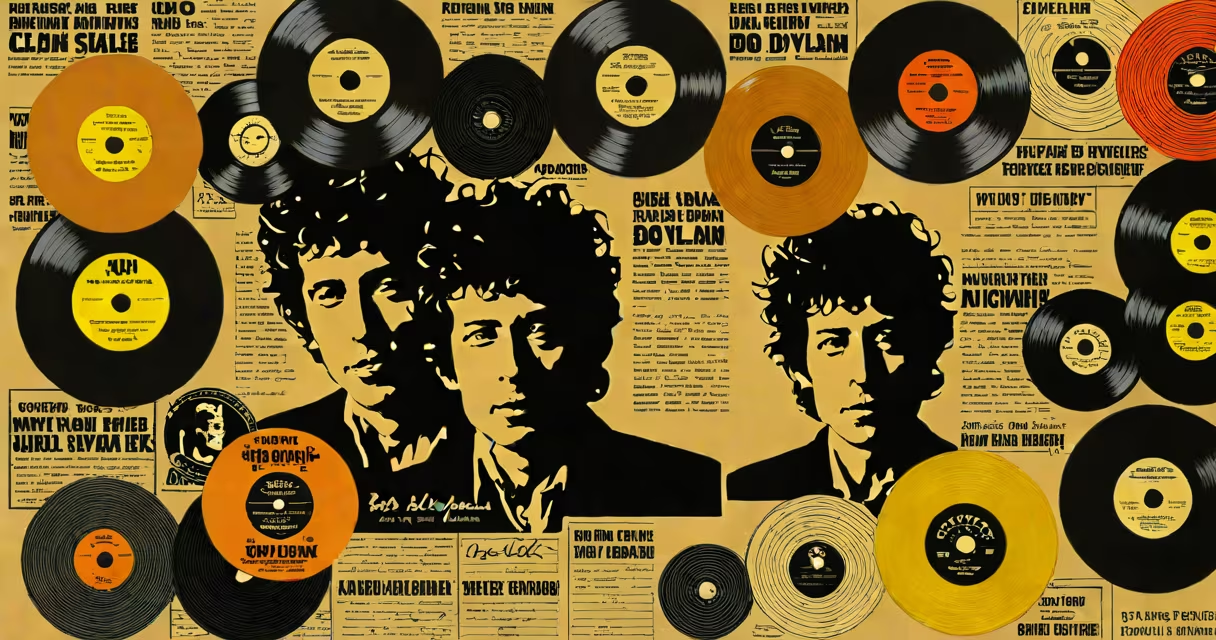
The bob dylan bootleg series is a curated collection of previously unreleased recordings from Bob Dylan's career, officially released by Columbia Records. These albums feature rare studio outtakes, alternate versions, and historically significant live performances, often sourced from original analog tapes.
Released between 1991 and 2023, the series began as a response to unauthorized bootlegs circulating among fans. Columbia's official version preserved audio quality and added detailed liner notes, turning fan artifacts into archival documents. The series spans multiple decades of Dylan's work, including sessions from the early 1960s through the 2000s.
Each volume is numbered and titled with a thematic focus-such as "The Basement Tapes" or "The Real Gone Cat"-and includes commentary from music historians and former band members. The series is not a random compilation; it follows a deliberate curation process based on historical significance, sonic clarity, and narrative coherence.
Columbia Records commissions archivists and producers to comb through decades of master tapes, session logs, and rehearsal recordings. Only material deemed historically valuable and sonically viable makes the cut. For example, Volume 13, *The Real Gone Cat*, features 1973 recordings from Dylan's tour with The Band, including a complete show from the Hollywood Bowl.
Each release includes a booklet with photos, session notes, and context about the recording environment. For instance, *The Bootleg Series Vol. 12: The Cutting Edge 1965-1966* contains studio logs showing that Dylan recorded "Like a Rolling Stone" in 15 takes, with one version lasting over 12 minutes. This level of detail distinguishes the official series from fan-made bootlegs.
Releases are timed around cultural moments-such as anniversaries of landmark albums or Dylan's birthday-to maximize relevance. Volume 15, *The Complete Basement Tapes*, was issued in 2014, coinciding with the 50th anniversary of the sessions that produced songs like "Tears of Rage" and "I Shall Be Released."
The series is organized by theme and time period. Not all volumes are chronological. Some focus on specific collaborators, such as *Vol. 10: The Witmark Demos*, which collects early songs written before Dylan signed with Columbia. Others spotlight genres or settings, like *Vol. 14: The Other Side of the Mirror*, which centers on Dylan's 1966 UK tour.
| Volume | Theme | Key Tracks | Release Year |
|---|---|---|---|
| Vol. 1 | Early Studio Outtakes | "Talkin' World War III Blues," "Ballad of Hollis Brown" | 1991 |
| Vol. 5 | 1966 Tour Recordings | "Visions of Johanna" (live, Paris) | 2005 |
| Vol. 13 | 1973 Tour with The Band | "Forever Young" (live, San Francisco) | 2018 |
| Vol. 15 | Complete Basement Tapes | "I Shall Be Released," "The Mighty Quinn" | 2014 |
Some volumes are themed around creative processes. *Vol. 8: Tell Me That You Love Me* focuses on Dylan's 1974 tour with The Band, capturing both polished performances and raw rehearsal takes. This volume includes a 22-minute version of "Blowin' in the Wind" recorded during soundcheck-a take that reveals Dylan's improvisational style in real time.
Many assume the series includes only unmastered or low-quality recordings. In reality, most tracks have been remastered using modern techniques. For example, *Vol. 11: The Basement Tapes* underwent restoration using spectral analysis to reduce tape hiss without altering the original performance.
Another myth is that all material is from private sessions. While many tracks come from informal settings-like Dylan's home in Woodstock-the series also includes professionally recorded radio broadcasts and television appearances. *Vol. 7: No Direction Home* features a 1965 BBC interview where Dylan discusses the meaning behind "Mr. Tambourine Man."
A lesser-known fact: some tracks were never intended for public release. The version of "A Hard Rain's A-Gonna Fall" in *Vol. 3* was recorded during a 1963 session meant to test microphone sensitivity. Dylan sang it twice-once with a whisper, once with full intensity-and both versions were included in the final release.
Fans use the series to trace Dylan's lyrical evolution. Comparing the 1964 demo of "Blowin' in the Wind" with the 1965 official version shows how Dylan altered phrasing to increase emotional impact. The demo version uses "how many times must the cannonballs fly?" while the final version changes it to "how many times must a man turn and run?"-a shift that heightens the song's moral urgency.
Music scholars cite the series as primary source material. According to the Library of Congress, the *Cutting Edge* volumes are part of the National Recording Registry due to their cultural and artistic significance. The 2005 release of *Vol. 5* was selected for preservation because it captures Dylan's transition from folk protest to rock experimentation.
I once spent a weekend listening to *Vol. 13* while studying the 1973 tour's setlists. I noticed that Dylan changed the key of "Forever Young" between shows-on the first night it was in G major, on the second in D major. This shift wasn't documented in official tour records, but the bootleg series revealed it. That moment showed me how deeply the series reflects Dylan's live artistry.
The bob dylan bootleg series is not the same as unauthorized fan releases. Unofficial bootlegs often lack proper mastering, contain distorted audio, or splice together fragments from different shows. The official series ensures fidelity and authenticity.
It is also not a greatest hits collection. While some volumes include well-known songs, they're presented in new contexts. For example, "Mr. Tambourine Man" appears in *Vol. 10* not as a single, but as a demo recorded in a New York apartment-complete with ambient noise from a passing train.
Finally, the series is not limited to rock or folk. *Vol. 14* includes gospel recordings from Dylan's 1979 tour, demonstrating his spiritual phase. One track, "Gotta Serve Somebody," was recorded in a church basement with minimal instrumentation-an intimate setting that contrasts sharply with the polished studio version on *Slow Train Coming*.